This is a joint statement by academics and researchers expressing concern over the August 2019 arrest and detention of British‑Iranian social anthropologist Kameel Ahmady in Iran. It highlights his respected research on female genital mutilation and child marriage, and stresses that his scholarly work should be protected, not punished. The statement calls on Iranian authorities to release him urgently, allow him access to a lawyer of his choice, and resolve the situation in a way that respects academic freedom and human rights. (Ahmady did eventually escape to the UK.)
You can read this website in the language of your choice via Google Translate.
STATEMENT ON KAMEEL AHMADY
21 August 2019
We the undersigned are academics and social researchers in issues concerning women and girls.
We note with sadness the arrest and detention in Iran of our colleague (and friend), the acclaimed British-Iranian social anthropologist and researcher Kameel Ahmady. [1]
As awards for, and recognition of, his work demonstrate, [2] Kameel’s studies have contributed significantly to our understanding of very important matters such as female genital mutilation and child marriage in the Middle East. That dialogue must continue.
We respectfully appeal to the Iranian authorities to release Mr Ahmady from imprisonment as a matter of urgency.
Should any legal charges against him continue, we also ask the authorities in Tehran immediately to permit Kameel access to legal representation of his free choice.
Kameel Ahmady is a globally respected academic and researcher whose work has made invaluable contributions to the fields of his endeavours.
We thank the Iranian authorities for their understanding of our concerns about the present situation, to which we hope a positive resolution acceptable to all parties will be achieved very shortly.
1. Kameel Ahmady Is Detained In Iran - News Updates
2. Kameel Ahmady - Publications, Achievements and CV
Signed: Institution / affiliation
(see below for signatories)
If you are an academic, social researcher or similar and you would like to append your name and organisation to this Statement, please add your details in the Comment box below, or email your name and affiliation to Hilary [at] HilaryBurrage [dot] com, with the header ‘Kameel Ahmady Statement’.
Your support will then be added to the list of names below, and we will try to keep you informed of developments. Thank you.
.
Brexit will undermine UK efforts to eradicate Female Genital Mutilation (FGM). Losing EU collaboration on research, data-sharing, and cross-border prevention initiatives will weaken protections for at-risk girls, especially amid rising prevalence. Consequences may include funding cuts, reduced NHS training, and stalled prosecutions (only two since 1985); sustained international partnerships are essential to combat this human rights abuse effectively.
You can read this website in the language of your choice via Google Translate.
 I rarely re-post material I’ve already published, but this is an exception. Given the shifts in the UK political landscape over the past week or so, I am pleased that London4Europe has today republished my piece on FGM and Brexit, originally posted by UK in a Changing Europe. Taking a more political position than usual in my work on FGM, I fear the damage Brexit would inflict is already starting to have impact. Intolerance and xenophobia are features of the UK’s current socio-political turmoil, and this cannot help us in seeking to protect the most vulnerable in our communities.
Here is the piece as it has now been republished:
I was pleased some years ago to publish this significantly cited paper in a well-respected academic journal, exploring the disconnect between epidemiology as an academic field and practical community health efforts. How does research on health, illness, and socio-economic factors translate—or fail to translate—into effective public policies and on-the-ground initiatives for improving well-being? This is a question I have long pondered, sensing a persistent strain in bridging rigorous inquiry with real-world application.
You can read this website in the language of your choice via Google Translate.
 The (dis?)connections between epidemiology as a field of enquiry, and the practice of community health in everyday reality, have interested me throughout my academic life.
How do the findings of research into health, illness and socio-economic context translate into public policy and work on the ground to improve people’s fitness and well-being? Or don’t they? – a question I find myself asking quite often now and which, looking back, I have been wondering about for quite a long time.
I was reminded of this much earlier paper (below; originally published in Social Science and Medicine – download text here ) just today because I saw it had recently been cited by some others who also ponder these questions. Perhaps we collectively still have work to do?
The UK Government National Audit Office recently invited submissions around their examination of the effectiveness of official development assistance. I suggested specifically that anti-FGM programmes should be judged by more than attitude change; they need stronger, long-term evidence of actual reductions in cutting and related harms. We might question how evaluations link reported shifts in beliefs to real behavioural change, and ask for more hard data from clinics, hospitals, media, politics, education, and girls’ later life outcomes.
You can read this website in the language of your choice via Google Translate.
 The UK Government National Audit Office recently invited submissions around their examination of the effectiveness of official development assistance. Evaluation is an aspect of work on programmes to eradicate female genital mutilation (FGM) which has interested me as a sociologist for quite a while. I therefore suggested some research questions which may be of interest to them or DfID. National and international support for work to EndFGM is essential and it is critical that we continue to learn which aspects of these programmes are likely to have most positive impact.
There is a growing realisation that to achieve maximum impact, programmes of FGM eradication must be underpinned by a cogent discipline and understanding of what FGM is and how it maintains its legitimacy in the eyes of those who practise it: parallels here might be the studies of substance abuse or premature / teenage pregnancy. FGM as an academic field is only now beginning to take shape (for instance, from the work at Oxford, Northwestern and other universities – please add other / your own FGM Studies courses in the Comments below). A critical part of the developing FGM Studies paradigm/s will be the development of even more effective research ‘toolkits’ to evaluate programmes of eradication at the local level, building on the pioneering global evaluations of EndFGM programmes by the UNFPA-UNICEF to establish FGM Studies as an academic discipline in its own right.
Female Genital Mutilation And Gender Politics In Modern Egypt
This is my review of three books on Egyptian gender politics, to explain why FGM persists despite legal bans and modernizing pressures. I argued that patriarchy, social norms, ideas of “purity,” and tensions between tradition and modernity keep the practice alive, and I also considered why some researchers have failed in the course of their enquiries to challenge respondents’ (ill-informed) claims that FGM is harmless. I situated FGM within wider Egyptian debates about colonialism, nationalism, religion, childhood, and women’s roles, noting that change is uneven rather than linear.
You can read this website in the language of your choice via Google Translate.
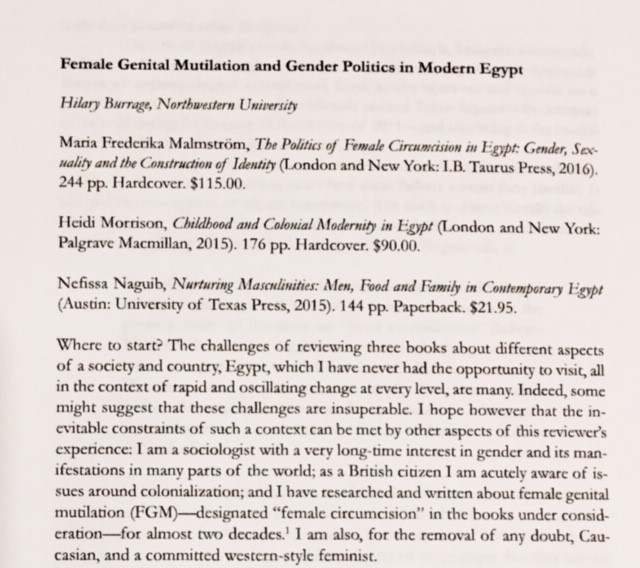
In 2018 I wrote a review of three books on Egyptian gender politics for the journal Left History. This essay has just now been published in Vol. 22, No. 1 (2018). In my review I seek to understand the rationales by which female genital mutilation (FGM) continues in Egypt in a context where it seems both that many men strive to maintain patriarchy and also to demonstrate their nurturing intent, and that women try to reconcile their ‘modern’ and traditional roles. I am also critical in that field researchers did not challenge post-interview some respondents’ beliefs that FGM is necessary and harmless.
Maria Frederika Malmstrὅm The Politics of Female Circumcision in Egypt: Gender, Sexuality and the Construction of Identity (2016) I.B. Tauris, London and New York : 244 pp
Heidi Morrison Childhood and Colonial Modernity in Egypt (2015) Palgrave Macmillan, London and New York : 176 pp
Nefissa Naguib Nurturing Masculinities: Men, Food and Family in Contemporary Egypt (2015) University of Texas Press, Austin TX : 144 pp
Westminster FGM Event: ‘Cutting Season’ Film, FGM In Canada Petition, Role Of UK GPs And National FGM Centre Funding
It was good to be part of a Westminster FGM event kindly hosted by Sarah Champion MP and built around screening a documentary by Canadian film-maker Giselle Portenier. Three policy issues were identified in subsequent discussion: Canada’s need to confront FGM, better support for UK GPs caring for survivors and those at risk, and continued funding for the National FGM Centre. FGM is not only a global problem but also a domestic one, and governments everywhere should back practical frontline services, survivor care, and local advocacy, rather than treating eradication as someone else’s responsibility.
You can read this website in the language of your choice via Google Translate.
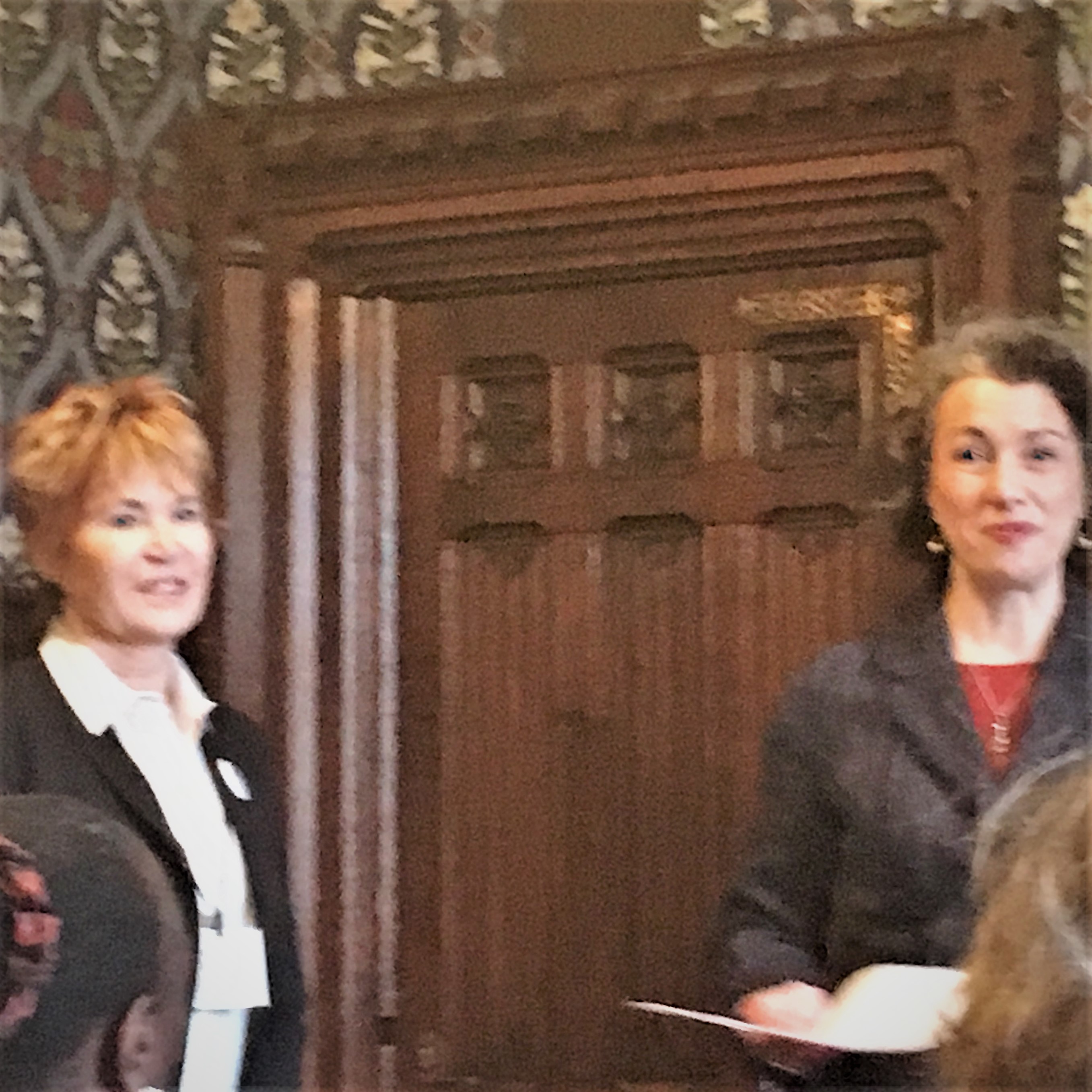 I was pleased to collaborate with Sarah Champion MP and her team on the event Sarah held in the House of Commons on 7 February 2019. A packed Jubilee Room audience saw the BBC version of Canadian film-maker Giselle Portenier’s documentary on FGM safe houses in Tanzania, followed by a lively Q and A. The panelists were Dr Phoebe Abe-Okwonga, Leethen Bartholomew, Cllr Anita Lower and me. Topics addressed included the need for Canada to take FGM seriously, how GPs in the UK can be supported to provide care for FGM survivors and potential victims, and funding for the UK National FGM Centre,
Progress to end FGM in the UK is being weakened by austerity, reduced public-health support, and Brexit-related political distraction. Laws and prosecutions matter, but they are not enough without sustained funding, community-based prevention, and accountable national leadership. FGM remains a human-rights abuse rooted in wider social and economic inequality, so cutting support to activists and specialist services makes eradication harder.
You can read this website in the language of your choice via Google Translate.
 Today (6 February) is the annual Day of Zero Tolerance for Female Genital Mutilation, a day when people around the world declare once again their commitment to stopping this cruel traditional practice. The UK has been amongst those leading the way in FGM eradication, but sadly there is almost no aspect of British life on which Brexit – leaving the European Union – would not impinge.
This post, written for the Analysis pages of The UK in a Changing World website, examines some serious difficulties which may arise for UK-led work to end FGM, if Brexit goes forward.
6 February: ‘Zero Tolerance For FGM’ Day In Britain And World-Wide
FGM is a severe human-rights abuse that still persists in Britain and worldwide despite laws, public awareness, and the annual Zero Tolerance Day on 6 February. Legal bans are not enough because the practice is sustained by social norms, weak public-health support, underfunded community work, and the need for stronger prevention, protection, and prosecution. Even in the UK there are thousands of girls and women at risk or living with FGM and /or other harmful practices, so ending it requires sustained political commitment, resources, and community engagement. Some formal mechanisms to identify those vulnerable, and to capture prevalence in the UK, are considered below.
You can read this website in the language of your choice via Google Translate.
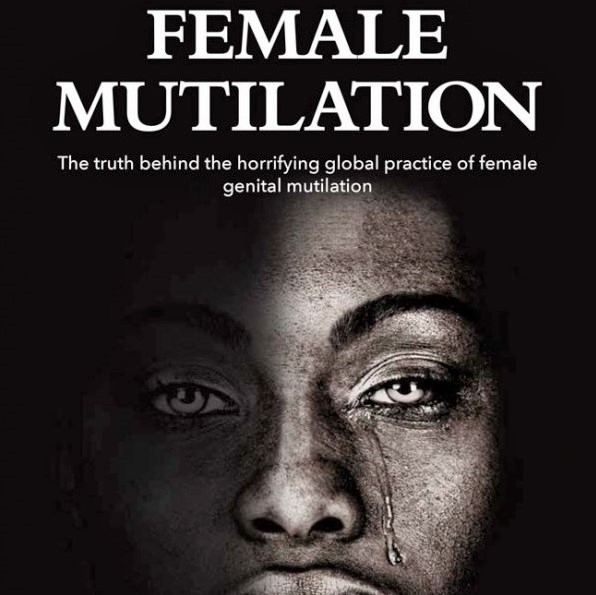 On 6 February 2003 the First Lady of Nigeria, Mrs. Stella Obasanjo, made the official declaration of Zero Tolerance for FGM during an event by the Inter-African Committee on Traditional Practices Affecting the Health of Women and Children (IAC). That date is now marked annually as we renew our determination to make FGM history; and much has indeed been achieved – many of us know far more about FGM now than then – but in the UK as much as anywhere there remains a great deal to be done before we can start to hope our task is accomplished. These are some thoughts about progress in Britain which I wrote for the Morning Star today:
In this presentation I argue that ending FGM in the UK needs practical, well-resourced action: better data, training, clear safeguarding routes, and stronger collaboration between professionals, survivors, activists, and communities; and FGM should be treated as a human-rights abuse and economic crime, not softened with euphemisms. Also, given the challenges of this work, it is vital to understand that everyone involved needs support to avoid burnout.
You can read this website in the language of your choice via Google Translate.
 I’ve been asked to make a short presentation at the Symposium to End FGM in Britain held at 55 Tufton Street, London on 31 January 2019. My allocated task is to present some practical suggestions about how activists can take things forward; and I have interpreted this in a general way, rather than as a clinician, lawyer or someone in any other specific position.
These are my first thoughts, seeking to find something for everyone who would like to join us in making FGM very firmly history.
#EndFGM Campaigners And Intactivists Against Male Circumcision (MGM) Have Many Concerns In Common
You can read this website in the language of your choice via Google Translate.
 Activists against female genital mutilation often insist FGM must not be called ‘female circumcision’; and it’s not, in formal dialogue, ‘cutting’, either. I agree with them. As the WHO, UNFPA, IAC, the Bamako Declaration and others such as the authors (me included) of the Statement on FGM insist, FGM is quite simply ‘Mutilation’.
But the idea that FGM is ‘worse’ than ‘male circumcision’ (MGM) is not very helpful. There is no need for competition as we seek to prevent harm to either gender. FGM and MGM are both issues of child protection and human rights. Mutual support and collaboration will take us further, more quickly.
Brexit, Youth And Media: Decelerating The Movement To End FGM?
 Friday 19 October 2018 saw us at another Oxford University International Gender Studies Centre / UnCUT/VOICES Press event considering approaches to eradicating female genital mutilation (FGM), this time with a focus on media and youth. One theme arising throughout the day was the need for greater evaluation of different ways to attempt eradication, but my contribution was more specific: I asked what is known about the impact which Brexit (the UK leaving the European Union) would have – if it happens – on work to end FGM?
I have been researching this question – to which I shall return here again when my enquiries are complete – for a while, but one illuminating response arrived in my Inbox just as I was travelling to Kellogg College in Oxford. It was this, from Julie Ward MEP, that we discussed in my session.
Art and performance are powerful ways to convey messages on difficult topics. Bullet Hole, a play by Gloria Williams about the circumstances in which three different London-based women who have had FGM find themselves, is a welcome addition to this genre. The play leaves no-one in any doubt that FGM has long-lasting and cruel outcomes, both physically and psychologically; but the message is also that with support women can move on. The question is, how often is such support available? And what are we doing anyway, to stop FGM?
Bullet Hole, presented by Naiad Productions, is showing from 2 – 27 October 2018, at the Park Theatre, Finsbury Park, London. The director is Lara Genovese, and the cast are Gloria Williams, Doreene Blackstock and Anni Domingo.
After the performance on Wednesday 10 October a number of us joined the audience for a panel discussion:
In The Name Of Your Daughter (An #EndFGM Film About Rhobi Samwelly’s Safe Houses In Tanzania)
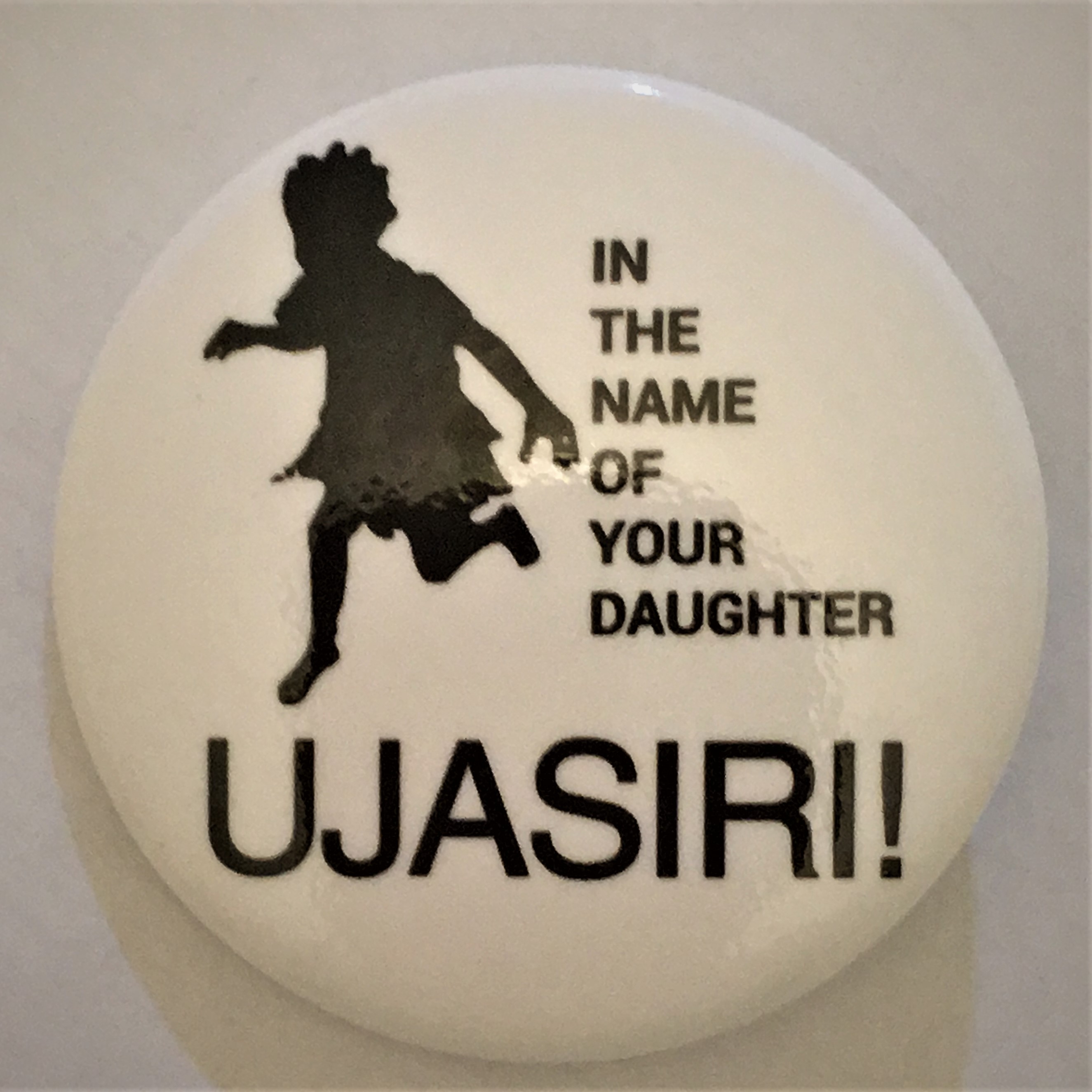 The Raindance Film Festival is an important event in the London arts diary. Yesterday (5 October 2018) we saw one of this year’s featured films: In The Name Of Your Daughter, a documentary about saving young girls in Tanzania from female genital mutilation (FGM) via a ‘safe house’, a place to which likely victims of this crime can flee, or are taken, for protection during the ‘cutting season’. Especially important here is how trust and understanding about FGM must be established to rebuild connection between these girls and their families and communities.
Kameel Ahmady: His Book ‘In the Name of Tradition’
 My friend and colleague Kameel Ahmady, the British-Iranian social anthropologist and #EndFGM / #EndChildMarriage scholar, has been detained in Tehran. His wife, Shafagh Rahmani, says he is held in Evin Prison on unknown potential ‘national security’ charges.
[January 2021: Kameel has now escaped to London.] This may be a good time to draw attention to Kameel’s first book in English, In the Name of Tradition, which reports on his research on female genital mutilation (FGM) in Iran.
The book was published by UnCUT/VOICES, a specialist #EndFGM publishing house owned by another very good friend, Tobe Levin. She and I edited it and were so impressed by the work that we added a jointly written Afterword. Here it is:
The Many ‘E’s Of FGM Eradication – And Why They All Lead Via ‘Economics’ And ‘Epidemics’ To Public Health
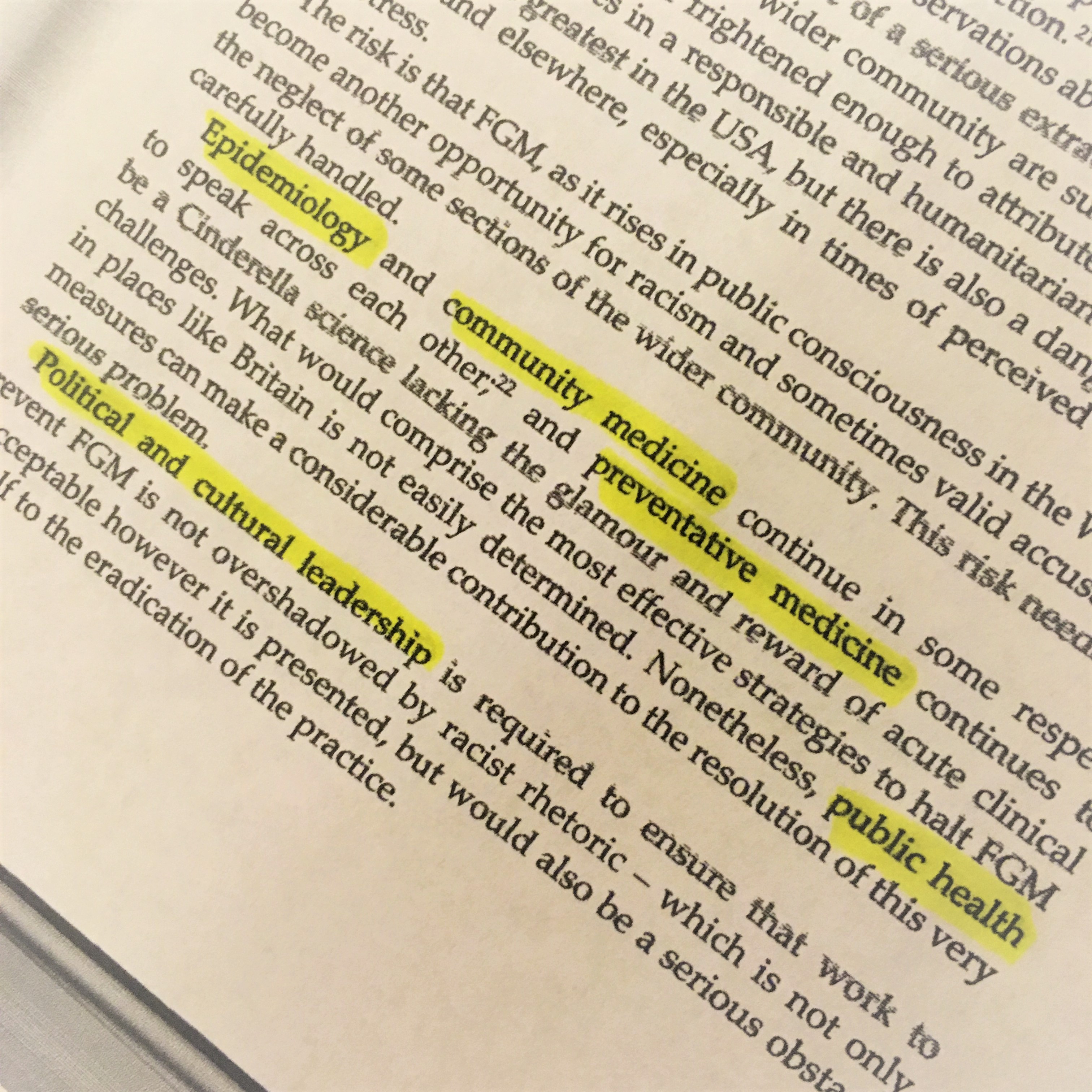 I was pleased to be invited to speak at the second University of Salford ONECPD Conference on Zero Tolerance for Female Genital Mutilation. I originally intended my presentation to be on The 4Es of Eradication but further events and consideration suggest there are at least 7 Es…. and that they all point the same way: The largely missing element in current eradication strategies is Public Health.
In this post I explain why I see that discipline or framework as critically important if we are to eradicate FGM forever.
The fundamental question for those who seek FGM eradication is not, ‘How long will it take?’, but rather, ‘What resources and leadership are required, finally to make FGM history?’
Female Genital Mutilation Destroys Lives And Communities
 The University of Salford is where, in 1973, I gained my M.Sc. degree in the Sociology of Science and Technology. I was therefore pleased to be asked to return at last, this time as a speaker at a ONECPD Conference on Tuesday 24 April 2018, on Zero Tolerance for Female Genital Mutilation (FGM). The topic I will address is The 4 Es of FGM Eradication – Engagement, Education, Enforcement and Economics.
I was also invited to write a blog on our Zero Tolerance for FGM theme for the ONECPD website. Here it is:
Read more…
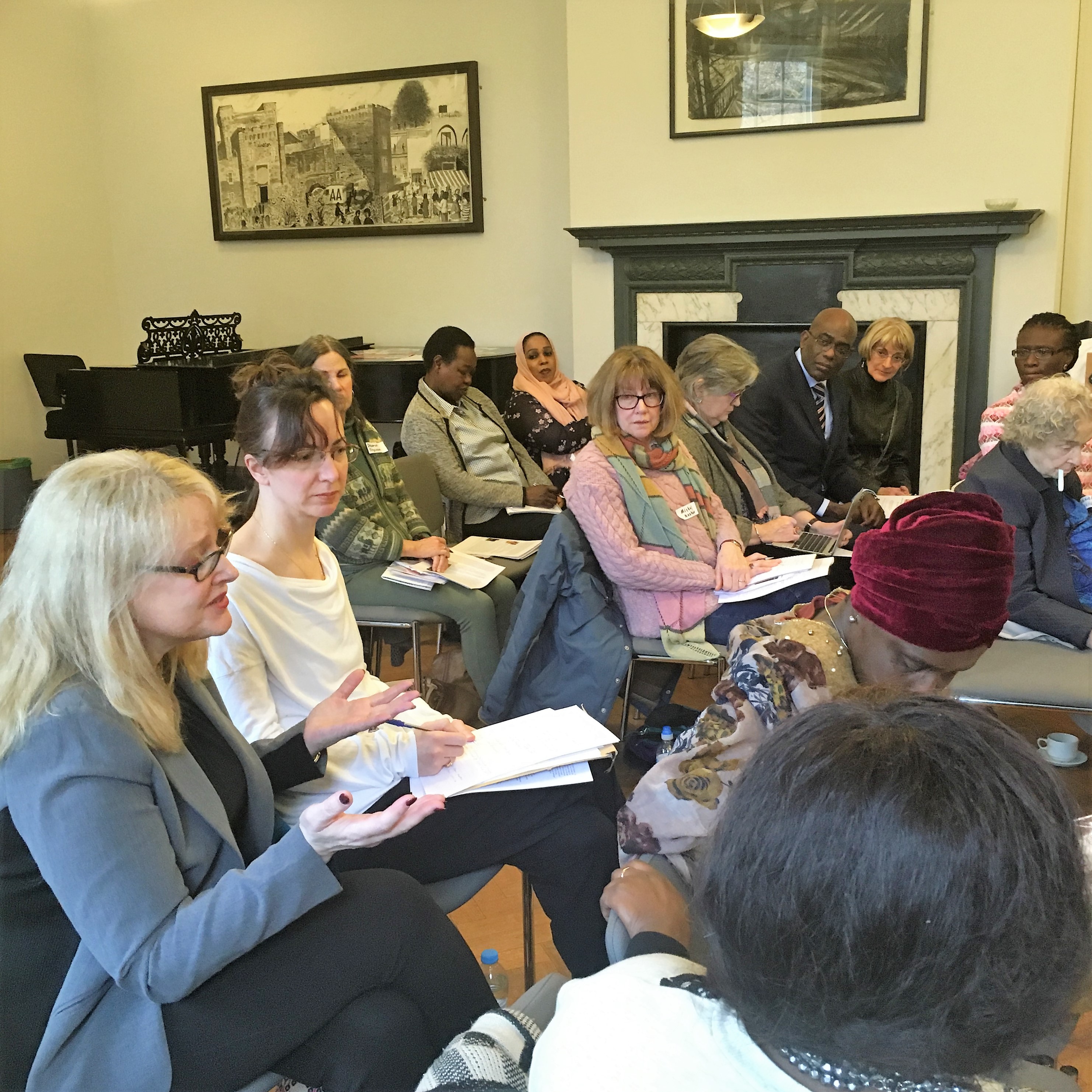 Friday 8 March 2018 saw another EndFGM seminar led by Dr Tobe Levin and hosted by Dr Maria Jaschok of the International Gender Studies Centre, Lady Margaret Hall, University of Oxford. The event was attended by academics (two from the USA), doctors, lawyers and activists. I contributed by leading an interactive session on the many economic aspects – still so often overlooked – of female genital mutilation and its eradication. My briefing paper (drawing on the event concept note Tobe Levin had prepared) follows below, with a visual record of our discussions:
Dare2Care – A New Website About Child Protection By Sarah Champion MP
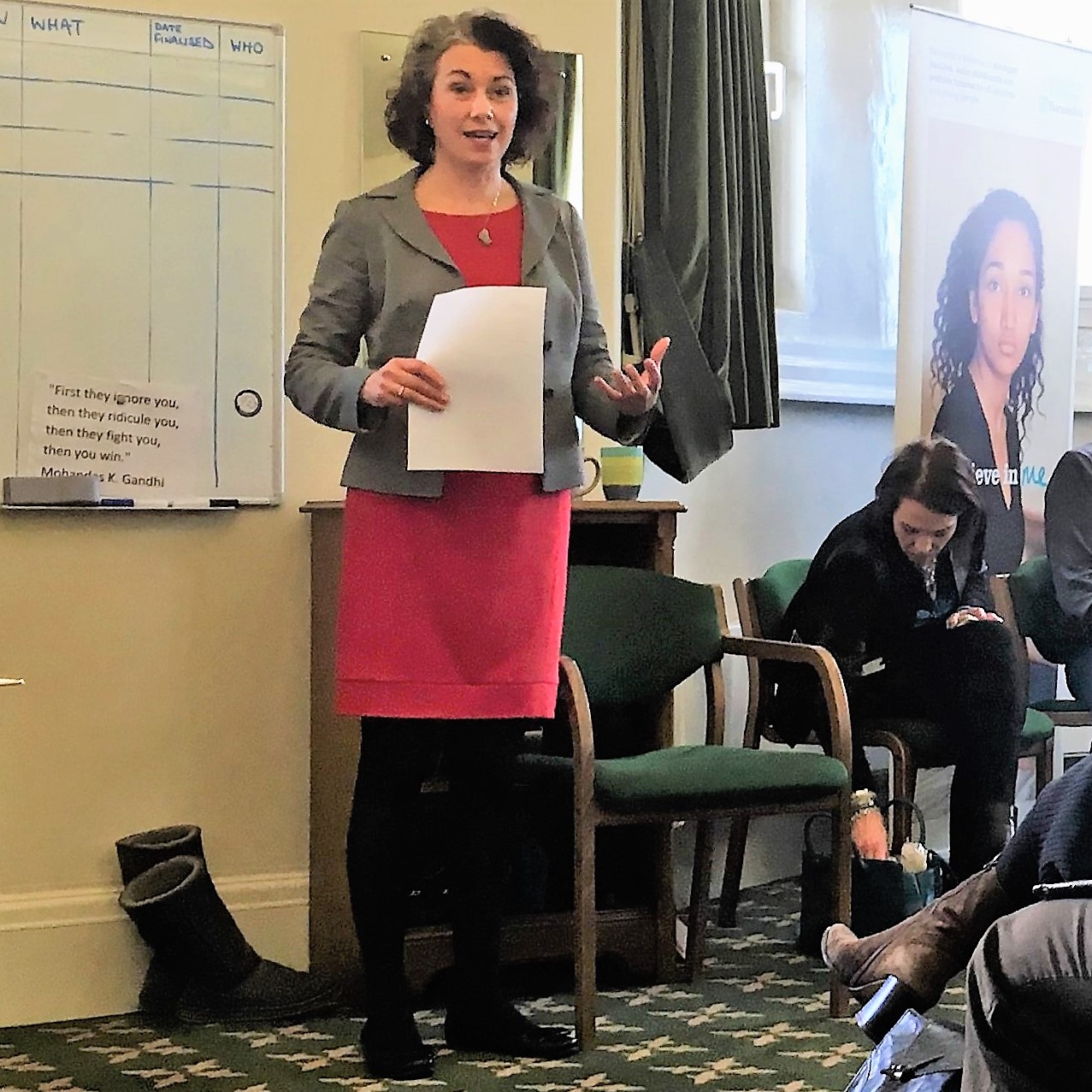 It was an indication of their commitment that, despite the snow storms, dozens of activists joined Sarah Champion MP in her Westminster office for the launch today (Tuesday 27 February) of Dare2Care, an online resource which focuses on the prevention of child abuse in the UK.
Sarah is the MP for Rotherham, a constituency which has seen multiple and very severe instances of grooming and other child abuse. Learning about these crimes must surely have been one of the reasons why she is so determined to help stop harm to children.
Sociology Reviewed: The Sociology Of Science And The Science Of Society
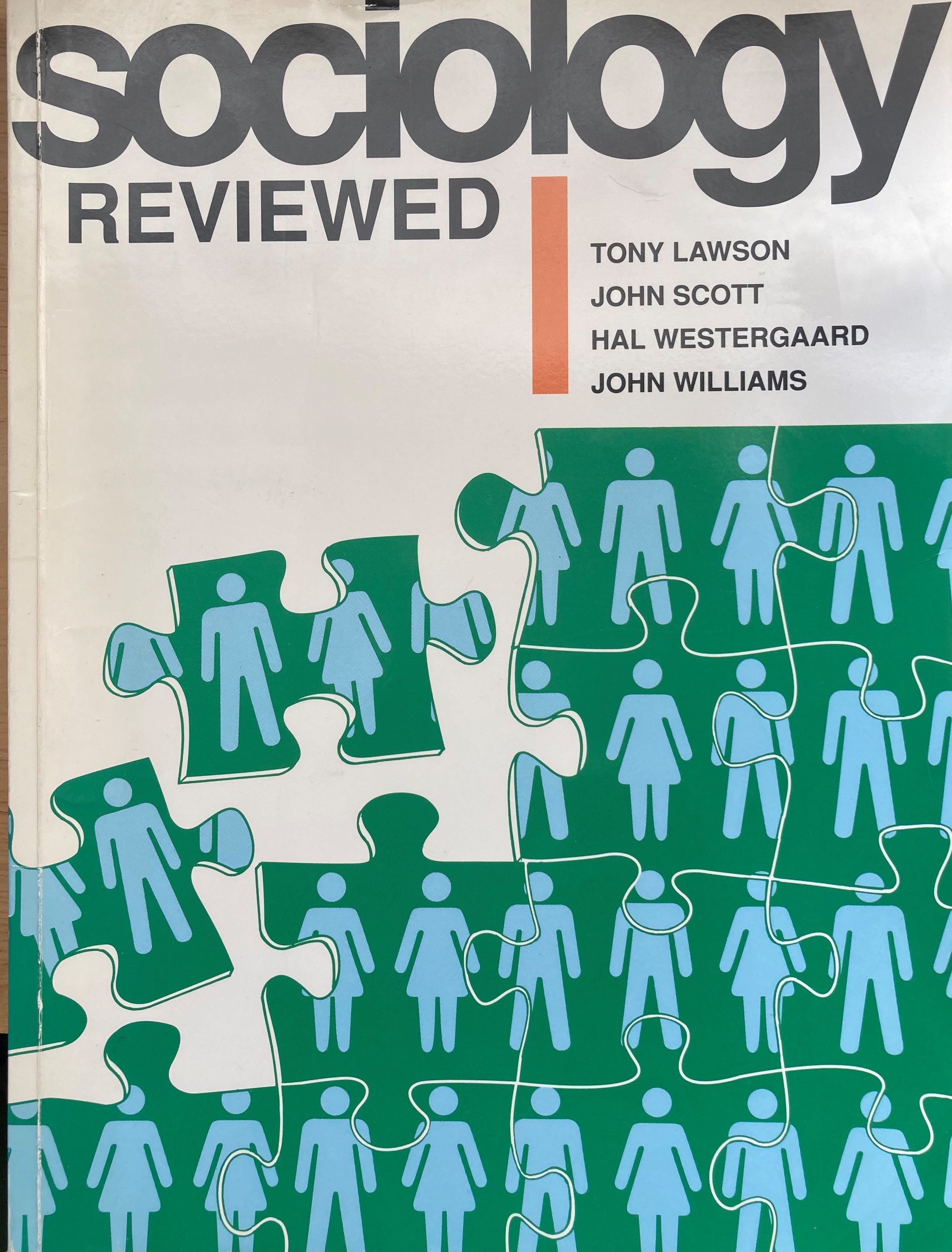 I studied the natural sciences in the late 1960s before ‘defecting’ to Sociology, where my original degree was in Social Science (Sociology, Psychology, Economics, Statistics etc) and my Master’s was in the Sociology of Science and Technology.
I was fascinated by it all: how research is chosen, funded and develops, and how ‘theories’ are constructed, both by real human beings via conscious and cultural choices . It was therefore a pleasure in 1993 to respond when the editors of Sociology Reviewed invited me to write about ‘The Sociology of Science and the Science of Society’ for their book.
And 25 years later, overall the same general observations still apply…
So below is the piece I wrote for Sociology Reviewed, in which I tease out how the natural and social sciences have much in common, both being shaped by the curiosities, available resourcing, investigatory skills and eventually negotiated paradigms of the people who develop any particular subject focus. Eternal ‘truths’ are a matter of individual belief, not science; but shared understandings based on tested and established evidence – even though what comprises accepted evidence, and the subsequent understandings (paradigms), may change over time – can take us a long way towards meaningful insights into the natural and social worlds in which we all live.
 17 November 2017: A workshop entitled Elephants in the Room: Hurdles – and Hope – for Ending Female Genital Mutilation (FGM) challenged us to consider some ‘elephants in the room’ in how we think about that particular form of gendered physical and psychological abuse. The event, co-sponsored by the International Gender Studies Centre at Lady Margaret Hall, University of Oxford, and the UnCUT/VOICES Press, enabled those present to share thoughts on aspects of FGM which may be both blatantly obvious and difficult to discuss. My contribution, summarised below, was on the Economics of FGM.
The ‘four Es’ of Eradicating FGM are Engagement, Education, Enforcement and Economics.
But perhaps there is also a fifth ‘E’ – because in the context of this seminar Economics is the Elephant in the room….

 Hilary Burrage