International Women’s Day 2021 is both a celebration of women’s achievements and a reminder of persistent gender inequalities. It highlights how the day has historically been a moment to call for change in rights, representation, and everyday treatment of women, while also acknowledging the ongoing work needed to achieve real equality in all spheres of life.
You can read this website in the language of your choice via Google Translate.

It was in the 1980s that my mother (now a centenarian) first told me about female genital mutilation (FGM). She was active as a Quaker and as a member of Amnesty International (UK), and somehow this awful practice had come up in a discussion. Could these stories of FGM be true, she asked? I promised, with my medic sister, to do my best to find out.
How could I know way back then that this earnest question by my Mum would come to expand my horizons, extend my networks and friendships, and shape my life? Read more…
Kameel Ahmady, a British‑Iranian anthropologist, was arrested in Tehran in 2019 on state‑security charges and in December 2020 sentenced to over nine years in prison plus a large fine. He describes the trial as politically motivated, riddled with legal flaws and orchestrated by hard‑line security forces who portrayed his research on harmful traditional practices (such as child marriage and FGM) and engagement with UN‑style development goals as “infiltration.” After enduring solitary confinement, harassment and surveillance, he fled Iran in late December 2020 and made his way to Britain to continue his social‑scientific work from abroad, while insisting on his innocence and vowing to keep campaigning for reform.
You can read this website in the language of your choice via Google Translate.
 My friend and colleague, the social anthropologist Kameel Ahmady, is a British-Iranian who was arrested in Tehran in August 2019 on charges concerning state security. In December 2020 he was found guilty by the court of the Islamic Revolutionary Guard, and sentenced to more than nine years in prison, along with a truly massive fine. What follows is his Statement on his work in Iran, the trial and his subsequent decision to escape to Britain.
A summary of events to date is available here.
Kameel Ahmady: His Defence Appeal Against Imprisonment
Social anthropologist Kameel Ahmady, a British‑Iranian, was arrested in Tehran in August 2019 and later sentenced by an Iranian Revolutionary Court to more than nine years in prison on vague state‑security charges linked to his research on sensitive social issues such as child marriage and female genital mutilation. In his 2020 defence appeal he challenges the accusations as politically motivated, arguing that his academic work and NGO‑funded research were wrongly framed as “infiltration” and “subversion.” Denied proper legal representation and facing repeated procedural violations, Ahmady fled Iran and reached Britain, making his defence and verdict public to expose what he calls an unjust, politically driven prosecution designed to intimidate civil society and researchers.
You can read this website in the language of your choice via Google Translate.
My friend and colleague, the social anthropologist Kameel Ahmady, is a British-Iranian who was arrested in Tehran in August 2019 on charges concerning state security. In December 2020 he was found guilty by the court of the Islamic Revolutionary Guard, and sentenced to more than nine years in prison, along with a truly massive fine. He decided however to escape from Iran and now lives in Britain. What follows is the English version of his appeal, written in Farsi, against the judgement.
A summary of events to date is available here.
I decided to make the main parts of my verdict and summary of my defence public in order for people to know how and why I was sentenced, accusations I have countered with real evidence that I believe will prove my innocence. Let them be recorded in history, which is the best judge.
Kameel Ahmady
Kameel Ahmady: Verdict Of His 2019-2020 Trial In Iran
British‑Iranian social anthropologist Kameel Ahmady was arrested in Tehran in August 2019 on state‑security‑related charges and, in December 2020, convicted by Tehran’s Revolutionary Court and sentenced to over nine years in prison plus a heavy fine. The verdict cited alleged “cooperation with the hostile state of the USA,” possession of a pepper spray, a litre of alcohol, and a taser, and accused him of promoting Western and human‑rights values undermining Islamic family law. After his appeal was rejected, Ahmady decided to flee Iran and now lives in Britain, publishing his verdict and defence to show what he regards as a politically motivated, flawed trial.
You can read this website in the language of your choice via Google Translate.
My friend and colleague, the social anthropologist Kameel Ahmady, is a British-Iranian who was arrested in Tehran in August 2019 on charges concerning state security. In December 2020 he was found guilty by the court of the Islamic Revolutionary Guard, and sentenced to more than nine years in prison, along with a truly massive fine. He decided however to escape from Iran and now lives in Britain. What follows is a slightly abbreviated English version of the original judgement, which was written in Farsi.
A summary of events to date is available here. Read more…
Kameel Ahmady Sentenced To (More Than) 8 Years In Prison
In December 2020, British-Iranian social anthropologist Kameel Ahmady was sentenced by a Tehran Revolutionary Court to prison for “subversive” research. While initial reports indicated an eight-year term for collaborating with a “hostile government,” official court records cited a total sentence of nine years and three months, plus a substantial fine. Ahmady, known for his studies on child marriage and female genital mutilation, decried the process as legally flawed, citing 100 days of detention without legal counsel and farcical court sessions. He subsequently fled Iran to escape the imprisonment and has since resided in Britain.
You can read this website in the language of your choice via Google Translate.
My friend and colleague, the British-Iranian anthropologist Kameel Ahmady, was yesterday sentenced by a Tehran court to (more than) 8 years in prison in Iran.
Kameel’s research is on topics such as female genital mutilation, child marriage and informal / ‘white’ marriage. Below is a statement released today:
MEDIA RELEASE
Sunday 13 December 2020
British-Iran Anthropologist and Researcher Sentenced to 8 years by Court in Tehran
Joining The Dots: Why FGM Studies Must Be A Distinct Discipline
Today I argued at a Kings College colloquium that Female Genital Mutilation (FGM) must be established as a distinct, multi-disciplinary field of study within professional curricula. Current training often fails to provide a comprehensive understanding of the issue, which is necessary for effective prevention and eradication. By integrating “FGM studies” into the education of healthcare providers, social workers, and other professionals, institutions can better equip individuals to address the complexities of this human rights abuse. A rigorous, consolidated academic approach is essential to tackling the systemic nature of FGM.
You can read this website in the language of your choice via Google Translate.
 Thursday 10 December 2020 was the final event in the Kings College, London Autumn series of presentations on Patriarchal Inscriptions. My own contribution that day concerned the urgent need for an academic field of ‘FGM Studies’.
It is a truism that ‘science’ sees only what it chooses to consider. The current Covid-19 pandemic (70+m cases) has received many multiples of the resources available to address FGM (200+m cases). Further, subject disciplines (e.g. Public Health, if not Epidemiology as such) which illuminate disadvantage are less likely to gain political favour. Reflecting on this, I called my talk
Going solo, passing the buck or joining the dots?
Why a multi-disciplinary curriculum is essential in professional training (and practice) to eradicate female genital mutilation.
The current Covid-19 pandemic offers an opportunity to explore and compare the differences in approach between an acute viral epidemic and an enduring, entirely human agency / socially activated one such as female genital mutilation (FGM). It is nonetheless vital that both be addressed.
Populism is increasingly pushing many democracies toward authoritarian rule, as some elected leaders openly disregard democratic norms, human‑rights protections, and scientific evidence on issues such as climate change and the pandemic. Such politicians rely on “alternative facts” yet are chosen by voters, underscoring that the real challenge lies in how citizens relate to democracy. Are Joe Biden’s 2020 US‑election victory and Kamala Harris’s historic role hopeful signs that mainstream, liberal democracy can still push back against populist, often autocratic tendencies if voters engage critically and knowledgeably?
You can read this website in the language of your choice via Google Translate.
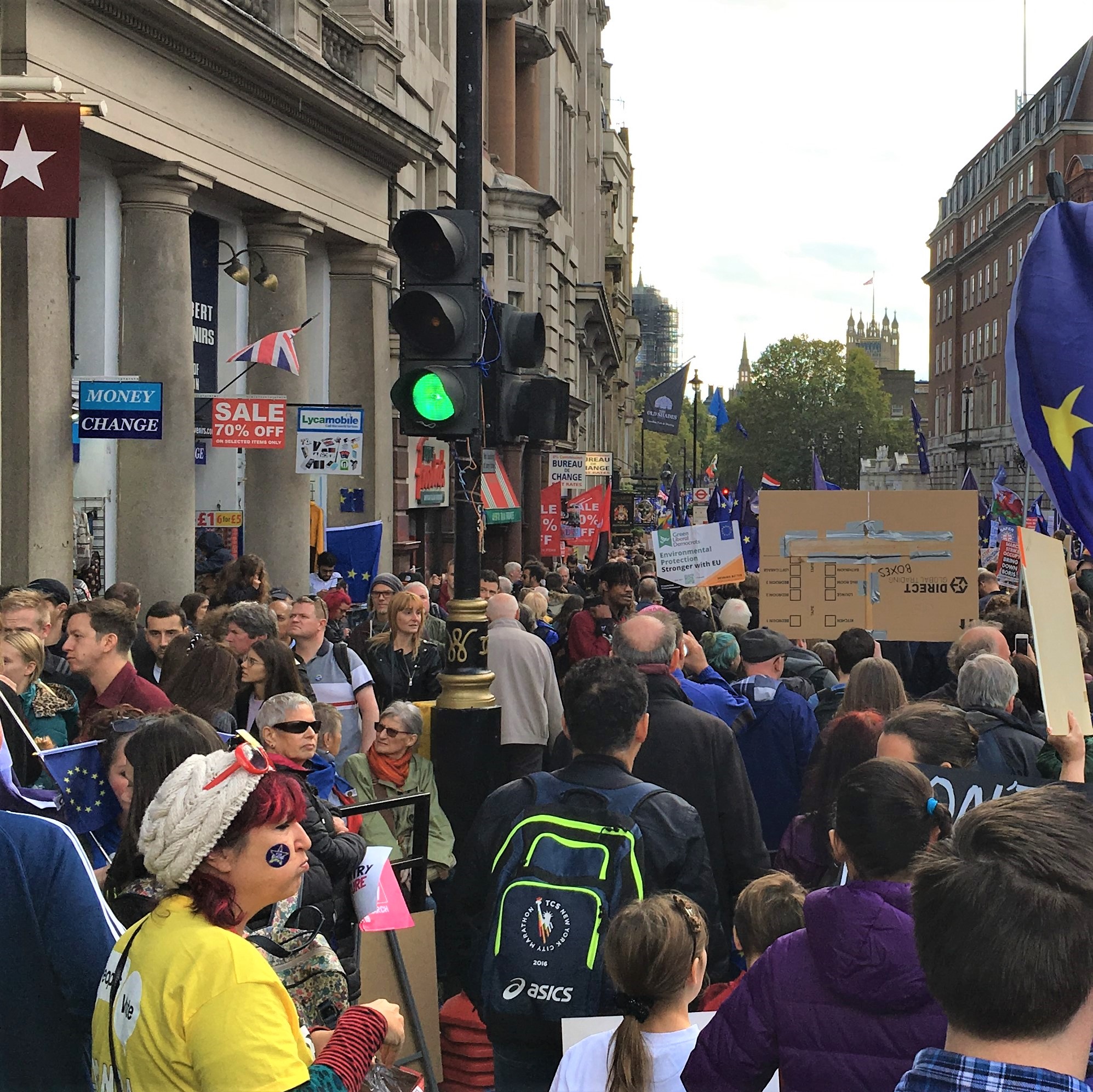 Sometimes we have to think beyond the specific, and examine the wider contexts of our lives. The bigger picture is what has been bothering me for a long while, as we try to defend the rights of children and vulnerable adults in a currently very challenging global setting. Our human rights, our health and even the well-being of the planet itself are currently threatened by the increasingly careless way that some first world states politicians at all levels are disrespecting, even disregarding, democracy.
Climate change? Covid-19? Communities? Seemingly irrelevant to the powerful (and usually male) autocrats who lay claim to be our political leaders. Often, they rely on what a US press secretary once termed ‘alternative facts‘. But these politicians are elected by us, or at least by our fellow citizens.
In The Guardian of 3 November 2020 the columnist Zoe Williams rightly reminds us that the refocusing of politics lies in the hand of voters. How, she asks, can we democratically resist populism, which is the route to power of many autocrats and worse?
This is the Guardian letters response which I and, independently, two other readers (Michael Meadowcroft and Derrick Joad) offered to her question:
FGM is complex. It is non-medical injury to female genitals at a global epidemic scale (200M+ affected, 3M more yearly), inflicting lifelong health damage. Multi-sector collaboration is essential —clinicians, lawyers, educators, economists—encompassing pressure points like economic ties (bride-price, lost education), cultural fears, medicalization risks, and psychological intergenerational trust. Prevention via personal human choice is key; enforcement and care alone are insufficient. So who can make this happen?
You can read this website in the language of your choice via Google Translate.
 Many women and girls seek help only when the harm of FGM has already reached them and they need urgent attention for gynaecological or obstetric problems; and often, like the medics who care for them, other sectors of the FGM prevention community are too hard pressed and focused on the imperative for action to have much time to reflect on the wider contexts in which this cruel abuse of women and girls’ human rights occurs. A while ago I joined an online conference BAME Birthing with Colour to talk about FGM and the issues arising from it, which encompass many complex challenges for those aiming to end this harm.
In preparing my presentation I drew on a wider social, psychological and economic analysis of FGM, in the hope that such an overview can enhance perspectives around the important work in which activists and professionals are engaged as they strive to make FGM history forever. Below are some notes I made for my presentation, now updated. I hope these may still be useful as we all continue to seek ways to finally eradicate FGM, a procedure where the female genital organs are injured or changed for no medical reason.
An Economic Deficit Index for FGM? Human Capital, Sustainable Development And Land
Do we need an “Economic Deficit Index” for Female Genital Mutilation (FGM) to force policymakers to recognize the practice’s financial toll alongside its human rights abuses? By correlating FGM prevalence with World Bank Human Capital Indices and UN development data, can we emphasise how countries with high FGM rates are disproportionately hindered in health, education, and economic growth? And should we also connect FGM to patriarchal land ownership issues, suggesting it relegates women to chattel status? Perhaps now is the time to demand rigorous economic scrutiny of FGM to prove it damages national economies, potentially pressuring leaders who remain indifferent to the humanitarian argument alone?
You can read this website in the language of your choice via Google Translate.
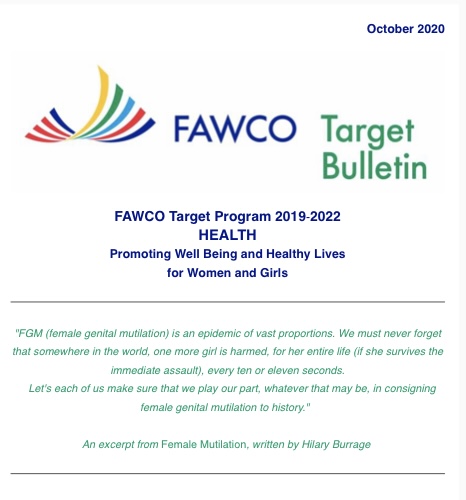 FAWCO is an American / International women’s voluntary organisation which promotes peace and international goodwill. This year FAWCO has chosen to address issues around FGM (female genital mutilation), so it was good to talk via the internet with members yesterday about the connections between economics and FGM. There is now some general recognition of the costs which would accrue if the health consequences of FGM were properly addressed, but still little acknowledgement of the multiple other economic and resource costs and implications of this cruel practice.
Recent years have seen the creation of a number of public health and policy indicators for specific factors which demonstrate the wellness or otherwise of particular groups within societies.
Now, I suggest, is the time to extend that trend to include an index for the economic impact of female genital mutilation and maybe other traditional / harmful practices.
Perhaps if we measure the economic impact ‘as well as’ the harm to real human beings, more politicians and policy makers will sit up and take notice?
I have written several times before about ‘the economics of FGM‘, so to take the current discussion forward this time I examined some less frequently considered factors which seem to be relevant to the interface of FGM (and other gendered / traditional harmful practices) and economics.
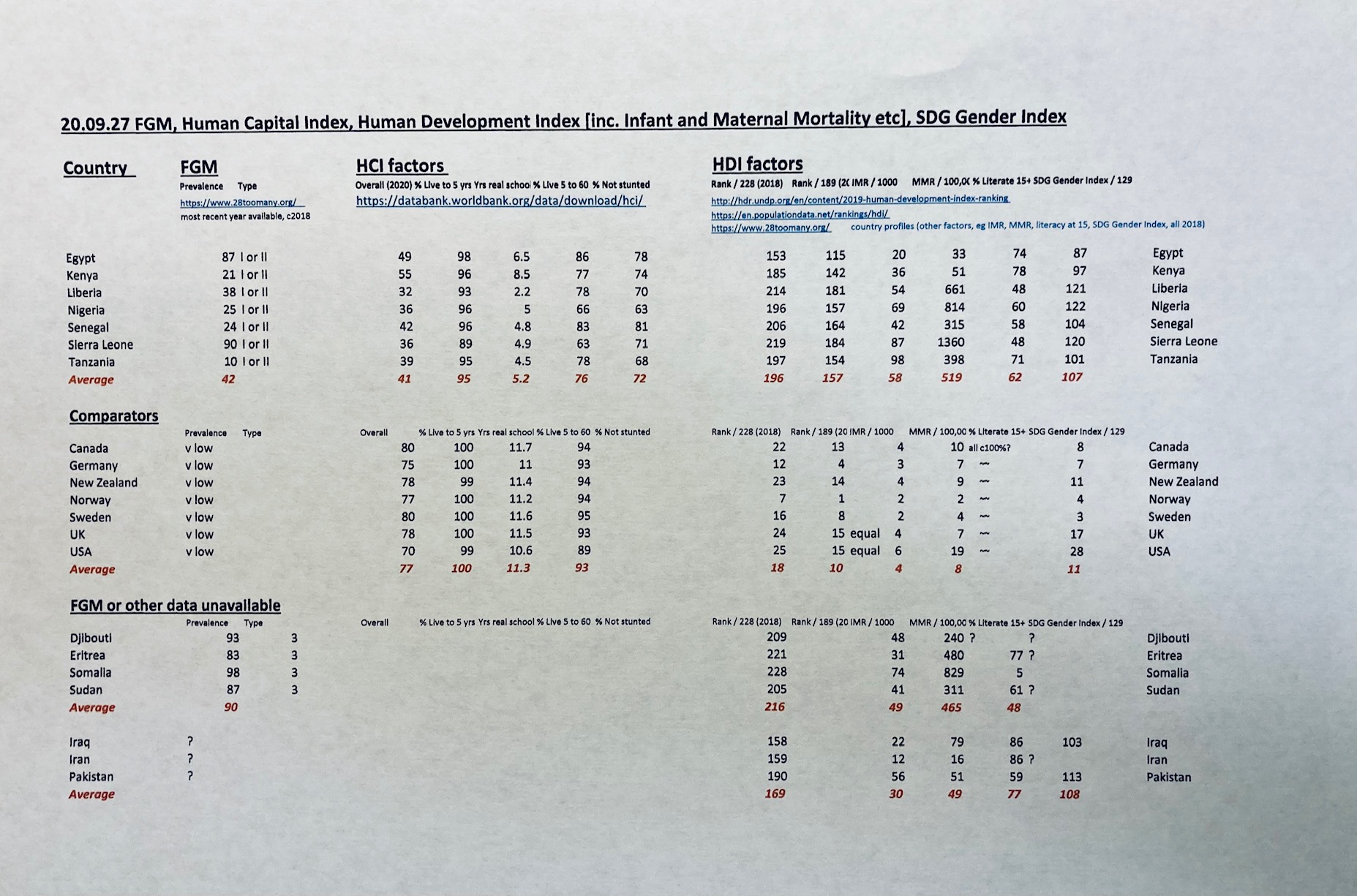
I chose to look at four groups of countries, actually a fairly random selection from those possible:
- Seven countries from the ‘developing’ world which have an incidence of FGM ranging from 10% to 90% of Types 1 and/or 2 FGM: Egypt, Kenya, Liberia, Nigeria, Senegal, Sierra Leone and Tanzania (this last country selected because FAWCO members had a few weeks previously read the book Among the Maasai by Juliet Cutler, an account which includes reference to FGM of her work as a volunteer teacher in Tanzania).
- Seven ‘first world’ countries where the incidence of FGM is very low, and predominantly as a result of the diaspora from other locations: Canada, Germany, New Zealand, Norway, Sweden, U.K., and U.S.A.
- Four ‘developing’ countries with a high incidence of FGM Type 3: Djibouti, Eritrea, Somalia and Sudan; and
- Three countries in the Middle East where FGM is known to occur, but prevalence is uncertain: Iraq, Iran and Pakistan. very little relevant data is available for these last three locations, but this too is significant. Despite some researchers’ heroic efforts, we don’t know enough about FGM and other socio-economic / heath factors in these countries.
This is only a very approximate exercise. I simply wanted to see how much advantage or otherwise in respect of matters such as the life chances people in these various groups of countries have, and whether rates of FGM seem to follow the same way. The data I have cannot demonstrate any causalities, but perhaps they reflect certain realities for those concerned.
The factors considered here are
prevalence of FGM as a percentage of women age 15-49, and type of FGM, in each country;
the Human Capital Index as estimated by the World Bank:
including the percent of children who survive to age 5, number of ‘learning- adjusted’ (effective) years of schooling – otherwise referred to as LAYS – which children receive, percent of those surviving at 5 who live to age 60, and percent of children who grow up ‘not stunted‘;
2018 rank order of human development index (advantage) of each country, in the total of 228 nations in the world (which I list here under the general United Nations Human Development Index heading, below); and
the Human Development Index itself:
2017 rank order of the 189 nations for which HDI data is available, Infant Mortality Rate (for every 1000 live births), Maternal Mortality Rate (for every 100,000 women giving birth), and percent of the population literate at age 15 (varying years, between 2016 and 2019) and the Sustainable Development Goals Gender Index for 129 countries in 2019.
These groups of countries are selected rather randomly – I do not purport here to produce a formal analysis of the interplay of a wide range of factors which will influence the life experience of individuals in the various categories. Nonetheless, I hope that what we see will prompt further questions about how a number of starkly advantageous or disadvantageous influences on a person’s (specifically, a child or a woman’s) life connect in different countries.
Life chances
It is evident that general rates of FGM coincide also with some measures of life chances – countries with higher rates of FGM also have higher rates of maternal and infant mortality and life expectancy, and lower rates of literacy and lower rankings for the Human Capital and Human Development Indices.
(NB It is important here to note that the prevalence of FGM does not divide neatly by national borders; a tribe or clan which does or does not practise FGM may locate across one or even several national boundaries, so that national statistics on FGM give only the most general reflection of actual incidence at any one locale in that country.)
Despite these only very general indications however, it is evident that countries with a significant prevalence of FGM really cannot ‘afford’ the extra disadvantages which it surely brings. As we see, these nations already face enormous challenges in regard to health, education, social policies and other economic factors. (Indeed. as the recent paper by Batyra et al indicates, socio-economic disadvantage seems to be widening as disparities in the prevalence of FGM also become more marked.)
Gendered factors
We see even in these general data that gender is significant. Nations with significant incidence of FGM are also nations with a lower SDG Gender Index. (SDGs are the United Nations ‘Sustainable Development Goals‘, number 5 of which refers to gender equality and empowerment.)
The average (mean) global ranking for the ‘first world’ gender indices listed here is 11 out of 129 countries; the mean for the selected countries with types 1 or 2 FGM is 107. We don’t actually know what the ranking for the countries listed with the ‘type 3’ (extremely invasive) FGM might be, if they were included in the ranking.
Health: a very significant factor here. Maternal mortality ranges from 8 deaths per 100,000 live births in first world countries, to somewhere around 500+ deaths per 100,000 events in some of the developing world countries listed. We already know that FGM increases the likelihood of maternal ill-health (morbidity) and death; and we also know that the ‘medicalization‘ of FGM – it being performed by clinicians – does not, and cannot, make it safe.
Land: moving on from issues specifically around health and well-being, the matter of gendered land ownership is critical in every corner of our planet, first world or otherwise. In much of the developing world (and quite large swathes of the first world) the question of who owns what land is difficult to answer. The land has always been there, and over the centuries many claims, mostly by men, will have been made on it.
In some parts of the globe however only those considered ‘adult’ may have any stake in the land (and/or perhaps also other property). In this way any women who has not undergone FGM is excluded (and maybe also any man who has not been ‘circumcised‘*). A woman is not ‘adult’ until she has experienced this rite of passage. She may not even be permitted to own any land unless she has been ‘cut’.
[*See also this report on the OHCHR Sande and Poro societies in Liberia, and Onni Gust’s discussion of attaining adulthood, genital mutilation, land and patriarchy in the context of colonialization.]
What next?
We have considered many times on this website the critical connections between FGM and economics. We know that a girl or woman who has FGM may become simply an object or chattel to be exchanged between men; we know it that FGM has its own local economies, providing paid work for many different people in many different settings; we know it can be very seriously harmful to the health and well-being of women, and especially of mothers and children; we know it often excludes girls and young women from pursuing their education and their employment / professional ambitions.
I would suggest that all these data, where available, offer hard evidence for my view that FGM is an extreme form of patriarchy incarnate.
But still, despite the efforts of many, FGM continues. Something more needs to be done, if we are to gain enough leverage finally to make FGM history.
Perhaps we need an Economic Deficit Index for Female Genital Mutilation?
This Index would tell us, for each country or region, how much economic harm is being inflicted by the continuation of FGM:
- What is the overall labour market damage of FGM?
- How can the skills of those treating FGM conditions (or conducting medicalized FGM) be put to more productive use?
- By how much is the care of children affected by FGM? How many young lives are lost because of it, and at what cost?
- What damage to literacy is caused by FGM?
- To what extent is gender equality affected by FGM?
- How much tax and related revenue is lost to given nations because of the harm of FGM?
The questions could go on… Some research has been undertaken on the costs fully to repair damage already inflicted on those girls and women who have been ‘cut’. Now we must add to those costs the other economic burdens discussed above, as well, no doubt, as others.
In the internet-enabled event with FAWCO which I was fortunate enough to join, I shared some of these ideas (Youtube video) and we considered several further aspects of the issues.
And Tharien Van Eck (who is leading the FAWCO FGM initiative) and I produced a post-event list of suggestions around how we, every one of us, can help to stop FGM.
The next step, I believe, is to become very hard-headed, and to demand that the same economic scrutiny is applied to FGM as to other matters of global economic importance. My own efforts here are of little consequence, beyond showing that FGM very certainly does have detrimental economic impacts; but I hope it’s a start.
We all know that FGM is a huge cruelty and human rights abuse, but still some people in positions of power lack the will to do enough about this.
Let’s show them, beyond any doubt, that FGM harms their national wallets ‘as well as’ the wellbeing of their nation’s women.
Read more about FGM and Economics
Read more about Patriarchy Incarnate
~ ~ ~ ~ ~
Your Comments on this topic are welcome.
Please post them in the box which follows these announcements…..
~ ~ ~ ~ ~
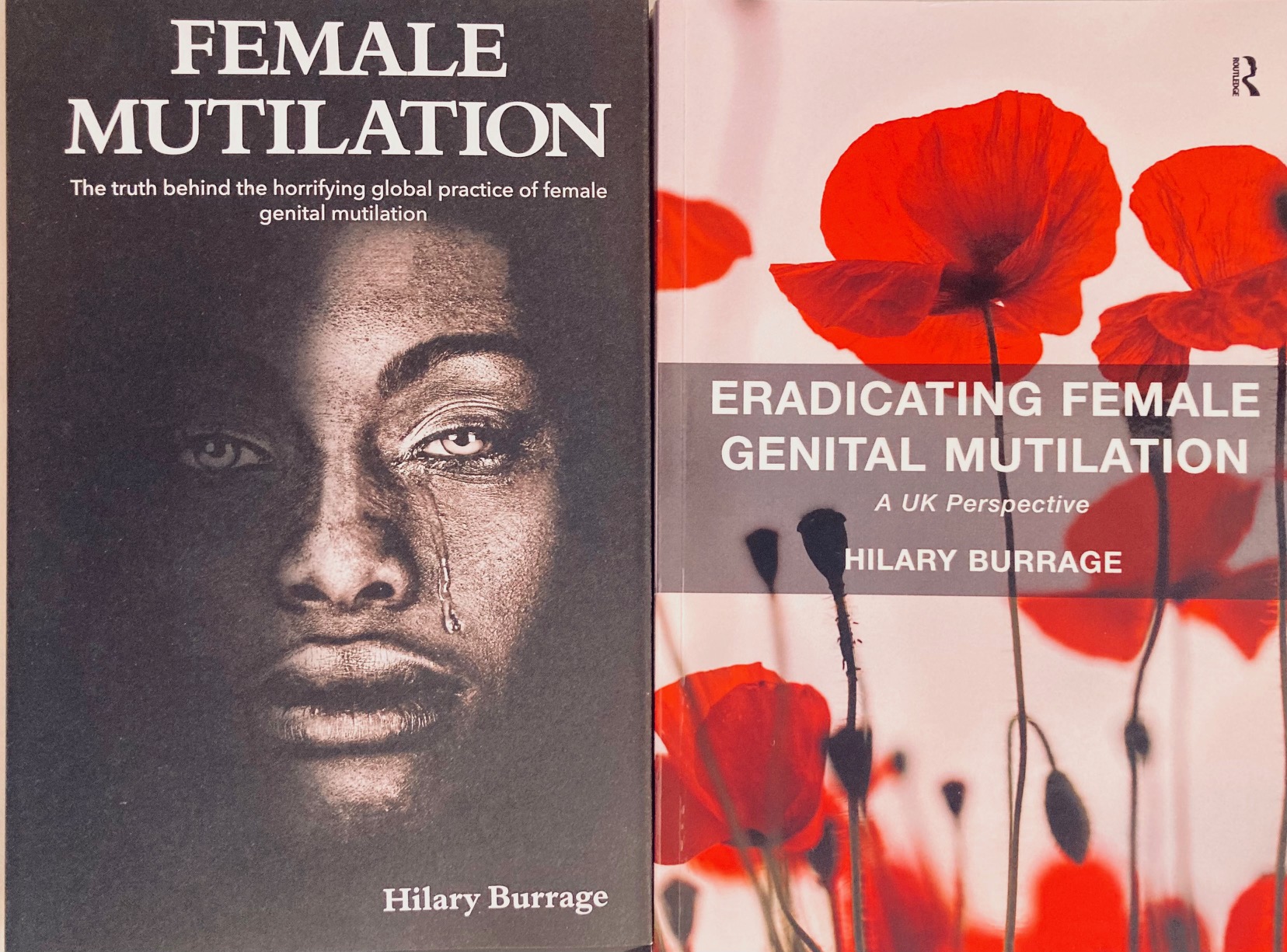
Books by Hilary Burrage on female genital mutilation
https://orcid.org/0000-0002-6684-2740

Hilary has published widely and has contributed two chapters to Routledge International Handbooks:
Female Genital Mutilation and Genital Surgeries: Chapter 33,
in Routledge International Handbook of Women’s Sexual and Reproductive Health (2019),
eds Jane M. Ussher, Joan C. Chrisler, Janette Perz
and
FGM Studies: Economics, Public Health, and Societal Well-Being: Chapter 12,
in The Routledge International Handbook on Harmful Cultural Practices (2023),
eds Maria Jaschok, U. H. Ruhina Jesmin, Tobe Levin von Gleichen, Comfort Momoh
~ ~ ~
PLEASE NOTE:
The Inter-African Committee on Traditional Practices Affecting the Health of Women and Children, which has a primary focus on FGM, is clear that in formal discourse any term other than ‘mutilation’ concedes damagingly to the cultural relativists. ‘FGM’ is therefore the term I use here – though the terms employed may of necessity vary in informal discussion with those who by tradition use alternative vocabulary. See the Feminist Statement on the Naming and Abolition of Female Genital Mutilation, The Bamako Declaration: Female Genital Mutilation Terminology and the debate about Anthr/Apologists on this website.
~ ~ ~
This article concerns approaches to the eradication specifically of FGM. I am also categorically opposed to MGM, but that is not the focus of this particular piece, except if in any specifics as discussed above.
Anyone wishing to offer additional comment on more general considerations around male infant and juvenile genital mutilation is asked please to do so via these relevant dedicated threads.
Discussion of the general issues re M/FGM will not be published unless they are posted on these dedicated pages. Thanks.
The 2020 Home Secretary’s stance on “Jasmine,” an 11-year-old asylum seeker, is hypocritical because courts found her at serious risk of FGM if removed from the UK. Britain publicly opposes FGM but still lacks good data, so giving children weaker protection in immigration cases, and wasting resources through a hostile asylum system. Does this case reflect unequal value placed on BAME and migrant lives, despite the UK’s anti-FGM commitments and funding?
You can read this website in the language of your choice via Google Translate.
 ‘Jasmine’ is 11 years old and has lived with her mother in the U.K. for some 8 years, all her conscious life. They have only Bahraini citizenship, but are of Sudanese origin. The Home Secretary wants to refuse them asylum although the Family Court has ruled very clearly that Jasmine is in serious danger of Female Genital Mutilation (FGM), and thus deportation should not happen.
The UK has a zero tolerance policy on FGM. It is hypocritical to want to send a child to a place where that will likely be her fate, and still to hold no proper data on the incidence of these sorts of cases.
Many of us are supporting a petition to protect Jasmine which has been instigated by Dr Charlotte Proudman, a human rights barrister. You may wish to add your name too:
Protect Jasmine from FGM and allow her to stay in the UK
.
Female Genital Mutilation And Economics
FGM is not only a human-rights abuse but also an economic harm, costing survivors, families, communities, and states through healthcare, lost productivity, early marriage, and weaker education and social participation. The practice is sustained by money and power, and the girl’s body and future are effectively traded as commodities for others’ benefit. Should policymakers to use economic arguments to end FGM, since showing the resource costs may help persuade people who are unmoved by human-rights appeals alone?
You can read this website in the language of your choice via Google Translate.
It was a pleasure this morning to be the speaker for a Zoom seminar hosted by Oxford Against Cutting and chaired by their Community Outreach Director, Kaddy Touray. Our theme was Female Genital Mutilation and Economics.
I addressed two aspects of this theme: first, the economic factors and impacts of FGM for individuals and families; and second, these factors and impacts for wider communities and nations. Below is a summary of my talk and of some of the discussion which followed it:
The 2005 Bamako Declaration by the Inter-African Committee (IAC), insists on retaining “Female Genital Mutilation” (FGM) as the precise term adopted by African activists in 1990 and endorsed by WHO, UN, EU, and African Union. Western-influenced alternatives like “Female Genital Cutting” (FGC) or “excision” dilute the harm’s gravity, ignore African women’s consensus, and risk transient change by avoiding confrontation. The Declaration demands organizations revert to FGM terminology and heed African voices against paternalistic overrides.
You can read this website in the language of your choice via Google Translate.
 The term ‘female genital mutilation’ (FGM) was adopted in 1990 by the Inter-African Committee (IAC) on Traditional Practices Affecting the Health of Women and Children, and in 1991 the World Health Organization (WHO) recommended that the United Nations adopt it as well. It has now been confirmed by the United Nations and the World Health Organisation. The turning point in this debate was the Bamako Declaration of 6 April 2005, issued by the sixth General Assembly of the IAC, in Mali.
Now, some fifteen years later, it is perhaps time to remind ourselves about the significance of this globally important step towards the eradication of FGM.
An lightly edited (abbreviated) version of the Bamako message follows below:
My review all these years ago of Eva J. Salber’s 1989 autobiography The Mind Is Not the Heart highlights how her life as a woman physician, epidemiologist, and social‑medicine practitioner spans South Africa, England, and the USA whilst also so admirably juggling motherhood and partnership. Her focus on social and political determinants of health and her commitment to poor and marginalised communities is notable. The book can however feel overly precise and pedantic as an autobiography, and its socio‑political message is sometimes uneven or unstructured, making it a slightly difficult, if rewarding, read.
You can read this website in the language of your choice via Google Translate.
 Eva J. Salber’s book, The Mind is not the Heart: Recollections of a Woman Physician, was first published in 1989, and I was lucky enough in 1990 to be asked to write a review of it for the journal Sociology of Health and Illness.
Thirty years later this book is still available, and people are still reading it. so here is my small contribution to Dr Salber’s literary profile.
The book is now available in hard and paperback, and on Kindle.
One further observation: I was startled on revisiting my review to see that, Dr Salber having emphasised the failure of South Africa and the USA to have a national health service, I actually ended my commentary with concerns about the viability of the British NHS, even back all those years ago when the UK was governed by a previous Conservative Government. Some things for the public good, Eva Salber might agree, require unceasing vigilance even when the battle seems to have been won.
Despite decades of activism and years marking the international “Zero Tolerance to FGM Day,” female genital mutilation remains a widespread human‑rights and public‑health crisis, even in the UK and other developed countries. FGM is rooted in patriarchal control and deeply entrenched traditions, but some global progress through legal bans, UN/WHO commitments, and grassroots campaigns has been made. How can we sustain multi‑level action—education, community engagement, survivor‑led movements, and stronger implementation of laws and services—to protect at‑risk girls and support those already affected? The Action:FGM Manifesto is one element of a way forward.
You can read this website in the language of your choice via Google Translate.
 The 6th February every year since 2003 has been International Zero Tolerance for Female Genital Mutilation (FGM) Day. It has also this year been an occasion for some of us to present at No.10 Downing Street, London, a Manifesto on FGM and other forms of harmful practice / gendered violence, for the attention of the British Prime Minister. The Manifesto is the work of the voluntary collaborative group Action:FGM. We have taken many months to refine the Manifesto and we seek to represent the views of a wide range of survivors, activists and others who work in the field of #EndFGM.
You can read the Manifesto below:
In this presentation at St Antony’s College, Oxford I explained why female genital mutilation (FGM) is “patriarchy incarnate,” functioning to maintain control over women’s sexuality and ensure their “purity”. While women frequently perform the act, men are often the “proxy perpetrators” who benefit economically and socially from the practice, which secures status, bride prices, and family honor. Despite its widespread harm, men usually possess little actual knowledge of the procedure. Addressing FGM requires challenging deep-seated patriarchal structures; engaging men in discussions about family nurturing could be a potential pathway to ending the practice.
You can read this website in the language of your choice via Google Translate.
 I visited St Antony’s College Middle East Centre, Oxford University, today (5 February 2020) as guest of Dr Soraya Tremayne, to give a presentation in the run-up to International Zero Tolerance for FGM Day tomorrow. My theme was the necessity to ensure that men are brought onside as activists to #EndFGM. I looked at ways in which, traditionally, men have been mostly unengaged in the realities of FGM (beyond their economic interests and an insistence on ‘purity’) and perhaps how, drawing on recent studies of masculine nurturative behaviour in Egypt, this might be changed.
My write-up of the presentation is below:
Social Research In Environmental Contexts (A DEFRA Science Advisory Council Paper, 2007)
In 2007 I was one of a small group of members from the UK Department for Environment, Food and Rural Affairs Science Advisory Council (Defra SAC) who produced a report on The Use of Social Research in Defra. I had several concerns about social research practices in environmental contexts, including overstretched social researchers despite excellent work, inadequate integration of social sciences into environmental policy, and insufficient resources for rigorous methods. Ethical lapses, poor interdisciplinary collaboration between natural and social scientists, and risks of flawed studies may lead to misinformed decisions on sustainability. How can we nurture better capacity-building and training?
You can read this website in the language of your choice via Google Translate.
 In 2007 I was one of a small group of people from the UK Department for Environment, Food and Rural Affairs Science Advisory Council (Defra SAC) who produced a report on The Use of Social Research in Defra.
Given the urgency – at last – now attached to demands that we face up to climate change and other global environmental challenges, this seems a good time to revisit that report.
Defra SAC Social Science Sub-Group‘s report to the Defra Chief Scientific Advisor (CSA) focused on the capacity and use of social research to inform and assist policy development within the Department.
Read more…
Our Human Rights, Civil Society And Brexit
Brexit endangers core human rights enshrined in the EU Charter of Fundamental Rights and the European Convention on Human Rights, both integral to UK law via the Human Rights Act. At risk are freedoms like speech, assembly, movement, and protection from arbitrary arrest, alongside threats to anti-FGM efforts, environmental protections, women’s rights (e.g., maternity, equal pay), workers’ rights, asylum policies, and health research. Might Brexit empower nationalism and a “police state” mindset?
You can read this website in the language of your choice via Google Translate.
 Human rights cannot be a matter of pick and mix. We either have our rights to liberty, safety, free speech, associations and faith of our choosing, and much more; or we don’t.
As I have explained before, I am very concerned about the impact that the UK leaving the European Union (EU), Brexit, would have on efforts to eradicate female genital mutilation (FGM) in Europe. But ‘just’ that one concern cannot be isolated from the many other issues which Brexit presents.
Brexit was conceived and supported by people who want the EU to fail, yet any UK government that is committed to the rule of law and democracy should want the EU to thrive…. One way emboldens forces of division and nationalism; the other way strengthens the project that was founded to resist those forces. (Rafael Behr, 16 October 2019.)
Medically Unnecessary Genital Cutting And The Rights Of The Child: Moving Toward Consensus
This academic paper, published today, claims there is often a double standard in Western law and ethics around medically unnecessary genital cutting of children, where female genital cutting is treated as a human rights violation while non‑therapeutic male circumcision is often tolerated or endorsed. In principle, all children have an equal right to bodily integrity and future autonomy, so genital cutting without a child’s informed consent is ethically problematic unless it is clearly medically necessary and in the child’s long‑term best interests. A consistent, rights‑based framework is required, applying the same standards regardless of a child’s sex or the cultural or religious rationale given for the procedure.
You can read this website in the language of your choice via Google Translate.
 It has always been my belief that male ‘circumcision’ (also known as Male Genital Mutilation or ‘Cutting’) is, like Female Genital Mutilation, a denial of the fundamental human right to bodily integrity – especially when the person concerned is too young, or otherwise unable freely, to give informed consent to such an act. Today a declaration to that effect, initiated by Brian Earp and edited and agreed jointly by 90 academics including myself, has been published. The text refers expressly to so-called genital ‘surgery’ or ‘modification’ in Western societies, but in large part I’d say it applies also to genital ‘cutting’ in any context.
Below is the abstract for the paper, which is published with open access in The American Journal of Bioethics 19(10):17-28:
Routledge International Handbook Of Women’s Sexual And Reproductive Health
I was pleased to contribute a chapter to this Handbook, which is a broad, interdisciplinary guide to women’s sexual and reproductive health, using a life-course, biopsychosocial, feminist, and international lens. My own chapter considers female genital mutilation and genital surgeries, covering physical and psychological harms, treatment, prevention, medicalization, and debates around male circumcision and terminology.
You can read this website in the language of your choice via Google Translate.
 The Routledge International Handbook of Sexual and Reproductive Health, edited by Jane M. Ussher, Joan C. Chrisler, Janette Perz, is the result of a collaboration between the joint editors and many different authors. I am pleased to be one of them, having written Chapter 33, on Female Genital Mutilation and Genital Surgeries.
The e-version of the book is available from today (23 September 2019) and the hardback version will be published on 11 October.
Below is a summary of the book as a whole, and also a summary of my particular chapter:
‘Recent, Relevant Experience’: How CATE Legitimates Narrowly Defined Concepts Of Teacher Education (Boxall & Burrage, 1989)
Waltraud Boxall and I argued here that the UK Council for the Accreditation of Teacher Education (CATE)’s “recent, successful school-teaching experience” rule for teacher educators was too narrow and helped privilege school-based experience over broader academic or pedagogic expertise. We criticised how this definition shaped teacher training approval, especially by limiting who could teach education courses and what counted as valid professional knowledge. We also suggested that this debate is longstanding and still relevant because definitions of educational “problems” and “solutions” remain contested.
You can read this website in the language of your choice via Google Translate.
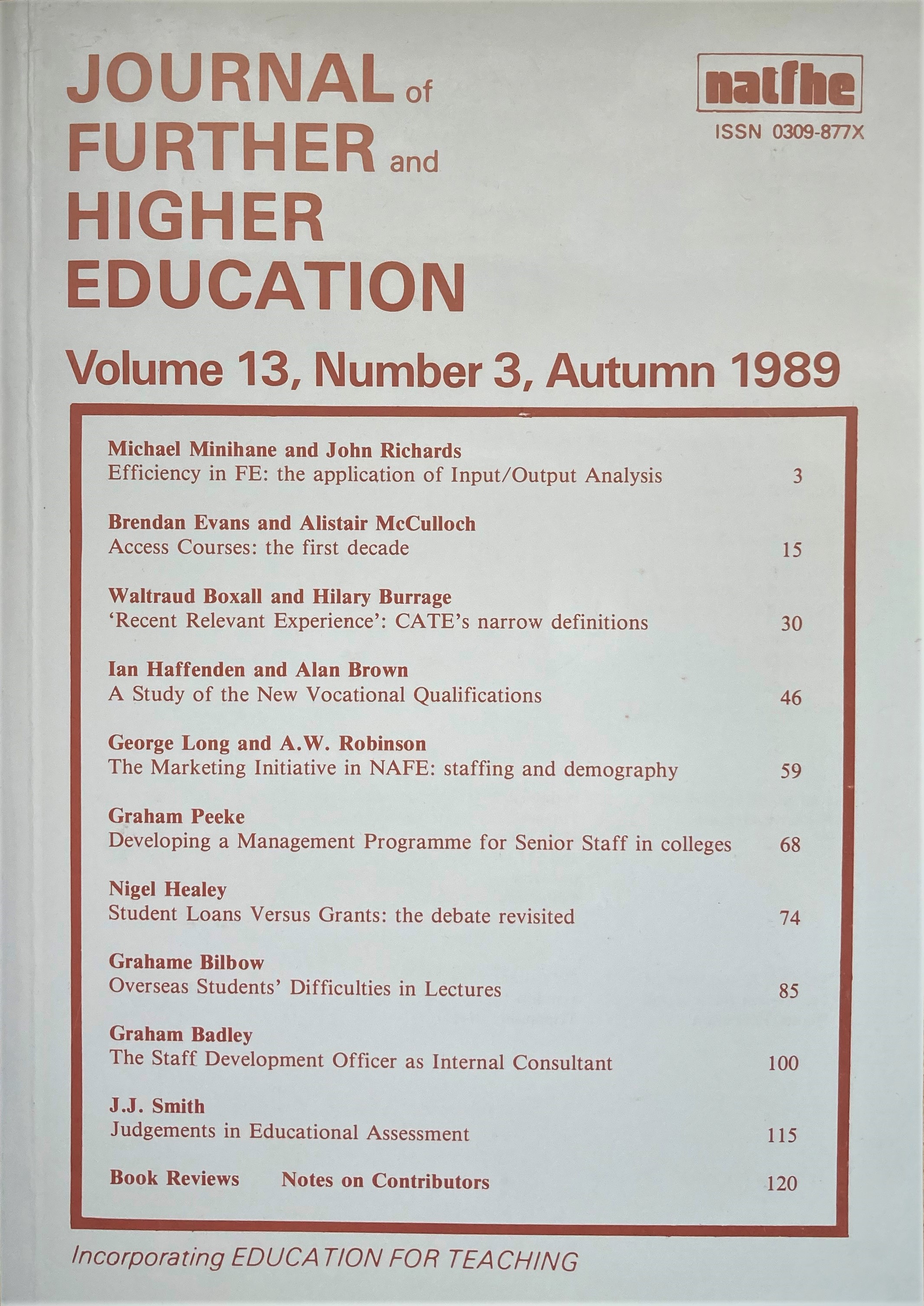 Some decades ago now, there was considerable concern about what curriculum should be offered in the professional training of teachers. How to define educational ‘problems’ and identify ‘solutions’ is probably a matter of eternal debate.
Indeed, these concerns continue to demand attention even now, so perhaps this is a good time to share the paper which Waltraud Boxall and I published in the Journal of Further and Higher Education (Volume 13, Number 3) way back in Autumn 1989?
.
In a paper published in 2006 William Taylor describes CATE in this way:
The Council for the Accreditation of Teacher Education (CATE) was set up in 1984 to offer advice to the Secretary of State on the approval of courses of initial teacher training. Such accreditation must be distinguished from academic validation, which is the responsibility of universities and the Council for National Academic Awards (CNAA). Initial training courses must now satisfy published criteria as to qualifications for entry, length, balance of content, professional experience, and curriculum coverage. In particular, undergraduate courses must include at least two years of subject study at a level appropriate to higher education. Staff concerned with pedagogy are also required to have recent and successful experience of school teaching.
The paper written by Waltraud Boxall and myself is reproduced below: Read more…

 Hilary Burrage