Welcome. This website comprises mostly Hilary's sociological papers and articles about patriarchy, (gendered) harmful practices (e.g. female genital mutilation / FGM) and thoughts on science, health, environmental issues, sociological analysis, social policy and good practice.
Walk to End FGM, Washington DC (USA), Saturday 15 October 2016
 The Global Woman P.E.A.C.E. Foundation is a USA-based ‘501c3 nonprofit’ organization dedicated to empower women and girls through education to eradicate gender based violence. You can imagine therefore how thrilled I am that in just two months’ time, on 15 October, I shall be with them, alongside friends and colleagues, in Washington DC on the Walk to End FGM (details below), when I am to receive a certificate of recognition for my two books on female genital mutilation.
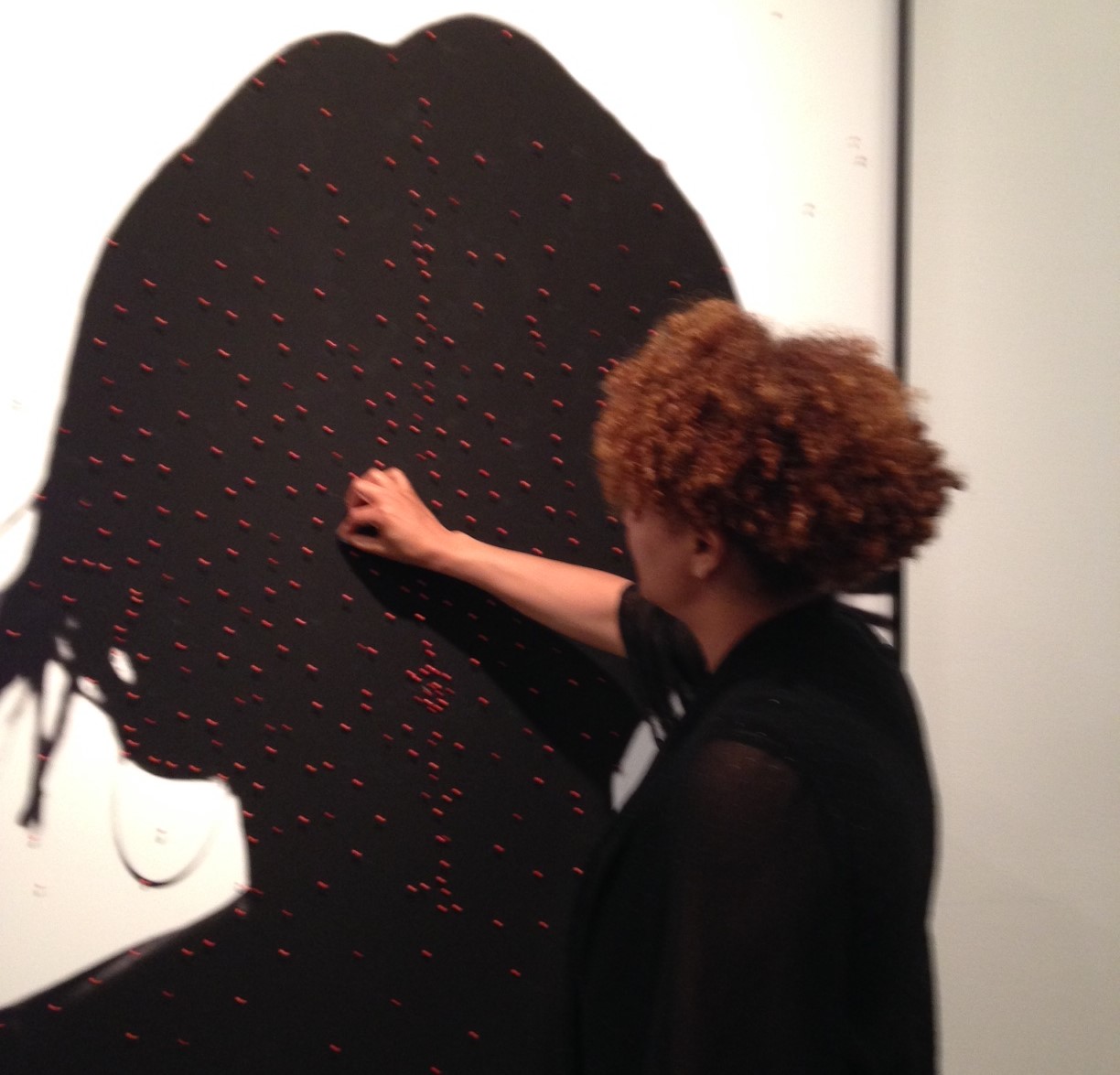 Tonight I chaired a debate about FGM at Rivington Place, London, where documentary photographer Aida Silvestri has an exhibition, Unsterile Clinic, curated by Renee Mussai of Autograph ABP. The topic was Health, Advocacy and Art: A Panel Discussion on Ending FGM with, as speakers, Aida herself, plus Deqa Dirie, Aissa Edon, Emma Boyd, Dianna Nammi and, responding from the audience, Hoda Ali. The event, organised by Ali Eisa, illuminated both what people agreed about FGM, advocacy and art, and what they didn’t.
HOPES: The Hope Street Association (In Retrospect)
 Ten years ago today Joe Riley, then Arts Editor of the Liverpool Echo, wrote a piece about HOPES: The Hope Street Association and my role in the regeneration of the Hope Street Quarter. We started with a huge threat to the big arts organisations in the city and the slogan ‘Once lost we will not get it back‘ , and moved on to become a thriving cultural quarter that had until quite recently been a backwater.
I often reflect on what Joe wrote in his report in July 2006, and on how matters have evolved since that time.
 I was delighted to respond to the AHA Foundation’s invitation to be interviewed for their newsletter. Founded by Ayaan Hirsi Ali, herself a survivor of female genital mutilation, the Foundation has made tremendous moves towards the eradication of FGM and other gendered human rights abuses.
The AHA Foundation is currently sponsoring an e-petition to Demand a National Action Plan to Fight Honor Violence – a requirement at the core of what must be secured in every country if we are to progress in making FGM and other gendered violence history.
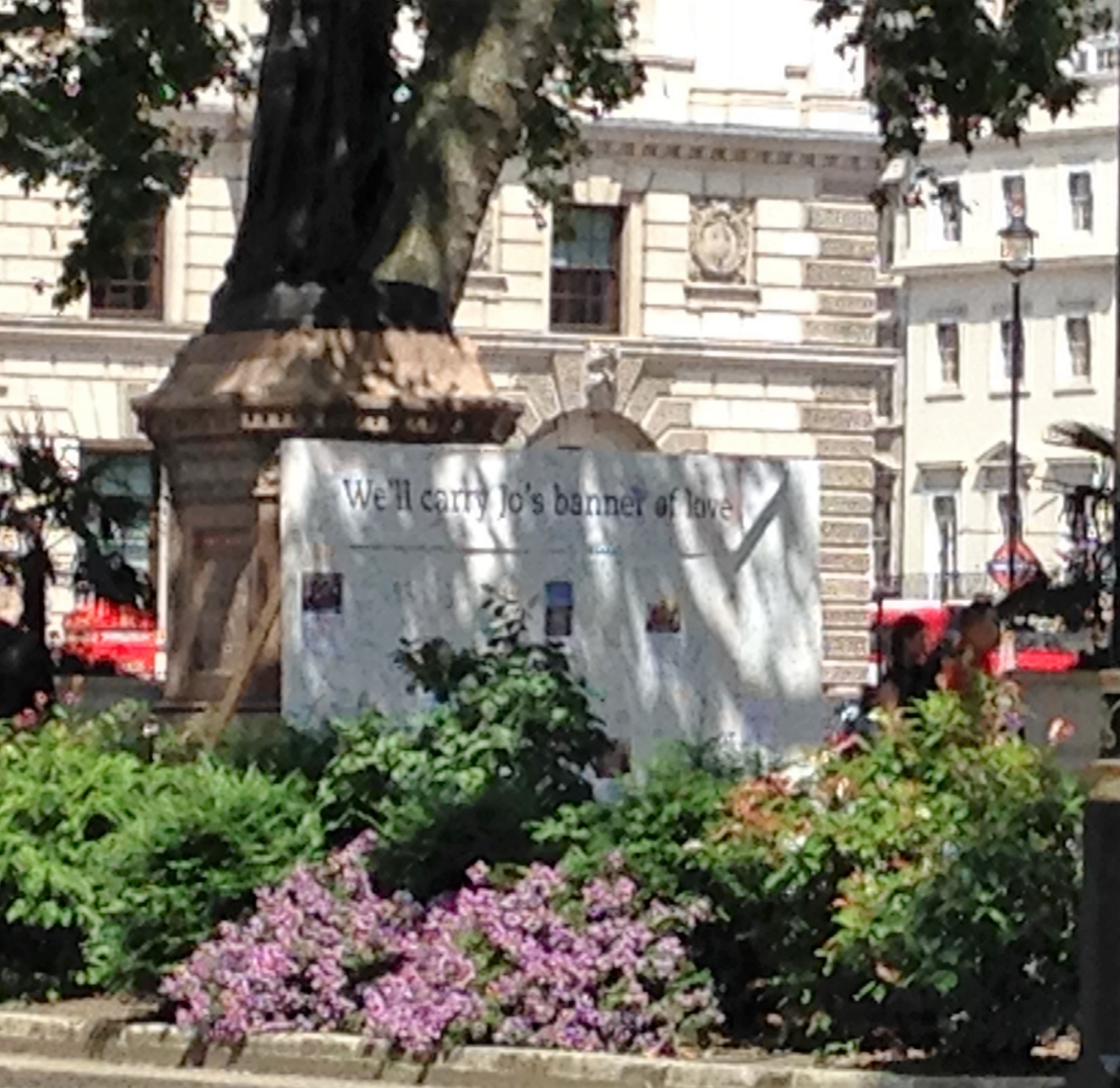 Today I attended two meetings on FGM in Westminster. One was as a member of the informal FGM group which Sarah Champion MP convenes, and the other was as an observer at the Home Affairs Select Committee FGM Roundtable Discussion. Some general issues come up regularly: the need for an FGM National Action Plan, questions about mandatory reporting, the effectiveness of the multi-agency guidelines. To these we should add broadening FGM to include other child / gendered abuse, using the Public Health approach and, vitally, recognizing human rights.
Art As Activism: Through the Eyes of Nigerian Artists Confronting Female Genital Mutilation (FGM)
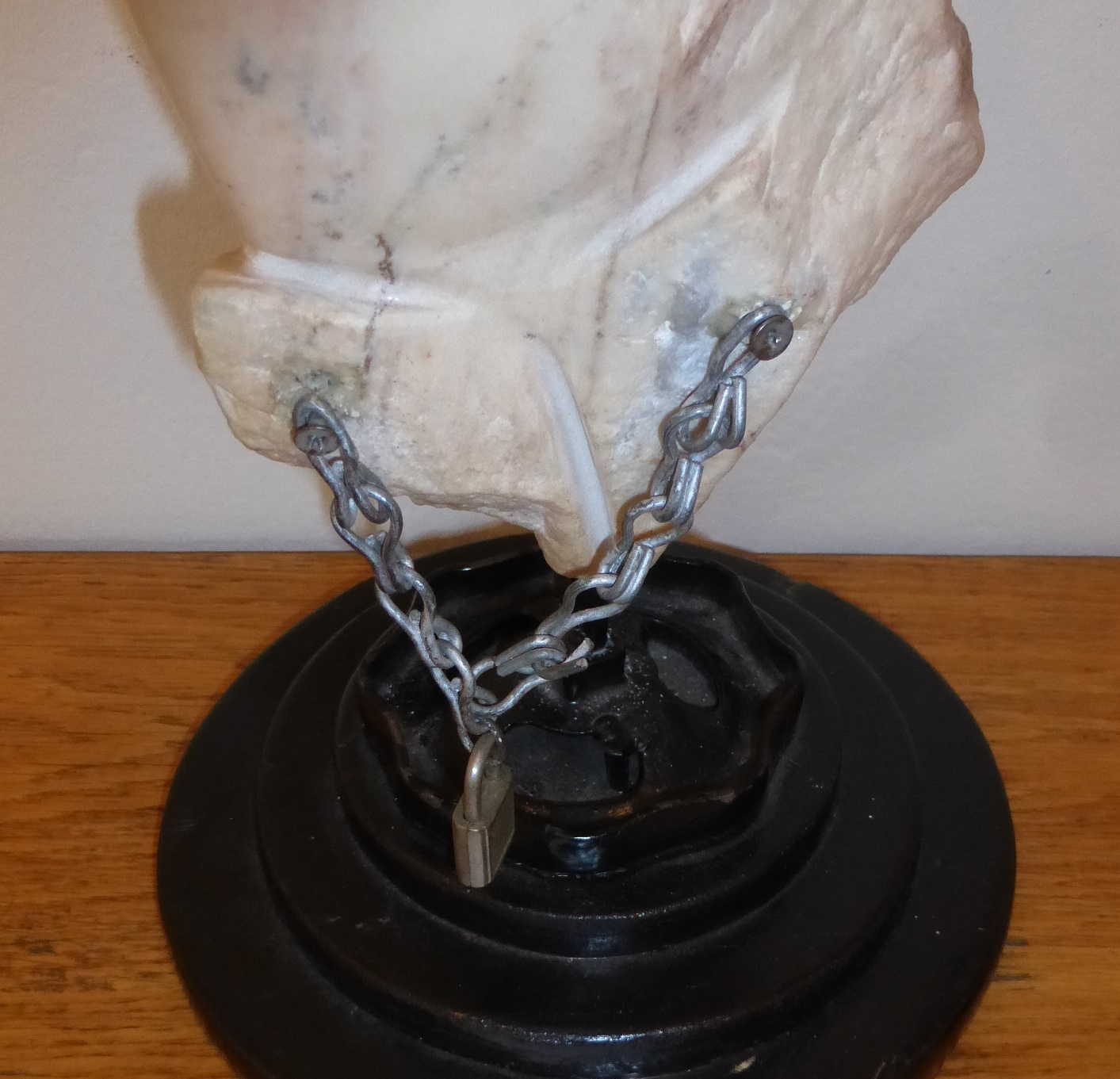 The Through the Eyes of Nigerian Artists Confronting Female Genital Mutilation exhibition has been shown many times in Germany; and now the curator, Dr Tobe Levin, has also arranged two evenings of events in Oxford UK. In my contribution I spoke about art as activism, and on prospects for developing a greater public concern to achieve eradication – only when public pressure is applied to high levels of governance will real progress be made. These are my thoughts on art and advocacy:
Policing Issues In Regard To Female Genital Mutilation (And Other Harmful Traditional Practices) In The UK
 The British Labour Party Home Affairs policy commission is currently investigating the topic of police reform. I was invited to make a written submission on how I think the police could improve their response to victims of FGM or those who are at risk of becoming victims.
What follows comprises my draft submission – but I am acutely aware there is still much work to do on this difficult topic. I hope my submission will help the discussion along. Your thoughts are also very welcome.
Please note: Comments and queries are very welcome via the response box at the end of this piece. Thank you.
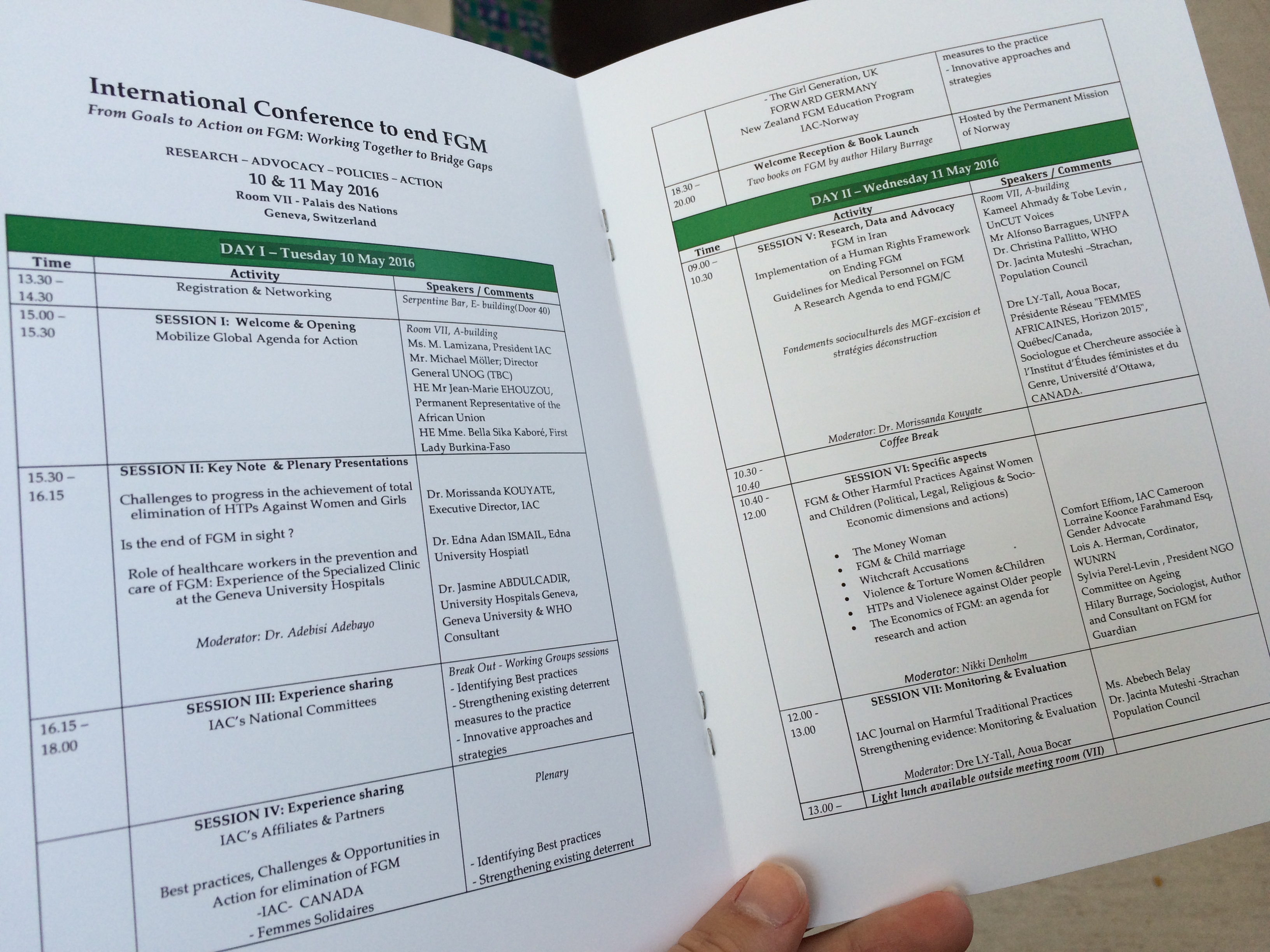
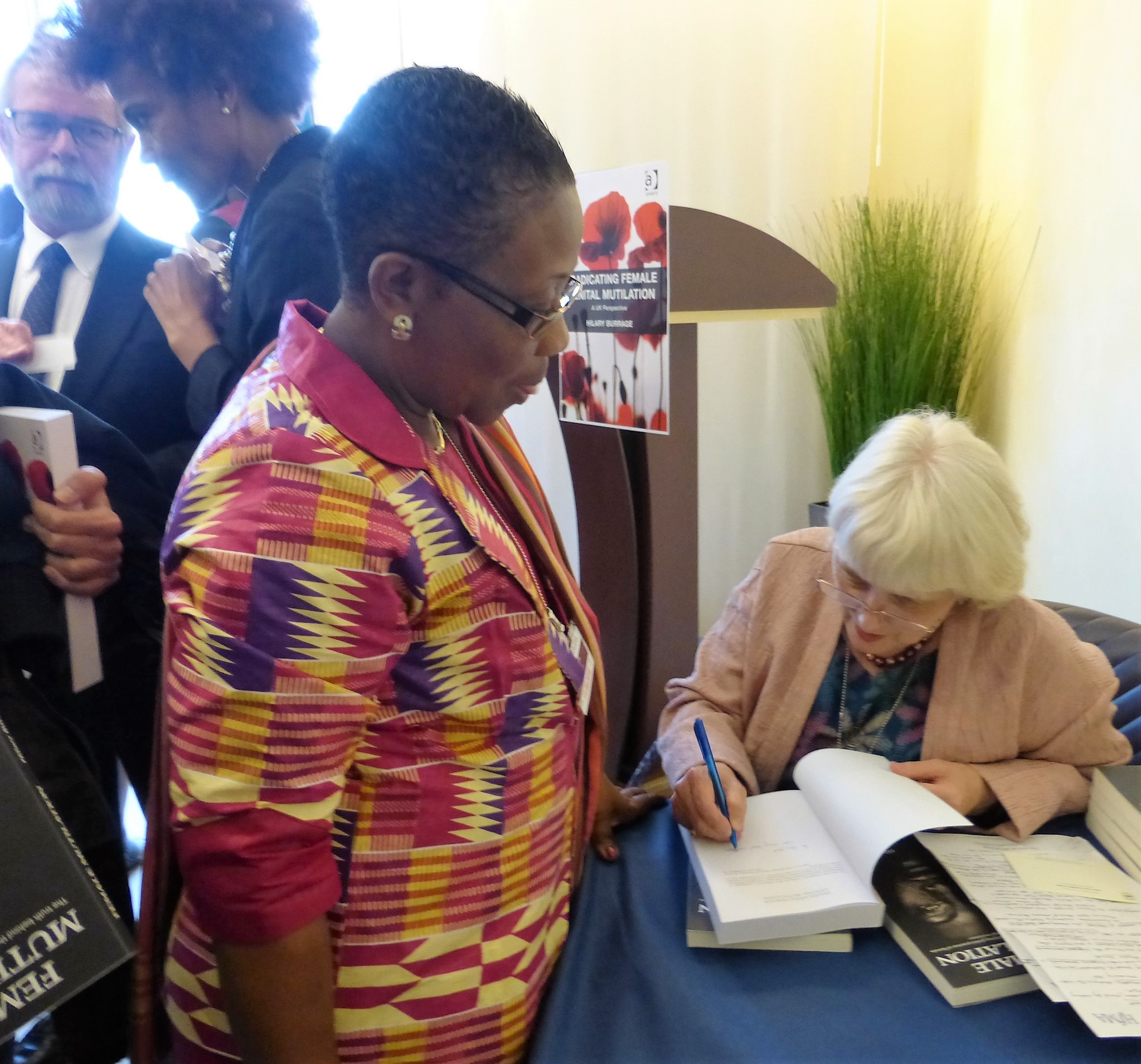 On 10 and 11 May 2016 I attended the Inter-African Committee conference on FGM at the United Nations in Geneva, where I gave a paper. It was a great honour to be invited to present both my books at the IAC conference reception, hosted by HE Steffen Kongstad of the Norwegian Embassy; and I was thrilled that Ambassador Kongstad also very generously arranged to give copies of these books to the guests who joined us. Here’s my short speech given at this, for me unforgettable, event.
Some photographs of the full event follow below, after this text of my talk about the books.
The 4 ‘E’s Of FGM Eradication – My Paper On The Economics Of FGM, At The UN Geneva IAC Meeting
 The Inter-African Committee on Harmful Traditional Practices affecting Women and Girls (the IAC) held an International Conference to End FGM at the United Nations in Geneva on 10 and 11 May 2016. The theme was ‘From Goals to Action: Working Together to Bridge Gaps‘. I spoke on the Economics of FGM. My main point? … that ending FGM will be achieved most quickly if we fully engage economic analysis of the wider contexts and use that analysis to inform Public Health budgets and strategies, with top-level leaders who accept direct accountability for delivery.
 It was good to be invited to contribute to The Body Issue (17) of the online magazine Her Edit. The brief was to write an article about FGM, explaining why it continues, and what can be done to stop it. I chose to emphasise the frequent lack of understanding in practising communities about the harm of FGM, and the requirement on us all to keep the issues in the public mind. Below is my article, published by Her Edit under the heading ‘FGM: Patriarchy incarnate‘. What would others have elected to share with new readers about this tragic abuse of human rights?
Female Genital Mutilation Is Big Business
The Guardian published my article on the economics of female genital mutilation (FGM) today, 13 April 2016.
Entitled FGM: a costly, organised crime against women and girls, the article is an attempt to address some of the issues, especially the financial ones, which continue to make the eradication of FGM so difficult, whilst also wasting precious human and economic resources.
This is a more detailed version of my Guardian piece:
What Is Female Genital Mutilation? An Introduction To The Issues, And Suggested Reading
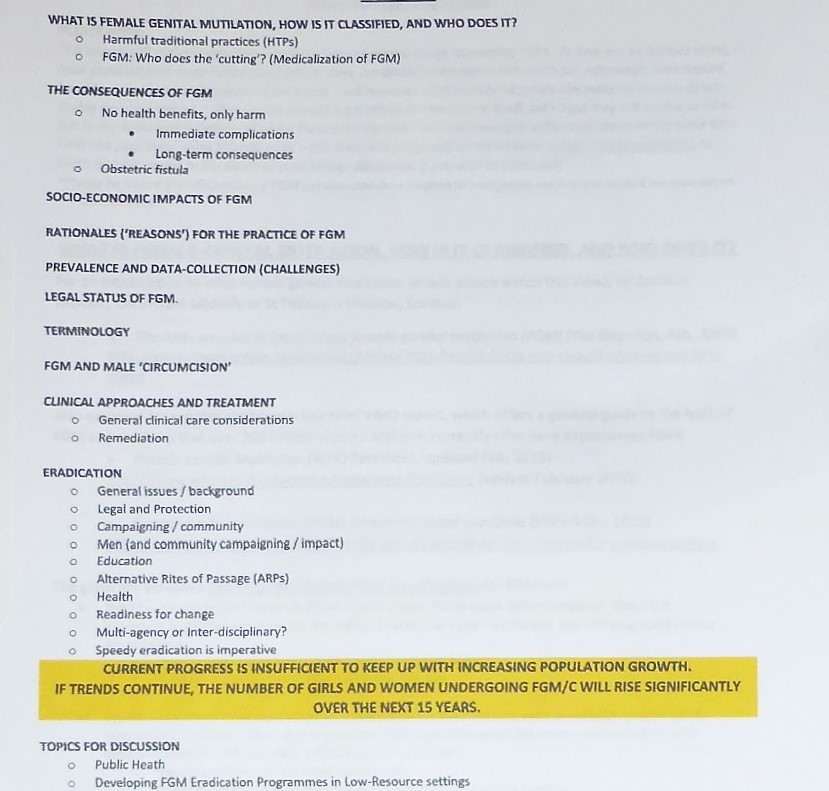 This briefing derives from my lecture (1 April 2016) on Female Genital Mutilation, to post-graduate students at the Liverpool School of Tropical Medicine. The notes will be updated occasionally, and will I hope serve as an introduction to most of the issues arising in the eradication of FGM, in both low-resource and more structured settings. Readers are welcome to make use of this blog, with the proviso only that my copyright and my two books on FGM are formally acknowledged:
* Eradicating Female Genital Mutilation: A UK Perspective (Hilary Burrage, Ashgate / Routledge 2015). Contents and reviews here.
* FEMALE MUTILATION: The truth behind the horrifying global practice of female genital mutilation (Hilary Burrage, New Holland Publishers 2016). Contents and reviews here.
Harmful traditional practices (HTPs) are group-sanctioned but usually now illegal actions taken to reinforce the power of one person or group over (an)other/s. HTPs occur in all societies but are more prevalent in less advantaged communities than elsewhere; and women and girls are more likely to be the victims of HTPs than are boys and men, albeit both experience them in specific contexts. HTPs are historically underpinned by contests for scarce resources and economic control and power. The recent past has seen global moves to address the issues and stop these practices.
Some examples of harmful traditional practices are listed below. Please be aware that this is not pleasant reading.
UPDATE 2019: There is now a move away from the term ‘harmful traditional practices’ to the more widely encompassing simple term ‘harmful practice‘.
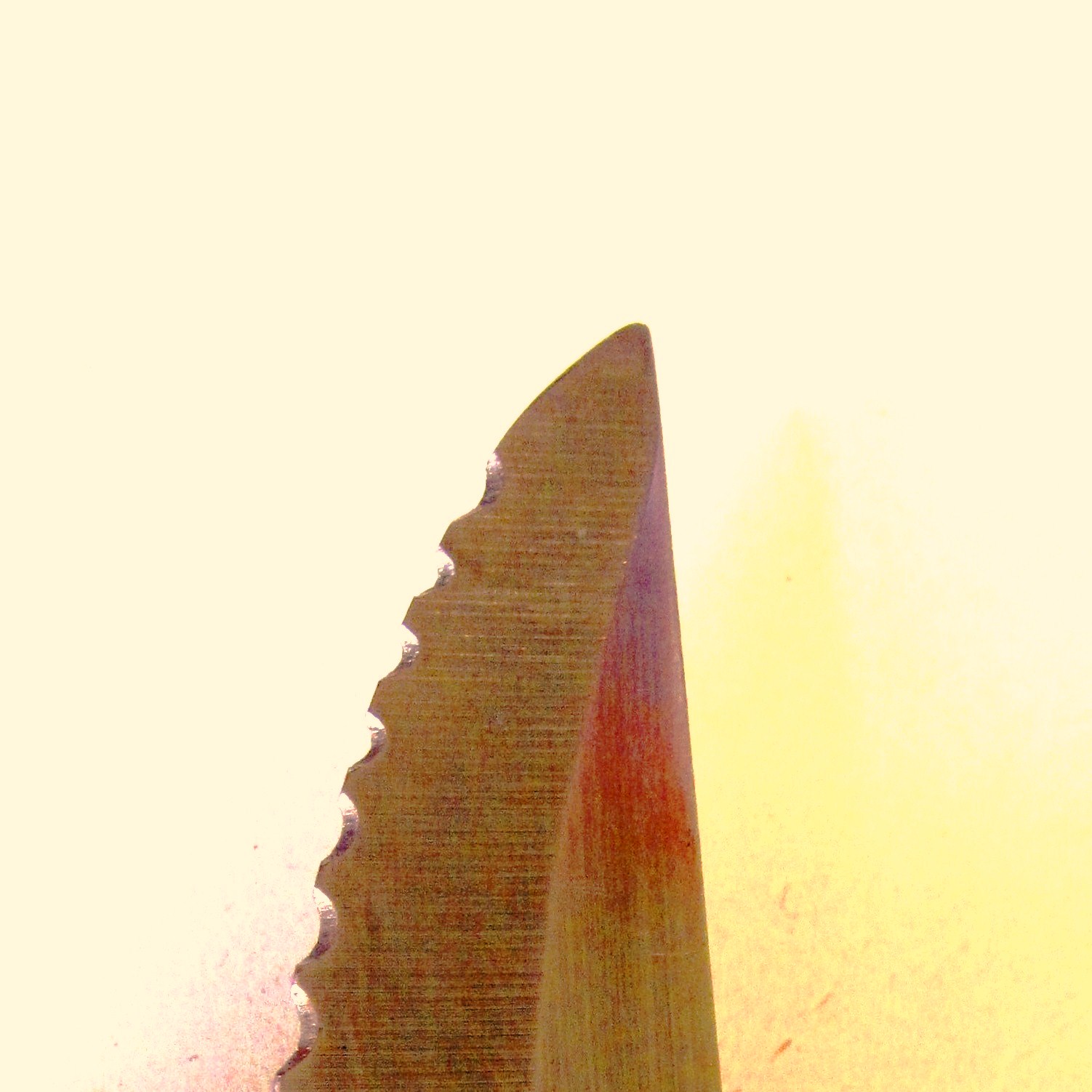
 In this blog post for RinGs, I reflect on the causes and consequences of FGM and what can be done about it, in the lead up to International Women’s Day. “It’s been 41 years but the sound of the blade still rings in my head… I started my fight against FGM when my daughter was born.” – Asha Ishmail, Kenya. From Female Mutilation (New Holland Publishers 2016).
(RinGs is Research in Gender and Ethics, and the website is hosted by the London School of Tropical Medicine with support from DfID.)
Female Mutilation, the truth behind the horrifying global practice of female genital mutilation (New Holland Publishers)
 My second book, Female Mutilation, the truth behind the horrifying global practice of female genital mutilation, is now in bookstores in Australia, the UK and beyond, and can also be purchased (discounted price) from the Guardian online bookshop, for delivery worldwide. The book, using real life case studies which complement my textbook, Eradicating Female Genital Mutilation, narrates the varied experiences of some 70 FGM survivors and/or campaigners living and working across two dozen countries in five continents.
I hope these first-person ‘stories’ will help to make FGM history, soon.
An Interview With Global Woman P.E.A.C.E. Foundation
 I was thrilled last Autumn to visit Washington DC and meet Angela Peabody, the Founder and President of the Global Woman P.E.A.C.E. Foundation. Angela is truly a pioneer in the fight against female genital mutilation in the USA, having set up the now-annual ‘Walk to End FGM’ Walk-A-Thon as well as a support clinic for survivors and their families. And now she has done me the honour of profiling my work and books in her organisation’s Newsletter. Here is the text of that profile:
Citizen Action In Support Of Zero Tolerance For FGM Day
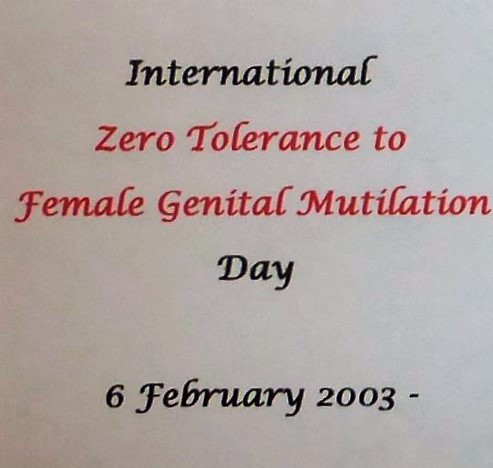
Today, 6th February, is the 12th annual International Zero Tolerance for Female Genital Mutilation Day.
To mark this milestone the Morning Star asked me to write a piece in response to the question, ‘Yes, that’s good; but what are we as ordinary citizens actually supposed to do about it?’. I hope that the suggestions I shared (below) help to move forward on that very important matter.
Everyone can do something.
A Global Paradigm For ‘FGM Studies’?
 Ashgate (Gower), the publishing company for my guide to / textbook on female genital mutilation, has been bought by Routledge, a part of the Taylor and Francis global group. It was nice therefore that they invited me to write something for their website about 6 February, International Zero Tolerance to FGM Day. So I explained why all aspects of stopping FGM must be put together coherently to ensure this harmful traditional practice is eradicated. A real paradigm for ‘FGM studies’ is essential….
Two Books, One Purpose: To End FGM
 I have now written two books about female genital mutilation. The first was Eradicating Female Genital Mutilation (Ashgate, 2015) and the second, due out very soon, is Female Mutilation: The truth behind the horrifying global practice of female genital mutilation (New Holland Publishers, 2016). The material is very different but, as I wrote (below) , the intention is the same. We must #EndFGM. Now.
Eradicating Female Genital Mutilation: A UK Perspective (Hilary Burrage, Ashgate / Routledge 2015). Contents and reviews here.
FEMALE MUTILATION: The truth behind the horrifying global practice of female genital mutilation (Hilary Burrage, New Holland Publishers 2016). Contents and reviews here.
Talking To Medical Students About FGM
 It’s really important that medical students talk about female genital mutilation (FGM) in good time to think about it, well before they are presented with real-life professional situations where they will need to be competent, composed, compassionate and yet also uncompromising, in immediate and often very complex contexts. I had such an opportunity to discuss FGM just this evening, at the University of Liverpool Medical School. My message as ever is ‘from horror to hope…’.

 Hilary Burrage