Welcome. This website comprises mostly Hilary's sociological papers and articles about patriarchy, (gendered) harmful practices (e.g. female genital mutilation / FGM) and thoughts on science, health, environmental issues, sociological analysis, social policy and good practice.
Long-Covid, Data, Confidentiality And Scientist-Citizens
 I recently had a modest involvement in a study concerning the use of clinical data in health care. The enquiry is wide-ranging but I hope I had something to contribute in terms of public confidence in the use of ‘their’ data for medical research. I suggested that most people have scant idea of how such research works, and that it might be a good idea, along with the increasing engagement of ‘citizen-scientists’ (‘lay’ people who help to generate data) to have ‘scientist-citizens’ – science professionals who actively explain how the data is anonymized and used, and why they need it.
Below is the gist of my submission to the enquiry. The commentary focuses to a degree on Long-Covid – a very topical issue just now – and the UK National Health Service (NHS) but also has a wider take on medical science and on matters such as approaches to the eradication of female genital mutilation (FGM) and, in fact, my own long experience of auto-immune conditions. I don’t usually write about myself, but maybe, given my own auto-immune conditions, it makes sense to do so just now, as we all recognise the need to know more about Long-Covid and similar conditions?

It was in the 1980s that my mother (now a centenarian) first told me about female genital mutilation (FGM). She was active as a Quaker and as a member of Amnesty International (UK), and somehow this awful practice had come up in a discussion. Could these stories of FGM be true, she asked? I promised, with my medic sister, to do my best to find out.
How could I know way back then that this earnest question by my Mum would come to expand my horizons, extend my networks and friendships, and shape my life? Read more…
 My friend and colleague, the social anthropologist Kameel Ahmady, is a British-Iranian who was arrested in Tehran in August 2019 on charges concerning state security. In December 2020 he was found guilty by the court of the Islamic Revolutionary Guard, and sentenced to more than nine years in prison, along with a truly massive fine. What follows is his Statement on his work in Iran, the trial and his subsequent decision to escape to Britain.
A summary of events to date is available here.
Kameel Ahmady: His Defence Appeal Against Imprisonment
My friend and colleague, the social anthropologist Kameel Ahmady, is a British-Iranian who was arrested in Tehran in August 2019 on charges concerning state security. In December 2020 he was found guilty by the court of the Islamic Revolutionary Guard, and sentenced to more than nine years in prison, along with a truly massive fine. He decided however to escape from Iran and now lives in Britain. What follows is the English version of his appeal, written in Farsi, against the judgement.
A summary of events to date is available here.
I decided to make the main parts of my verdict and summary of my defence public in order for people to know how and why I was sentenced, accusations I have countered with real evidence that I believe will prove my innocence. Let them be recorded in history, which is the best judge.
Kameel Ahmady
Kameel Ahmady: Verdict Of His 2019-2020 Trial In Iran
My friend and colleague, the social anthropologist Kameel Ahmady, is a British-Iranian who was arrested in Tehran in August 2019 on charges concerning state security. In December 2020 he was found guilty by the court of the Islamic Revolutionary Guard, and sentenced to more than nine years in prison, along with a truly massive fine. He decided however to escape from Iran and now lives in Britain. What follows is a slightly abbreviated English version of the original judgement, which was written in Farsi.
A summary of events to date is available here. Read more…
Kameel Ahmady Sentenced To (More Than) 8 Years In Prison
My friend and colleague, the British-Iranian anthropologist Kameel Ahmady, was yesterday sentenced by a Tehran court to (more than) 8 years in prison in Iran.
Kameel’s research is on topics such as female genital mutilation, child marriage and informal / ‘white’ marriage,
Below is a statement released today:
MEDIA RELEASE
Sunday 13 December 2020
British-Iran Anthropologist and Researcher Sentenced to 8 years by Court in Tehran
Joining The Dots: Why FGM Studies Must Be A Distinct Discipline
 Thursday 10 December 2020 was the final event in the Kings College, London Autumn series of presentations on Patriarchal Inscriptions. My own contribution that day concerned the urgent need for an academic field of ‘FGM Studies’.
It is a truism that ‘science’ sees only what it chooses to consider. The current Covid-19 pandemic (70+m cases) has received many multiples of the resources available to address FGM (200+m cases). Further, subject disciplines (e.g. Public Health, if not Epidemiology as such) which illuminate disadvantage are less likely to gain political favour. Reflecting on this, I called my talk
Going solo, passing the buck or joining the dots?
Why a multi-disciplinary curriculum is essential in professional training (and practice) to eradicate female genital mutilation.
The current Covid-19 pandemic offers an opportunity to explore and compare the differences in approach between an acute viral epidemic and an enduring, entirely human agency / socially activated one such as female genital mutilation (FGM). It is nonetheless vital that both be addressed.
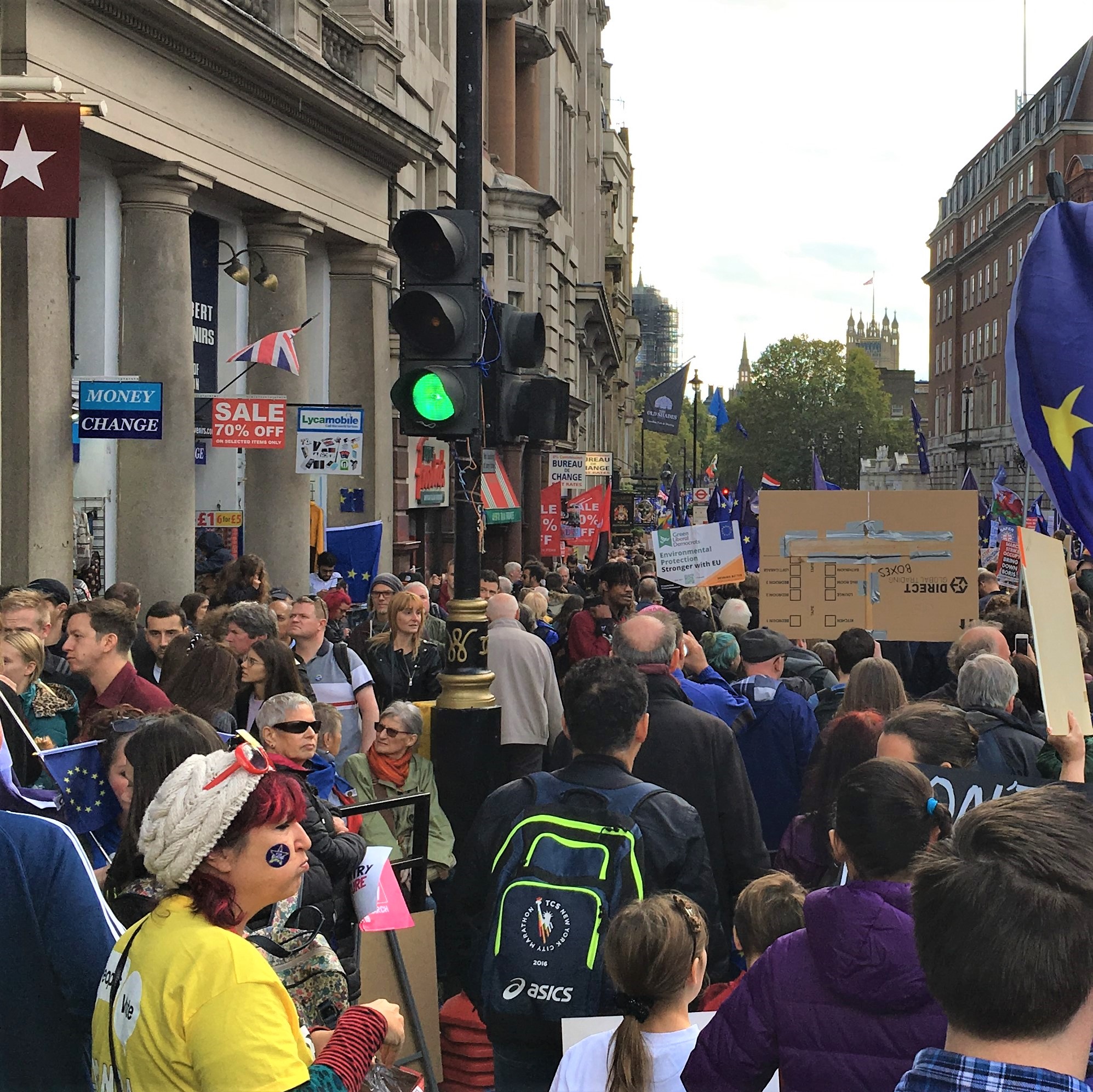 Sometimes we have to think beyond the specific, and examine the wider contexts of our lives. The bigger picture is what has been bothering me for a long while, as we try to defend the rights of children and vulnerable adults in a currently very challenging global setting. Our human rights, our health and even the well-being of the planet itself are currently threatened by the increasingly careless way that some first world states politicians at all levels are disrespecting, even disregarding, democracy.
Climate change? Covid-19? Communities? Seemingly irrelevant to the powerful (and usually male) autocrats who lay claim to be our political leaders. Often, they rely on what a US press secretary once termed ‘alternative facts‘. But these politicians are elected by us, or at least by our fellow citizens.
In The Guardian of 3 November 2020 the columnist Zoe Williams rightly reminds us that the refocusing of politics lies in the hand of voters. How, she asks, can we democratically resist populism, which is the route to power of many autocrats and worse?
This is the Guardian letters response which I and, independently, two other readers (Michael Meadowcroft and Derrick Joad) offered to her question:
 Many women and girls seek help only when the harm of FGM has already reached them and they need urgent attention for gynaecological or obstetric problems; and often, like the medics who care for them, other sectors of the FGM prevention community are too hard pressed and focused on the imperative for action to have much time to reflect on the wider contexts in which this cruel abuse of women and girls’ human rights occurs. A while ago I joined an online conference BAME Birthing with Colour to talk about FGM and the issues arising from it, which encompass many complex challenges for those aiming to end this harm.
In preparing my presentation I drew on a wider social, psychological and economic analysis of FGM, in the hope that such an overview can enhance perspectives around the important work in which activists and professionals are engaged as they strive to make FGM history forever. Below are some notes I made for my presentation, now updated. I hope these may still be useful as we all continue to seek ways to finally eradicate FGM, a procedure where the female genital organs are injured or changed for no medical reason.
You can read this website in the language of your choice via Google Translate.
An Economic Deficit Index for FGM? Human Capital, Sustainable Development And Land
 FAWCO is an American / International women’s voluntary organisation which promotes peace and international goodwill. This year FAWCO has chosen to address issues around FGM (female genital mutilation), so it was good to talk via the internet with members yesterday about the connections between economics and FGM. There is now some general recognition of the costs which would accrue if the health consequences of FGM were properly addressed, but still little acknowledgement of the multiple other economic and resource costs and implications of this cruel practice.
Recent years have seen the creation of a number of public health and policy indicators for specific factors which demonstrate the wellness or otherwise of particular groups within societies.
Now, I suggest, is the time to extend that trend to include an index for the economic impact of female genital mutilation and maybe other traditional / harmful practices.
Perhaps if we measure the economic impact ‘as well as’ the harm to real human beings, more politicians and policy makers will sit up and take notice?
 ‘Jasmine’ is 11 years old and has lived with her mother in the U.K. for some 8 years, all her conscious life. They have only Bahraini citizenship, but are of Sudanese origin. The Home Secretary wants to refuse them asylum although the Family Court has ruled very clearly that Jasmine is in serious danger of Female Genital Mutilation (FGM), and thus deportation should not happen.
The UK has a zero tolerance policy on FGM. It is hypocritical to want to send a child to a place where that will likely be her fate, and still to hold no proper data on the incidence of these sorts of cases.
Many of us are supporting a petition to protect Jasmine which has been instigated by Dr Charlotte Proudman, a human rights barrister. You may wish to add your name too:
Protect Jasmine from FGM and allow her to stay in the UK
.
Female Genital Mutilation And Economics
 It was a pleasure this morning to be the speaker for a Zoom seminar hosted by Oxford Against Cutting and chaired by their Community Outreach Director, Kaddy Touray. Our theme was Female Genital Mutilation and Economics.
I addressed two aspects of this theme: first, the economic factors and impacts of FGM for individuals and families; and second, these factors and impacts for wider communities and nations. Below is a summary of my talk and of some of the discussion which followed it:
 The term ‘female genital mutilation’ (FGM) was adopted in 1990 by the Inter-African Committee (IAC) on Traditional Practices Affecting the Health of Women and Children, and in 1991 the World Health Organization (WHO) recommended that the United Nations adopt it as well. It has now been confirmed by the United Nations and the World Health Organisation. The turning point in this debate was the Bamako Declaration of 6 April 2005, issued by the sixth General Assembly of the IAC, in Mali.
Now, some fifteen years later, it is perhaps time to remind ourselves about the significance of this globally important step towards the eradication of FGM.
An lightly edited (abbreviated) version of the Bamako message follows below:
 Eva J. Salber’s book, The Mind is not the Heart: Recollections of a Woman Physician, was first published in 1989, and I was lucky enough in 1990 to be asked to write a review of it for the journal Sociology of Health and Illness.
Thirty years later this book is still available, and people are still reading it. so here is my small contribution to Dr Salber’s literary profile.
The book is now available in hard and paperback, and on Kindle.
One further observation: I was startled on revisiting my review to see that, Dr Salber having emphasised the failure of South Africa and the USA to have a national health service, I actually ended my commentary with concerns about the viability of the British NHS, even back all those years ago when the UK was governed by a previous Conservative Government. Some things for the public good, Eva Salber might agree, require unceasing vigilance even when the battle seems to have been won.
 The 6th February every year since 2003 has been International Zero Tolerance for Female Genital Mutilation (FGM) Day. It has also this year been an occasion for some of us to present at No.10 Downing Street, London, a Manifesto on FGM and other forms of harmful practice / gendered violence, for the attention of the British Prime Minister. The Manifesto is the work of the voluntary collaborative group Action:FGM. We have taken many months to refine the Manifesto and we seek to represent the views of a wide range of survivors, activists and others who work in the field of #EndFGM.
You can read the Manifesto below:
 I visited St Antony’s College Middle East Centre, Oxford University, today (5 February 2020) as guest of Dr Soraya Tremayne, to give a presentation in the run-up to International Zero Tolerance for FGM Day tomorrow. My theme was the necessity to ensure that men are brought onside as activists to #EndFGM. I looked at ways in which, traditionally, men have been mostly unengaged in the realities of FGM (beyond their economic interests and an insistence on ‘purity’) and perhaps how, drawing on recent studies of masculine nurturative behaviour in Egypt, this might be changed.
My write-up of the presentation is below:
Social Research In Environmental Contexts (A DEFRA Science Advisory Council Paper, 2007)
 In 2007 I was one of a small group of people from the UK Department for Environment, Food and Rural Affairs Science Advisory Council (Defra SAC) who produced a report on The Use of Social Research in Defra.
Given the urgency – at last – now attached to demands that we face up to climate change and other global environmental challenges, this seems a good time to revisit that report.
Defra SAC Social Science Sub-Group‘s report to the Defra Chief Scientific Advisor (CSA) focused on the capacity and use of social research to inform and assist policy development within the Department.
Read more…
Our Human Rights, Civil Society And Brexit
 Human rights cannot be a matter of pick and mix. We either have our rights to liberty, safety, free speech, associations and faith of our choosing, and much more; or we don’t.
As I have explained before, I am very concerned about the impact that the UK leaving the European Union (EU), Brexit, would have on efforts to eradicate female genital mutilation (FGM) in Europe. But ‘just’ that one concern cannot be isolated from the many other issues which Brexit presents.
Brexit was conceived and supported by people who want the EU to fail, yet any UK government that is committed to the rule of law and democracy should want the EU to thrive…. One way emboldens forces of division and nationalism; the other way strengthens the project that was founded to resist those forces. (Rafael Behr, 16 October 2019.)
Medically Unnecessary Genital Cutting And The Rights Of The Child: Moving Toward Consensus
 It has always been my belief that male ‘circumcision’ (also known as Male Genital Mutilation or ‘Cutting’) is, like Female Genital Mutilation, a denial of the fundamental human right to bodily integrity – especially when the person concerned is too young, or otherwise unable freely, to give informed consent to such an act. Today a declaration to that effect, initiated by Brian Earp and edited and agreed jointly by 90 academics including myself, has been published. The text refers expressly to so-called genital ‘surgery’ or ‘modification’ in Western societies, but in large part I’d say it applies also to genital ‘cutting’ in any context.
Below is the abstract for the paper, which is published with open access in The American Journal of Bioethics 19(10):17-28:
Routledge International Handbook Of Women’s Sexual And Reproductive Health
 The Routledge International Handbook of Sexual and Reproductive Health, edited by Jane M. Ussher, Joan C. Chrisler, Janette Perz, is the result of a collaboration between the joint editors and many different authors. I am pleased to be one of them, having written Chapter 33, on Female Genital Mutilation and Genital Surgeries.
The e-version of the book is available from today (23 September 2019) and the hardback version will be published on 11 October.
Below is a summary of the book as a whole, and also a summary of my particular chapter:

 Hilary Burrage