Welcome. This website comprises mostly Hilary's sociological papers and articles about patriarchy, (gendered) harmful practices (e.g. female genital mutilation / FGM) and thoughts on science, health, environmental issues, sociological analysis, social policy and good practice.
You can TRANSLATE this website to the language of your choice via the Google weblink.
.
 Referring to children as ‘stunted’ seems callous, which is probably why this description is rarely employed in general conversation; but in fact the term has a very specific definition and that definition is vitally important.
The World Health Organisation says children are defined as stunted if their height-for-age is more than two standard deviations below the WHO Child Growth Standards median.
But does being short matter? Actually, it matters a lot. There is widespread agreement particularly that the ‘first thousand days’ – from conception to age two – are vitally important for all children, wherever they live; and the time after that is also critical. It is difficult, sometimes impossible, to ‘catch up’, if the milestones of childhood are not reached; stunting has impacts for us all.
So this is not about ‘just’ height. Being stunted often serves as a warning that a child’s nutrition is inadequate, and their likely prospects limited. It’s about health, life experiences and expectancy, well-being and capacity to contribute to society. Inevitably, this condition affects many more children in the ‘global south’ than in modern western countries. And, whilst improvements have been noted, the chance that numbers of children with this limitation will occur is increasing globally (perhaps because there are more children now, albeit the percentage rate of occurrence may be dropping), with climate change and other socio-economic impacts becoming greater threats.
Below, we examine some of the influencing factors and likely outcomes for stunted (and other nutritionally disadvantaged) children. Sadly, to date this is not an altogether good news story; it still affects children the world over. And, as I argue below, female genital mutilation (FGM) may be an exacerbating or amplifying factor.
Given that the socio-economic / environmental contexts of FGM and other harms are often multiple, is it time to look more widely, to identify ?causative factor conjunctions where preventative intervention would provide most leverage across the board?
Gibbi Mballow, Gambian Politician Protecting Women
You can TRANSLATE this website to the language of your choice via the Google weblink.
.
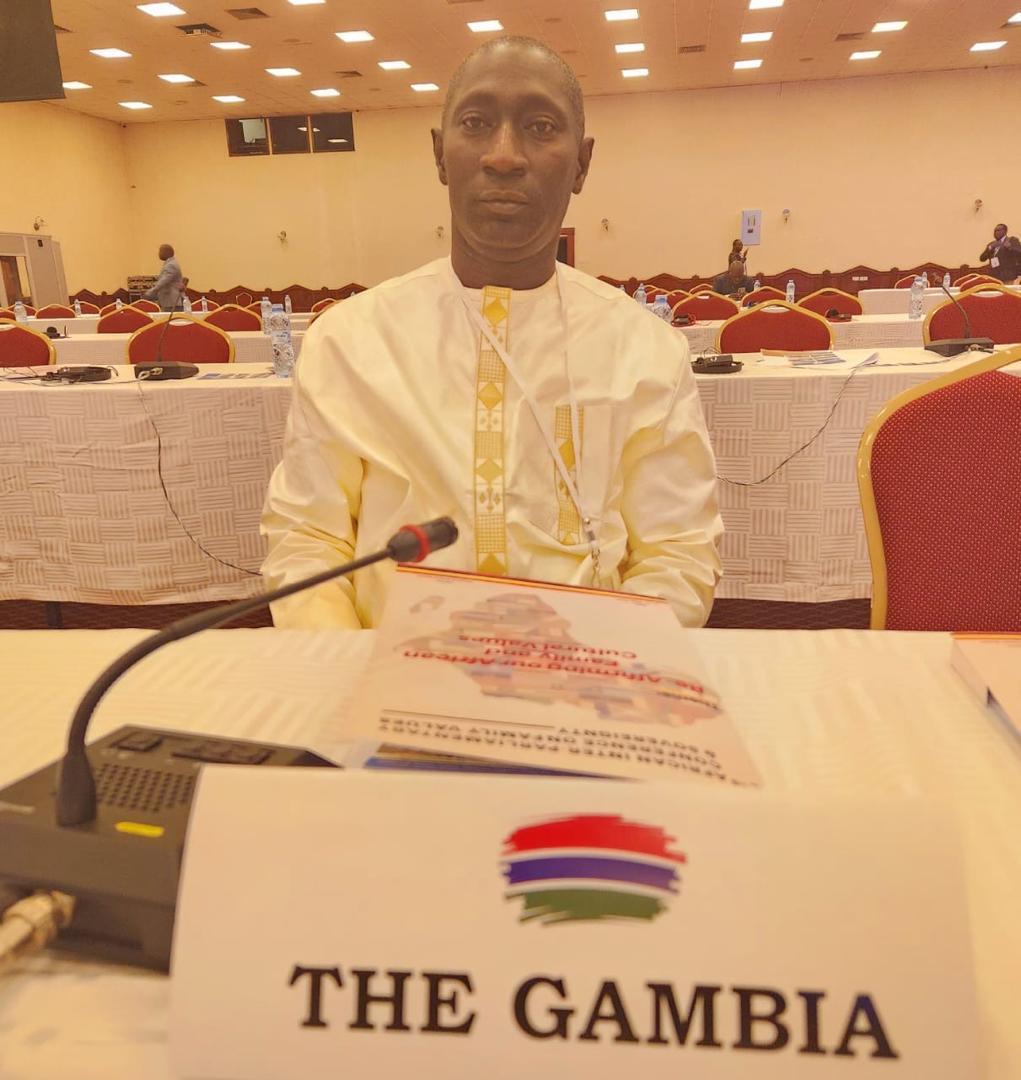 The Hon Gibbi Mballow is a Member of the Gambian National Assembly, the parliament of that country. He represents the Lower Fulladu West Constituency, where he grew up and still lives. He is a member of the National People’s Party. Whilst upholding and respecting his faith as a Muslim, Hon Mballow is aware it cannot be used to justify traditional harmful practices such as female genital mutilation (FGM), a tradition which has caused damage and ill-health to many women and girls. He aims to ensure FGM is abolished in The Gambia forever… and he is speaking out on it.
Nonetheless, the problem about legislating against FGM remains very concerningly. At the end of this post is also the statement Hon Gibbi made on 12 September about the personally perilous position in which he, his family and similarly persuaded colleagues now find themselves.
Read more…
You can TRANSLATE this website to the language of your choice via the Google weblink.
.
 The situation in The Gambia regarding FGM is currently very serious. A previous post here – Please DO NOT RESCIND #EndFGM Legislation In The Gambia – explains why this petition urges that a law which forbids female genital mutilation (FGM) should not be reversed, despite calls by some Gambian politicians to do just that. One major rationale for again permitting FGM is particularly unacceptable. Banning FGM was not, as some claim, a move by Westerners, or by people who disrespect Islam. Rather, this prohibition came about after much lobbying by Gambian women for years to secure a ban on FGM.
This post offers some of the historical background to achieving the prohibition of FGM in The Gambia, in support of the women in that country who have worked tirelessly to eradicate it. They must be respected for working so hard to ban that cruel ‘traditional’ practice, with all the harm that it imposes on babies, girls and women (and their families) who have been its victims.
You can TRANSLATE this website to the language of your choice via the Google weblink.
.

This petition addresses the continuing lack of provision of post-female genital mutilation (FGM) health care facilities for survivors of that appalling harm who live in the United Kingdom.
The authors of the petition believe funding for surgical reconstruction and psychosexual services are essential to address the unmet need of survivors of female genital mutilation (FGM).
Please support this petition for funding clinical services in this important area.
Here is the link to access the petition https://petition.parliament.uk/petitions/655651, which is open for signing by British citizens and people resident in the U.K., just until 5 August 2024.
Please if you can, support this petition.
Sign this petition
At 10,000 valid signatures the Government will respond to the petition. At 100,000 the petition will be considered for debate in Parliament. We have only until 5 August 2024 to get the required number of signatories.
The text of the petition (which you can also read via the link above) is as follows below:
You can TRANSLATE this website to the language of your choice via the Google weblink.
.

Our friend and colleague, Shahidul Alam PhD, is a citizen and journalist working in Bangladesh and globally.
He studied in Britain, where three decades ago he gained his doctorate in organic chemistry before turning to photojournalism, using his camera to document the imperilled conditions and human rights of people in various parts of the world.
Sadly the safety and freedom of Shahidul himself is now at risk.
Here is an account of what Shahidul Alam tells us happened in 2018 when he reported a safety campaign by young fellow Bangladeshis after a road traffic incident. The text below, co-authored by Lorraine Koonce-Farahmand and myself, explains why that episode has somehow, even more than five years later, led to continued peril for this committed human rights campaigner.
You can TRANSLATE this website to the language of your choice via the Google weblink.
.
 This photograph is of Jaha Dukureh, who with other FGM survivors in 2015 so bravely persuaded legislators in The Gambia, her native country, to outlaw female genital mutilation (FGM). Now however there is the prospect of that legislation being repealed, so that FGM can once again be practised legally.
The petition below explains why we as global citizens stand with Jaha and many others in that country and elsewhere, imploring the Gambian parliamentarians not to endorse this reversion to permit FGM.
We sent this document to the President and legislators of the Gambian parliament in time for it to be considered before a final decision on this desperately retrograde proposal was made in Junly 2024.
For a final outcome report on this campaign, and warm thanks to all of you who supported (and will continue to support) it, please see here:
World Water Day – And Why It Matters For #EndFGM
22 March is World Water Day, a date the UN first observed in 1993. Attention is focused on the global water crisis, highlighting the 2.2 billion people living without access to safe water. The 2024 theme, Leveraging Water for Peace, shines a light on action to tackle the devastation of global water and sanitation failures, not least for women and girls. This failure to provide safe water for consumption and hygiene is both a general crisis and one, I suggest, relating specifically to FGM (female genital mutilation). What follows are some reasons why.
You can TRANSLATE this website to the language of your choice via Google Translate.
UNICEF says women and girls spend 200 million hours every day collecting water.
“200 million hours is 8.3 million days, or over 22,800 years,” said UNICEF’s global head of water, sanitation and hygiene Sanjay Wijesekera. “It would be as if a woman started with her empty bucket in the Stone Age and didn’t arrive home with water until 2016. Think how much the world has advanced in that time. Think how much women could have achieved in that time.”
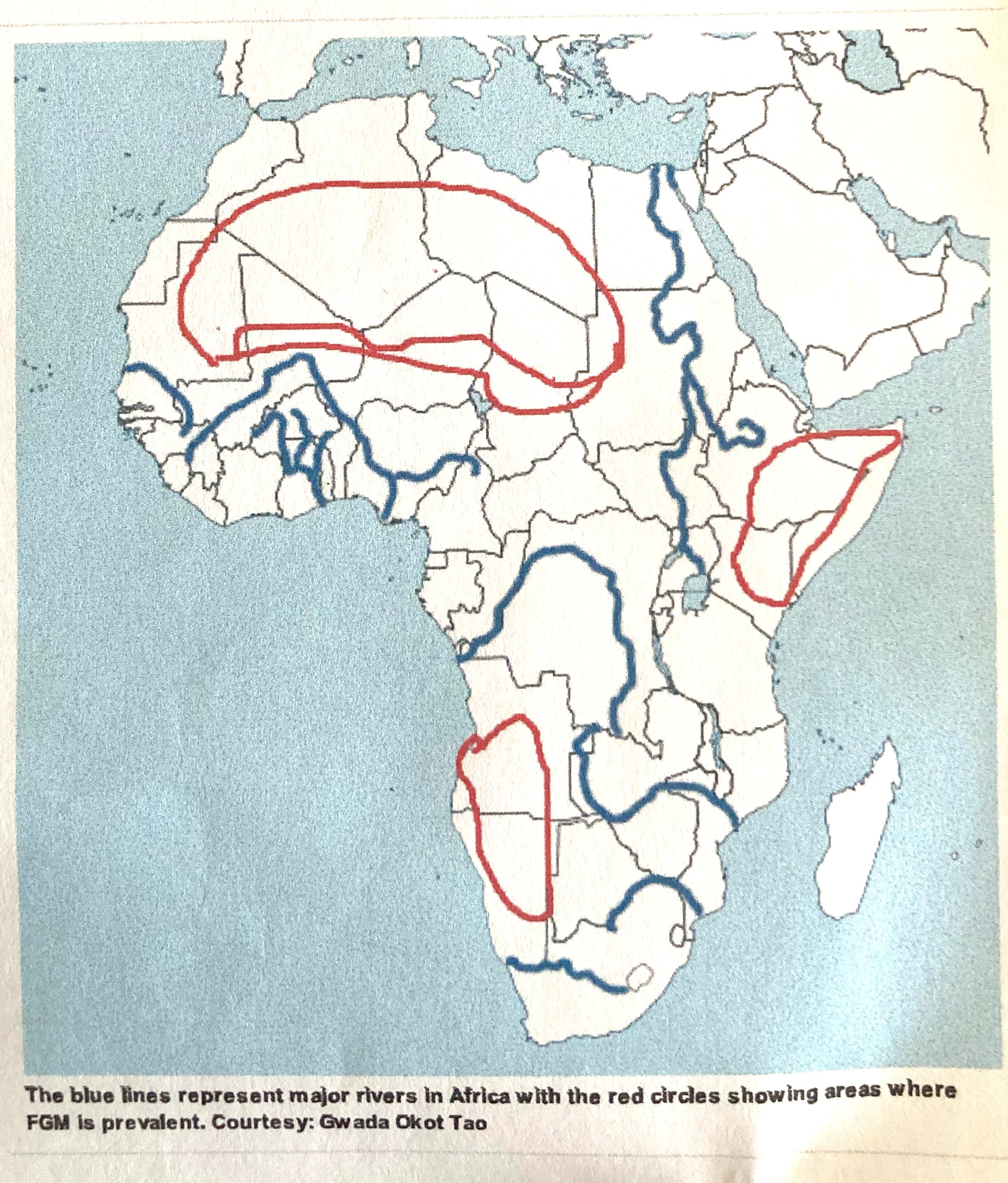
This observation throws into sharp relief why we need here first to consider how and why water is such a critical issue in many parts of the ‘developing’ world / ‘global south’. Thereafter we will also ask how the adequate availability of clean water might influence efforts to end FGM – unfortunately a matter rarely at the forefront of water policy. This map by Ugandan Gwada Okot Tao helps to illustrate why water may be so important:
Men As Policy-Makers Must Support #EndFGM – Enable Women To Gain Respect As Adults Via Fair Social And Economic Contexts
You can TRANSLATE this website to the language of your choice via the Google weblink.
.
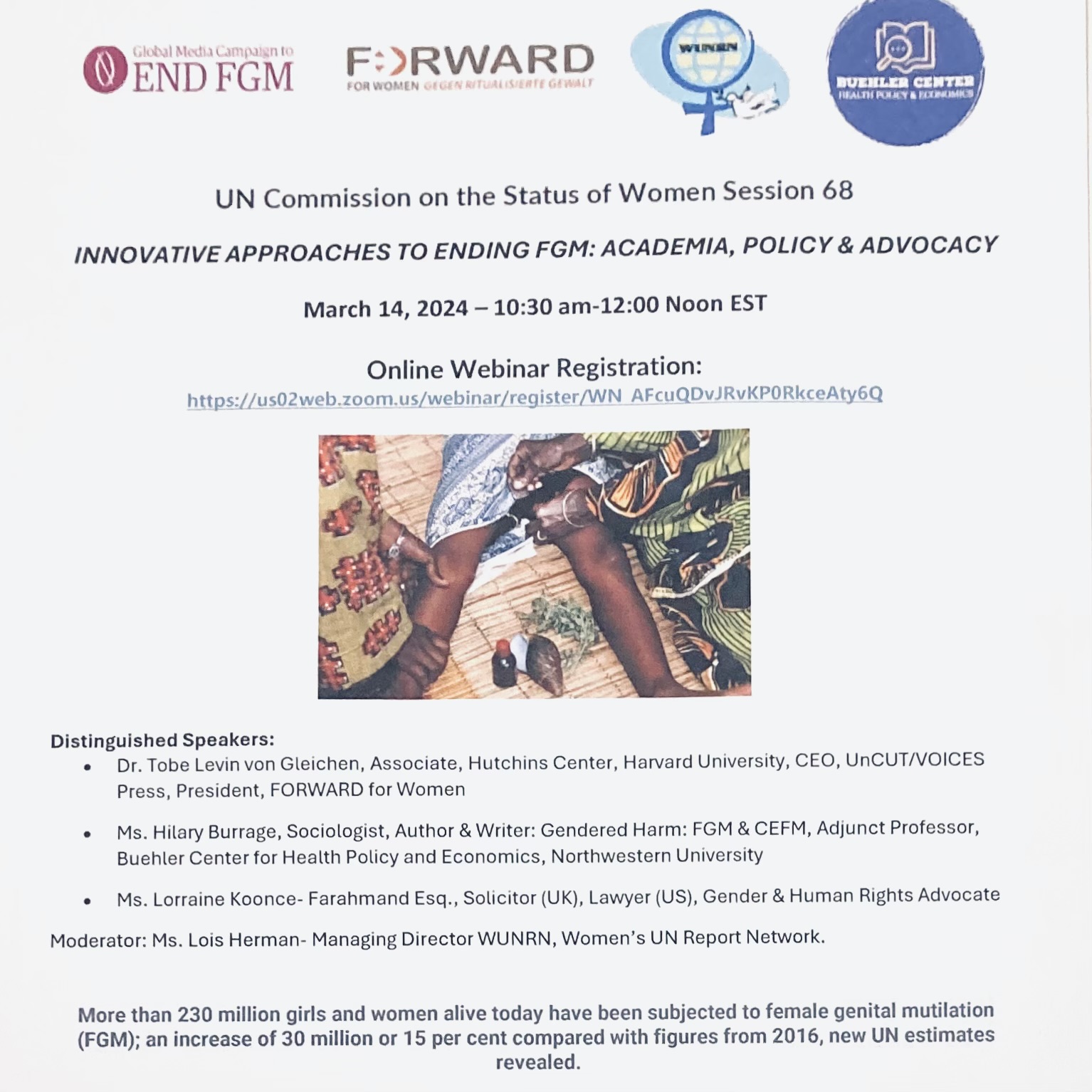
Today I joined my friends and colleagues Dr Tobe Levin and Lorraine Koonce-Farahmand Esq to deliver a session of the Commission on the Status of Women (CSW68), the theme of which this year is “Accelerating the empowerment of all women and girls by addressing poverty and strengthening institutions and financing with a gender perspective”. The title of our presentation, chaired by Ms Lois Herman of WUNRN, was ‘Innovative Approaches to Ending FGM: Academia, Policy and Advocacy’. My topic was Can practical ‘developments’ in socio-economic contexts help end FGM?
My thoughts on this question focused around the criticality of supportive measures by men, comprising the majority of politicians, leaders and policy-makers, in places where female genital mutilation (FGM) still occurs. It is very largely still men who decide how to shape laws, communities and infrastructure; but few consider actively how their decisions can enhance or damage moves to end this cruel and harmful traditional practice.
Nonetheless, there are many more men than those brave few openly declaring their opposition to FGM (examples here), who would like to see it end. I suggest in this post for their consideration some ideas about how that objective might by wider socio-economic developments be pursued.
Efforts to ensure women everywhere are respected as responsible adults, regardless of their FGM ‘status’, might be a powerful force towards eradication. This would require determined focus on enabling women to live their lives autonomously, free to be economically independent, and without the ‘need’ for reliance on husbands and other men.
Eradicating Female Genital Mutilation: Progress Via Practical And Low-Tech Approaches?
You can TRANSLATE this website to the language of your choice via the Google weblink.
.
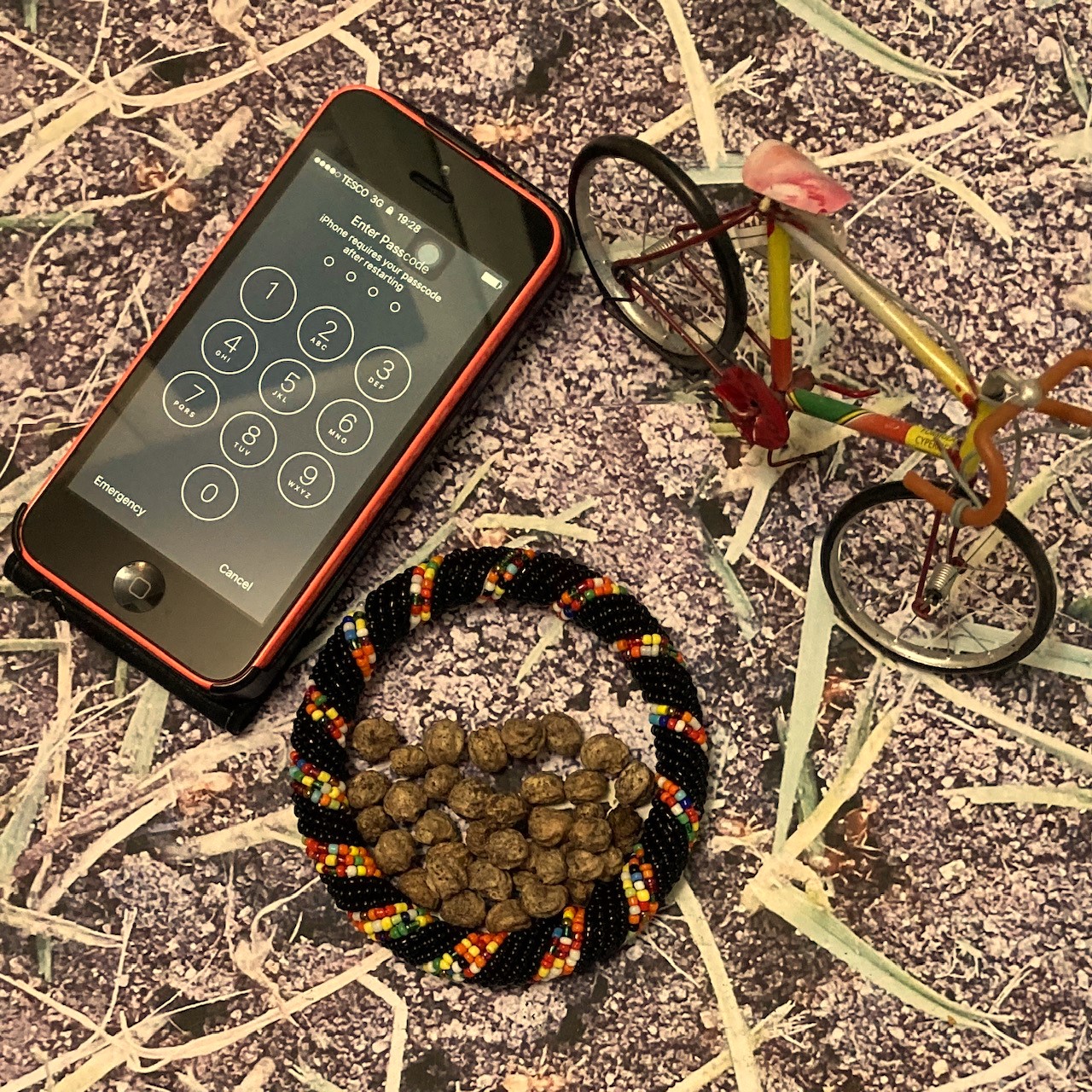 This post, in recognition of International Women’s Day (8 March), is a follow-up to my piece 0n Eradicating Female Genital Mutilation: Identifying The Tensions And Challenges of 6 February 2024, which was International Zero Tolerance for FGM Day. In the first post I considered some wider socio-economic contexts in which violence against women and girls (VAWG), especially FGM, continue, and some issues which can occur in terms of potentially conflicting interpretations and / or hypocrisies around such difficult and complex situations.
In this second post, referencing the always critical issue of sustainability, I consider some of the possibilities, already potential or in use, for the general adoption of practical measures, low technologies and public information in the eradication of FGM and other VAWG. In doing so I have drawn on findings from the COP26* conference on global environmental challenges such as energy (carbon), population and food, and on examples of accessible technologies and items such as mobile phones and bicycles. None of these ideas and suggestions is mine alone, but perhaps they help focus on the wider aspects of ending FGM, as well as the immediate medical, legal and educational mechanisms. Both are I believe essential for effective progress to be made.
This is the UN statement of IWD 2024. Below are some suggestions about how it interfaces specifically with efforts to #EndFGM.
In a world facing multiple crises that are putting immense pressure on communities, achieving gender equality is more vital than ever. Ensuring women’s and girls’ rights across all aspects of life is the only way to secure prosperous and just economies, and a healthy planet for future generations.
One of the key challenges in achieving gender equality by 2030 is an alarming lack of financing with a staggering USD 360 billion annual deficit in spending on gender-equality measures.
The time for change is now! Join us on 8 March 2024 for International Women’s Day as we rally behind the call to “Invest in women: Accelerate progress”.
[*COP26 was the 2021 meeting, in Glasgow in November 2021, of the UN Framework Convention on Climate Change (UNFCCC). ‘COP’ is an abbreviation of ‘Conference of the Parties’, of which that event was the 26th].
Eradicating Female Genital Mutilation: Identifying Practical Socio-Economic Measures And Technologies
You can TRANSLATE this website to the language of your choice via the Google weblink.
.
 Today is International Day of Zero Tolerance for Female Genital Mutilation (FGM), which perhaps offers an opportunity to look at progress made and some of the challenges ahead in ending FGM.
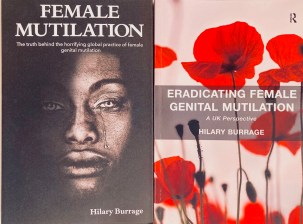
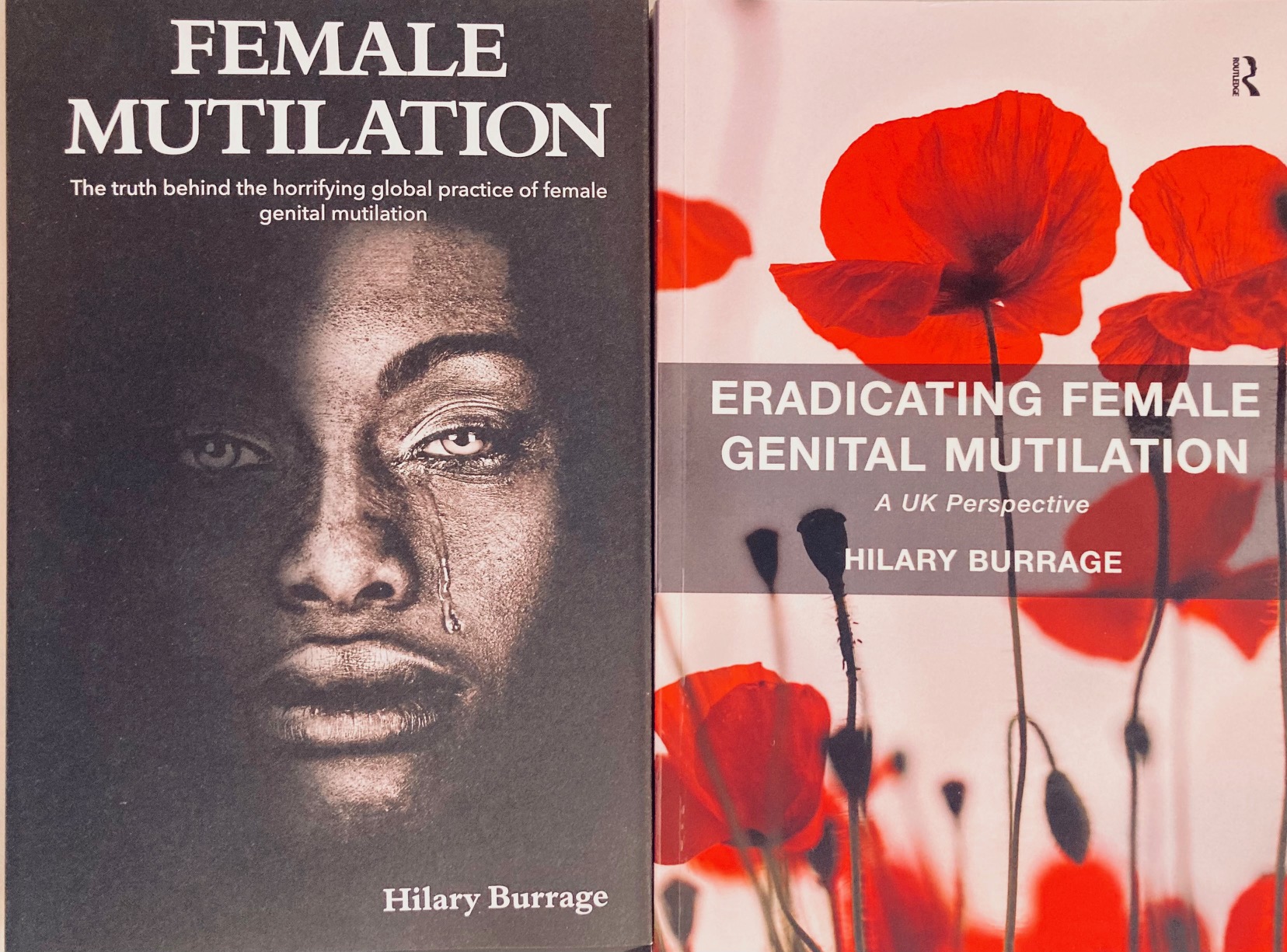
I am an academic sociologist. I subtitled my Eradicating Female Genital Mutilation book, published in 2015, ‘A UK Perspective‘ because I wanted to show respect to those, unlike me, working in and reporting directly from the field, often in countries in Africa or the Middle East.
What I researched and wrote about covered also however many parts of the globe beyond the U.K. – and the book was amongst the very first expressly to consider FGM from wider socio-economic and epidemiological perspectives. My thoughts today, presented here in summary, are therefore on progress made since 2015, and on issues which we must still address.
Particularly, I have considered here, looking back on this topic, ways in which these issues connect with another major theme which preoccupies me – the adoption of practical wider socio-economic measures and low-level technologies which, as well as having intrinsic value, may help to move forward the resolution of matters such as FGM. I will examine this second theme more closely in a subsequent post. Read more…
And The Most Complex Unaided Human Neurophysiological Collaboration Ever Is… An Orchestra?
You can TRANSLATE this website to the language of your choice via the Google weblink.
.
 This is a little diversion from my usual themes, but it’s a happy thought, so here goes: I suspect that the most complex stand-alone neurophysiological ‘exercise’ in the whole of human history is… a symphony orchestra. And since this week marks the annual conference of the Association of British Orchestras, now seems a good time to mention this.
The picture of the left is just one small example of the score for a single instrument (in this case, first violins) in a work for a large-scale orchestra.
As the score suggests, sometimes more than one note must be played at once, and they must often be played very rapidly, and always exactly together and extremely accurately. And everything must carry on precisely like that for, say, forty minutes or even an hour, if a major symphony or concerto (with soloist) is on offer in the concert.
But of course orchestras have many more instruments than ‘just’ violins…. Read more…
You can TRANSLATE this website to the language of your choice via the Google weblink.
.

The strapline on the cover of this book tells us much about its message: ‘When the world is against you… fight back!’ I Kick and I Fly is the tale of fourteen-year-old Heera, living in a grimly impoverished red light district in India, and about to be sold into the sex trade by her father, to pay the family’s debts.
But Heera has other ideas, bolstered by a chance opportunity to learn Kung Fu. Then her best friend goes missing, and Heera embarks on a daring rescue mission…
Ruchira Gupta, a journalist and activist, is a powerful advocate for feminist strength. To quote no less an authority than Alice Walker, author of The Color Purple, ‘Any work from Ruchira Gupta is sure to further the cause of liberating women.’
In this story of a fast-moving adventure we learn about a part of the world unknown to many, a world where it takes determination, ingenuity and courage to secure a way out. Read more…
The Routledge International Handbook of Harmful Cultural Practices
 Dr Tobe Levin von Gleichen writes: “Addressed to teachers at all levels, activists, policy-makers, and readers who care about girls’ and women’s wellbeing, this wide-ranging cornucopia of scientific analyses and literary essays promotes ending FGM. Its power derives from scholarship clearly presented to lay readers and contrasting viewpoints from all continents except Antarctica. Its intersectional lens illuminates FGM among allied abuses: early and forced marriage; surgical responses to intersex infants; the virginity complex in Western countries and more.
“Dr. Tobe Levin von Gleichen and Dr. U.H. Ruhina Jesmin edit UnCUT/VOICES publications, and the fine work of a number of contributors, including Hilary Burrage, has also appeared under the UnCUT/VOICES colophon. We are proud of our association with Routledge in offering you this resource.”
The book can be obtained as a paperback here. I am delighted to be a contributor to this important publication, as the author of Chapter 12, on FGM Studies: Economics, Public Health, and Societal Wellbeing. Further details of the book follow below.
Edited By Maria Jaschok, U. H. Ruhina Jesmin, Tobe Levin von Gleichen and Comfort Momoh Copyright 2023
NB Another Routledge book chapter I wrote relating to FGM and other genital surgeries is Female Genital Mutilation and Genital Surgeries, pp 495-511, Ussher et al, Routledge International Handbook of Women’s Sexual and Reproductive Health (2020) [See also Twenty Years Of Zero Tolerance Day To #EndFGM: But No End To Gender Debates And Genital ‘Treatments’.]
You can read this website in the language of your choice via the Google Translate.
 You can read this website in the language of your choice via Google Translate.
 You can read this website in the language of your choice via
 .
Hilary is a sociologist and Adjunct Professor at Northwestern University, Chicago (living in London). Much of her work now focuses on the health and safety of children and vulnerable adults, gendered violence, and, particularly, female genital mutilation.
Hilary Burrage is a consultant sociologist and journalist who has extensively researched and written about female genital mutilation (FGM) as a long-time campaigner for its eradication. She is considered an expert on the subject and has authored several highly-regarded books [etc] that address the global practice of FGM and the efforts to end it.
A National Traffic Lights System To Report NHS And Other Concerns Would Ensure Accountability
You can TRANSLATE this website to the language of your choice via the Google weblink.
.
 UK news a few days ago of the paediatric nurse Lucy Letby ‘Guilty’ verdicts – confirming that she did indeed murder several tiny babies (and tried to kill even more) – has left most of us numb, almost unable to comprehend what happened. But behind these verdicts lie questions about why it took so long to stop the horror; and what can be done to prevent such awful crimes in the future? One possible way forward would be a national ‘traffic lights’ system to record all child or vulnerable adult abuse concerns and the official responses to them.
Blade of Tradition in the Name of Religion: A Phenomenological Investigation into Male Circumcision in Iran (Ahmady, 2023)
You can TRANSLATE this website to the language of your choice via the Google weblink.
.
 There has long been a debate about whether ‘male circumcision’ – what some of us call ‘male genital mutilation’ (MGM) – can be seen in the same light as female genital mutilation (FGM). My own view is that there are both similarities and, to an extent, differences, but each is done on children who cannot consent, and both can in fact be deeply incapacitating or even lethal (in parts of Africa, many boys die from ritual circumcision every year). Yet still, in some global locations very little is known about the realities of MGM. It is good therefore to report the newly published study by my colleague Kameel Ahmady of male circumcision in Iran. Kameel asked me to write a Foreword to his book. This follows below.
Foreword by Hilary Burrage to Blade of Tradition in the Name of Religion (Ahmady, 2023) Read more…
You can TRANSLATE this website to the language of your choice via the Google weblink.
.
 It was great recently to meet up with Prof. Lori Ann Post, whilst she was on a visit to London. Dr. Post is Director of the Buehler Center at the Northwestern University Feinstein School of Medicine in Chicago, where she some while ago appointed me an Adjunct Professor; so we had a lot to catch up on and discuss. Lori is well able to express her own views, but one issue which we explored a little is why there is often something of a chasm between the activists campaigning on the ground against, eg, FGM, and those who research it with the same aim. I will try to consider that challenge briefly in this post.
Belgravia In Bloom ’23
You can TRANSLATE this website to the language of your choice via the Google weblink.
.
 Have you heard of Belgravia in Bloom? It’s a more relaxed and open-to-all mini version of the globally renown nearby (and concurrent) Chelsea Flower Show. Now in its eight year, this festival of flowers is definitely… blossoming.
I’ve just joined POST, a new(ish) blogging site, and I thought I’d start with something positive, a few nice photos and a bit of London history. Maybe you’d like to take a look? Read more…
Dr Phoebe Abe-Okwonga: FGM Activist And Physician
You can TRANSLATE this website to the language of your choice via the Google weblink.
.
 Dr Phoebe Abe-Okwonga MB ChB, MSc(CTM ), FRSA is a General Practitioner (GP) and Community Health physician who has practised for many years at the Yiewsley Health Centre in West Drayton, Greater London, England – where she holds an hour-long free and open clinic every Monday and Friday lunchtime, even in lockdown, for any woman who has undergone female genital mutilation (FGM).
Phoebe, a widowed mother of five originally from Uganda, completed her medical studies decades ago in the UK and has been concerned about FGM for many years. There are, she says, some 200 million women and girls now alive who have endured FGM, and around 130 to 140 thousand of them live in the UK.
 ‘The Patriarchy’ has been a mainstay of feminist critiques of societies for decades; and even before that, over the centuries, the idea that men have huge advantages over women was well understood and often discussed. But is it still the case in modern contemporary societies that, simply because they are men, some human beings have advantage over others, who happen to be female?
This was the question I addressed today in a talk for our local Fabian Society. Does patriarchy remain so embedded that we just don’t see it?
You can read this website in the language of your choice via the Google Translate.

 Hilary Burrage