Welcome. This website comprises mostly Hilary's sociological papers and articles about patriarchy, (gendered) harmful practices (e.g. female genital mutilation / FGM) and thoughts on science, health, environmental issues, sociological analysis, social policy and good practice.
 For practitioners of sociology, the sociological imagination shapes our understandings of politics as we try to make sense of the General Election, Politics and Power. As a sociologist you can either observe society from afar or get involved as many of us feel compelled to do. The sociological prism, once perceptually engrained, is deeply compelling; and never more so than when focused on Power.
Read more…
Sure Start, But Weak Connection
 Elections offer the opportunity to take stock and choose futures – as do decisions taken in regeneration every day, year in year out.
But to act wisely we need to understand how things come about. Politics locally or nationally underpins almost everything which happens in urban and community renewal, yet it remains often unperceived as the changes occur.
‘Right To Buy’ Heads Up The Housing Agenda Again
 Apparently ‘Right to Buy’ – a key policy in Prime Minister Margaret Thatcher’s time – is with us once more. It seems Conservatives in Wandsworth are keen to re-introduce the sale of council housing to tenants as a serious element in civic regeneration strategy. And there may also be other local authorities with the same idea, which some of us hoped had gone for good.
Read more…
Quotas For Women On Top Boards
 Do we need a quota system to get women into top Board positions? is the question asked today by the (Liverpool) Daily Post’s Business writer, Tony McDonough. It is sadly the case that some very successful women argue no special case should be made for more women to join them; perhaps this was true for them as individuals. But this ignores the huge untapped talents of the female half of the population.
Read more…
Regeneration Disappears Along With Regionalism
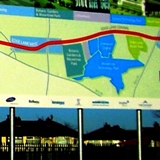 Where’s the regeneration? is a question which continues to worry many of us, as we look at (read reports of?) the political parties’ manifestos. This remains a valid and critical matter; but perhaps the invisibility of regeneration in its full-on form is inevitable. First there is a large degree of consensus about needing to concentrate on the smallest units of community life, and then, before we can say Sustainable, the bigger units have disappeared from view.
Read more…
The Big Society And ‘Dysfunctional’ Communities
 The Conservatives’ Big Society proposals, derived from their Broken Britain idea, might more truthfully be called the Boot Straps (community use of) proposals; for that is what they advocate. Scant hope here that disadvantaged communities will receive the support and investment they still need. The Big Society help them join mainstream society. Rather, Big Society rhetoric – ‘dysfunctional communities’, not disempowered ones; ‘platoons of volunteers’ comprising all adults in every UK community – suggests an altogether more prescriptive model of modern British society.
Read more…
BURA’s Framework For Regeneration
 The British Urban Regeneration Association’s Framework for Regeneration sets six criteria by which to assess the various political parties’ proposals for regeneration. A long and serious conversation about regeneration and sustainability is now required. Already, BURA has published responses to the recent Labour Government’s Budget, and the Conservatives’ paper on Big Society not Big Government.
Read more…
Deprivation Is Not The Same As Dysfunction
 A political debate is developing about how to tackle ‘dysfunctional communities’ after the general election. Discussing how to improve things for people in ‘disadvantaged’ or even so-called ‘deprived’ locations is one thing, and many of us have made this the focus of attention over the past decade or three. But the repair of ‘dysfunctional’ communities is another matter – not least because this concept is desperately negative and is unfair to the decent majority.
Read more…
World Water Day – Too Big To Handle?
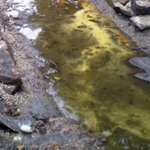 Monday 22 March 2010 is World Water Day, the annual date selected by UN-Water to remind us of the fundamental part water plays in all our lives. This year’s theme is Clean Water for a Healthy World.
Can there be any more pressing issue? Without clean water people die needlessly from horrible illnesses, without water at all they starve. But does all this have much influence on how we lead our lives in the western world?
Read more…
The Big WHY?
 There’s an awful lot of advice out there at the moment, about how to cope with / take advantage of / simply survive the new economic and social climate (not to mention the environmental one) which we are assured we now all face. Well, I’m sure it’s true that things are changing, but my guess is it’s less certain that we actually know in what way or ways.
Is it time to shift the vantage point a little, and ask more often not just How?, but also Why?
Read more…
Knowledge, The New Currency In Regeneration
 From regeneration to sustainability: A Northern take on knowledge ~ Knowledge is a neglected commodity in regeneration. It can be seen as the ‘new currency’ — the element in modern society which very largely distinguishes the empowered from the disempowered. But while much attention is paid to developing sustainable communities, very little is paid to the flow and accumulation or acquisition of knowledge or knowledges which might inform their settings and empower them.
Read more…
 How do ‘evidence’ and ‘policy’ fit together? It’s one thing to hope the evidence will tell us what to do; it’s another to persuade everyone else that the logic of how to resolve a given situation is so compelling.
Evidence-based policies are a great idea; but different people ask for different sorts of evidence. And policy makers can only deliver what electors will accept. There’s a dialogue challenge here somewhere.
1968 And All That: The Tale Of A Jobbing Sociologist
 Sociology as a discipline in the UK was shaping up during the 1960s; but there was still an air of mystery about the whole thing when I chose to study it. There was then no clear role model on which to base expectations. The discipline has however served me well ever since. For most of my working life I’ve been what might be called a Jobbing Sociologist. I wrote this account of my experiences for the BSA ‘Sociologists Outside Academia’ newsletter.
Read more…
The Economist Debate: Keynes Vs. The Free Market
 The Economist magazine has had an online debate on the proposition that ‘We’re all Keynesians now’. The outcome was not encouraging. By two-to-one that idea was rejected in favour of the free-market. Perhaps some economists haven’t yet learnt that the current day physical realities of the contexts keep shifting, and that the science of human behaviour is ultimately an art, depending on facts but also feelings.
Read more…
Can Liverpool’s Arts And Culture Businesses Thrive Post-2008?
 The Liverpool Chamber of Commerce and Industry (LCCI) represents all sectors of business in the city – including those who work in arts and culture. A current Chamber concern is therefore to maintain and promote the gains made during the city’s 2008 European Capital of Culture Year by Liverpool’s creative, arts and culture sectors. To promote this agenda, the Liverpool Chamber of Commerce and Industry has an LCCI Members’ Council has an Arts and Culture Committee, of which I am the founding chair.
Was Liverpool A Truly Inclusive Capital Of Culture In 2008?
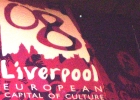 Liverpool has made much of its community engagement programme during the city’s European Capital of Culture year, in 2008. But when does engagement become genuine social inclusion? Does inclusion require empowerment as well as contact? Or is the underlying emphasis on increasing tourism to bolster the local economy enough?
Read more…
 La Princesse, a gigantic metal spider, came to Liverpool in early September 2008. This monster brought huge crowds to Liverpool’s city centre, as it enacted its story of ‘scientists’ and adventure.
There to attract ‘cultural tourism’ business to the city, at almost two million pounds one hopes this was a success. Whether, as claimed, it also engaged people successfully in ‘culture’ is also uncertain: at some point real cultural engagement surely also involves empowerment.
Read more…
Liverpool ’08: Cultural Turn Or Cultural Tourism?
 The Architectural Association, London hosted a debate on Friday 5 December ’08 about Liverpool. Consequent upon the issue of Architectural Review earlier in the year about that city, the speakers at this seminar were asked by architect Brian Hatton, a staff lecturer at the AA, to consider whether Liverpool has experienced a Cultural Turn.
Read more…
If Only Scientists Could Remember… Science Has Its Responsibilities: My Piece In ‘Research Forum’
 Research Forum has this week, 5 November 2008, carried an analysis (including an article by me) of A Vision for Science and Society, which DIUS, the Department for Innovation, Universities and Skills launched on 18 July and concluded on 17 October. The debate is by no means over. This is a conversation which has as yet a way to run.
Read more…
PHSE Becomes Core Curriculum – At Last!
 After much debate the Government has finally announced that Personal, Health and Social Education (PHSE) will be compulsory in schools at a level appropriate to each child’s age. This decision has been generally welcomed. But only a few years ago some of us, as educators, were still battling to save this entitlement and embed it into the curriculum.

 Hilary Burrage