Ending FGM In The Gambia Needs Real Action As Well As Words
.
You can TRANSLATE this website to the language of your choice via the Google weblink.
.
The Gambia Assembly (parliament) recently voted to retain legislation against female genital mutilation, but this decision is still not without controversy. There are people who claim, erroneously, that it is required by Islam so they continue to want to permit this cruel practice.
Amongst those who have resolutely supported the ban on FGM is the Hon Gibbi Mballow, a member of the National Assembly. This courageous decision has however proved costly to him personally and his family.
It is obvious that many people in The Gambia, including numbers of Hon Gibbi’s own constituents, will require more than fine words before they are convinced that abandoning traditional ways is acceptable. They will probably be more persuaded by real practical support towards safer and more comfortable lives, than by legal, or maybe even ‘religious’, arguments; so that tangible support is what Gibbi Mballow now seeks to secure.
Many of us around the globe tried to demonstrate our support of the Gambian legislation against FGM via public petitions such as this one. Our petition was not however a stand-alone exercise. A number of significant strands emerged as we became more familiar with the issues to hand. Amongst these were:
- Increasing concern in significant international quarters that any cancelling of FGM legislation in The Gambia would immediately prompt similar efforts in other countries – with the claim amongst protagonists that e.g. ‘Westerners’ were disrespecting The Gambia’s culture and religion
- Increasing awareness that these attempts at cancelling the law against FGM were led by fundamentalist religious groups, very largely male, who made false claims about what the Islamic faith requires of women (FGM preceded Islam and there is no confirmed record of any obligation to impose it; but we are told that numbers of community members persuaded to the contrary are not sufficiently literate to read the scriptures for themselves)
- Efforts to persuade communities that their ‘culture’ requires FGM, rather than that it is just unchallenged tradition which supports this custom
- A general lack of understanding that all forms of FGM are, as the WHO insists, harmful – a fact actively denied especially by some of the male protagonists for cancelling the legislation
- Evidence of financial dealings in some communities to gain support for ditching FGM legislation (we already know for sure that an Iman raised money to pay the fines – therefore enabling the release from prison – of three ‘cutters’ recently found guilty of inflicting FGM on babies)
In the light of all this it is gratifying to report that the Gambian Assembly Members (parliamentarians) decided convincingly when the issue returned for further debate on 15 July 2024 that they would retain the law decreeing FGM a crime. That affirmative decision was subsequently endorsed also by the President of The Gambia.
The issues continue
This was not however the end of the ‘story’. Those who had sought the legislative change have challenged the decision to retain the anti-FGM legislation at several levels.
At the highest level, a group of largely fundamentalist Islamists has lodged a demand that the entire FGM legislation, back to 2015, be declared inadmissible by the Gambian Supreme Court. This appeal is likely to be heard sometime in Autumn 2024, and is in fact unlikely to succeed, but it reinforces the worrying message that for some Gambians FGM remains acceptable.
At a less formal level, those who still seek to make FGM admissible have brought together a number of activists, not all of them Gambian, to persuade local people that FGM is their ‘culture’ and should be accepted and endorsed on that basis. These efforts at legitimation have included gathering together groups of women to hear, broadcast on the radio, the (inaccurate) claims of a highly educated American-Sierra Leonean woman who actively chose years ago to undergo FGM in the Bondo Bush as an adult, along with her significantly under-age sister.
And then there are the personal threats and intimations of violence. These have been directed at the determined Gambian women (respected and well-known, dedicated activists) who have opposed FGM for decades, and at the politicians who fought to retain the anti-FGM law.
As a result of these threats and intimidation some anti-FGM activists and politicians have found it necessary to take precautions for the safety of themselves and their families.
Amongst those politicians receiving threats is the Hon Gibbi Mballow who has been at the forefront of work to ensure FGM remains illegal. Hon Gibbi has been told that by challenging FGM he is a ‘traitor’ to his community, and that he will lose his Assembly / parliamentary seat (Lower Fulladu West) at the next election. He has also found it necessary to relocate his family (four young daughters) for their safety.
This situation is absolutely unacceptable, but Mr Mballow has identified ways in which to demonstrate resolutely his commitment to improving the lives of his constituents.
Some demographics
Lower Fulladu West is an up-river section of The Central District, the largest of the five administrative districts of The Gambia, located on both sides of the Gambia River, which is the principal source of water and transport. The main agricultural product are peanuts and rice.
Population
The total population of The Gambia in 2024 is about 2.4 million in a country of some 11,300 km2. Focusing on Lower Fulladu West, the City Population / The Gambia Bureau of Statistics reports the 2013 census as showing the district population as about 40,000 over an area of approximately 370 km2.
Health
2024 data gives an infant mortality rate of 29 for every thousand births (in 1950, 148 / thousand) and under-five mortality as 43 per every thousand births (in 1950 410 / thousand). Much has been achieved over the past decades, but more still needs to be done whenever possible.
FGM
UNICEF reports that in recent decades rates of FGM in The Gambia have remained largely stable at around 75% of women aged 15-49, with most girls undergoing it before the age of 5. (Type 2 is probably the most common procedure, almost always by a traditional ‘cutter’.) This UNICEF 2013 data also reports that 9% of girls are married (or in a union) before age 15, 30% before age 18, and 19% have given birth by 18. The Gambia Demographic Health Survey suggests that by 2020 the prevalence of FGM had however dropped a little, to 73%
A 2016 report says that FGM is slightly less prevalent in girls and women in urban areas (51%) than in rural ones (60%). A 2023 UNICEF report states that the percentage of girls and women aged 15 to 49 who know about FGM and think it should continue declines from 50% with a primary education to 39% with a secondary education, and from 52% in the middle wealth quintile to 36% in the richest wealth quintile.
Education and literacy
Girls who marry young are significantly less likely to have completed their school education. Nonetheless, education statistics from the Ministry of Basic and Secondary Education (MoBSE), show the primary school completion rate was at 80% in 2023 for boys and 96% for girls. The lower secondary completion rate was at 56% for boys and 75% for girls in 2023 (primary education is free, but in general boys must pay fees for secondary education, whilst girls are now excused.)
UNICEF (2020) gives The Gambia a literacy rate for young adults (15 – 24) of 69% for men and 64% for women. The World Bank / UNESCO reports that in 2024 net enrolment ratio in primary education (free, but not compulsory) was 94% – 100% for girls, but 87% for boys. It is likely however that girls drop out of school at an earlier age than the boys.
It is also reported that by 2024 in The Gambia 75% of city-dwellers had achieved literacy, but still only 41% of those in rural settings have done so. Likewise, literacy is only half as common among the poorest individuals as the most wealthy (42% versus 85%).
Land and labour
Britannica states that most land in The Gambia is held in common by villagers, which raises issues for women about men who claim ownership. There is a sharp division of labour, with men involved in planting, cultivating, and harvesting cash crops while women cultivate subsistence crops such as cassava (manioc), yams, eggplant, tomatoes, rice, and lentils. The production of peanuts has increased with the wider use of fertilizers and ox-drawn equipment and the introduction of better seeds but electricity is limited to parts of Banjul and a few interior towns, sporadic at best. Most Gambians do not have access to modern infrastructure.
In such a context it is unsurprising that rural Gambians especially feel the need for better support – the facilitation of meeting places to discuss problems, better agricultural tools for women growing crops, more health and educational facilities. These are requirements that Gibbi Mballow, himself a first generation graduate in pharmacy, seeks to address for his constituents.
From patriarchy incarnate to socio-economic progress
In contexts such as this words have little impact. If long-established practices such as FGM are to be challenged (as it should) by law and rhetoric, that challenge needs to be balanced by real action on the ground to show that progress towards a healthier, less hazardous existence is possible and will be delivered.
Unfortunately some in the Lower Fulladu West community, like various other traditional communities, see efforts to eradicate FGM as a betrayal of ‘culture’ and tradition. It is therefore critical that the parliamentary instigators of the ‘new’ anti-FGM order also demonstrate their commitment to improving the lot of their constituents.
Direct, practical evidence is required to show Gambians that the revised, ‘modern’ social order will deliver safer and ultimately by their own standards better lives for those involved. This is where an understanding of the socio-economics of the area becomes so important.
Whilst big improvements have been delivered over the past few decades, Lower Fulladu remains a rural region of low literacy, high mortality and serious gender (sex) inequalities. Of course legislation and persuasive discussion can move the dial a little on these matters, but there is a limit to the degree to which such strategies can alone implement a healthier and fairer, better functioning society or community.
Without strong evidence that change will deliver improvement in terms of how ‘ordinary’ people’s lives are affected, adherence to the status quo – including centuries of allegedly religious traditions such as FGM – may well be the preferred option for many in that community.
So what might turn the corner on the established order?
Surely, one of the main elements of change is a shift towards improving the status of those – in this case women and girls with FGM – who have been subjected to enduring harm?
A change in the relationship between women and men, older and younger community members, those with influence and those with less, might also see rejection of the perceived ‘need’ to impose actual physical incapacity and enduring (unacknowledged) psychological damage on female members of the community?
Patriarchy incarnate is the imposition – whether by the men themselves, or by women who unquestioningly believe men require this – of (some powerful) men’s will on the minds and bodies of women and girls.
The abolition of FGM, which is an extreme example of patriarchy incarnate, is fundamental to a more equal, safe and secure society. But it can probably only be achieved via real social and economic improvements, more status and independence, in the position of women.
Changing the socio-economic status of women
Whilst significant change to deliver greater autonomy to women and girls is dependent on context, in locations such as rural Gambia many women are farmers on small-holdings, growing crops for family consumption and for sale.
It is often observed that such women work many hours with heavy domestic responsibilities and little by way of practical support or general advice for the nurturing of their land. Partly the issue is the day-to-day challenge of outmoded, heavy labour agricultural equipment (and knowledge) and partly it is the actual issue of traditional land ownership and who has the upper hand financially – almost always the men.
Land ownership and modern farming practices are critical to women’s autonomy and well-being. Strangely however these critical economic developments have not as yet been much connected in formal discourse with FGM – which is a major cause globally of sub-optimal women’s health.
Without FGM, with whole, undamaged bodies, no anaemia, no constant pain, women can be more effective farmers, more effective care-givers and ultimately more autonomous as adults.
Women in full health, with adequate equipment and knowledge and properly functioning economies which reward their work, have no need for the vulnerabilities and dependency which FGM in effect imposes.
Why, we might ask, is this obvious fact not more on the radar in debate about FGM?
Bringing positive politics into play
Some politicians in The Gambia and elsewhere do however now recognise the criticality of positive moves away from FGM and towards a fair and effective rural economy.
One such politician is the Hon Gibbi Mballow, a lead Gambia Assembly Member in recent determined efforts to retain the law against FGM. Mr Mballow recognises the concerns his constituents have had about making FGM illegal, and he is working hard to show them there are more positive and beneficial ways forward.
This positioning has not however always been accepted by the people of Lower Fulladu West, some of whom see the abandonment of FGM as a betrayal of their beliefs – Islam does not demand FGM, but some communities continue to insist that it does. There have even been credible threats to other members of the Mballow family, who have now moved away temporarily to a safer location.
Ultimately the only way forward may be for the Hon Gibbi to demonstrate his commitment to constituents by securing tools, equipment and materials which will ease the subsistence level of many, particularly the women, who live in the community.
And alongside these practical improvements will come better health for women and girls who the law now decrees must not be ‘cut’.
Tradition and custom hold hard onto communities with little exposure to more modern ways of living; and certainly not every aspect of ‘modern’ life is ‘better’ than the old ways. But easier ways to produce (more) food and improve business, with healthier and less exhausted workers and family carers, will over time produce results.
The challenge however, right now, is how to engender in the constituents of Lower Fulladu West a belief in the future and diminish the accusations of betrayal.
Practical progress
It seems that in the immediate future proof of concern for local people will need to be demonstrated in very direct and solid ways.
Currently women gather from far and wide to discuss their modest agri-businesses and they have to sit on the ground for their meetings. A decent number of plastic chairs are urgently required to provide dignity and comfort for attendees at these meetings; and then some of the antiquated agricultural tools must be replaced, to ease the back-breaking work to tend to crops.
For some of us practical items to meet these requirements would be easy to obtain, but the problem is much greater for rural women with very low incomes and less opportunity to experience other ways of conducting their day-to-day lives. Initial material support is vital.
Hon Gibbi wants to see a thriving local co-operative largely led by the women of the community, who will decide how best to take matters forward. Words from outsiders, however warm, are not now enough.
It is action that will move these hard-working women and their families to a better future; and it is delivery of these actions which will also show Gibbi Mballow’s constituents that he really is on their side.
Abolishing FGM, increasing food production and improving local economies are all critical for better futures. Legal enforcement and education are essential, but not alone enough.
Male politicians who strive to promote the interests of women are perhaps still in a minority in places like rural Gambia, and it is vital that these brave men receive real, meaningful support from their colleagues and others of us more fortunate.
Practical actions, not just words, are the best hope for positive change…
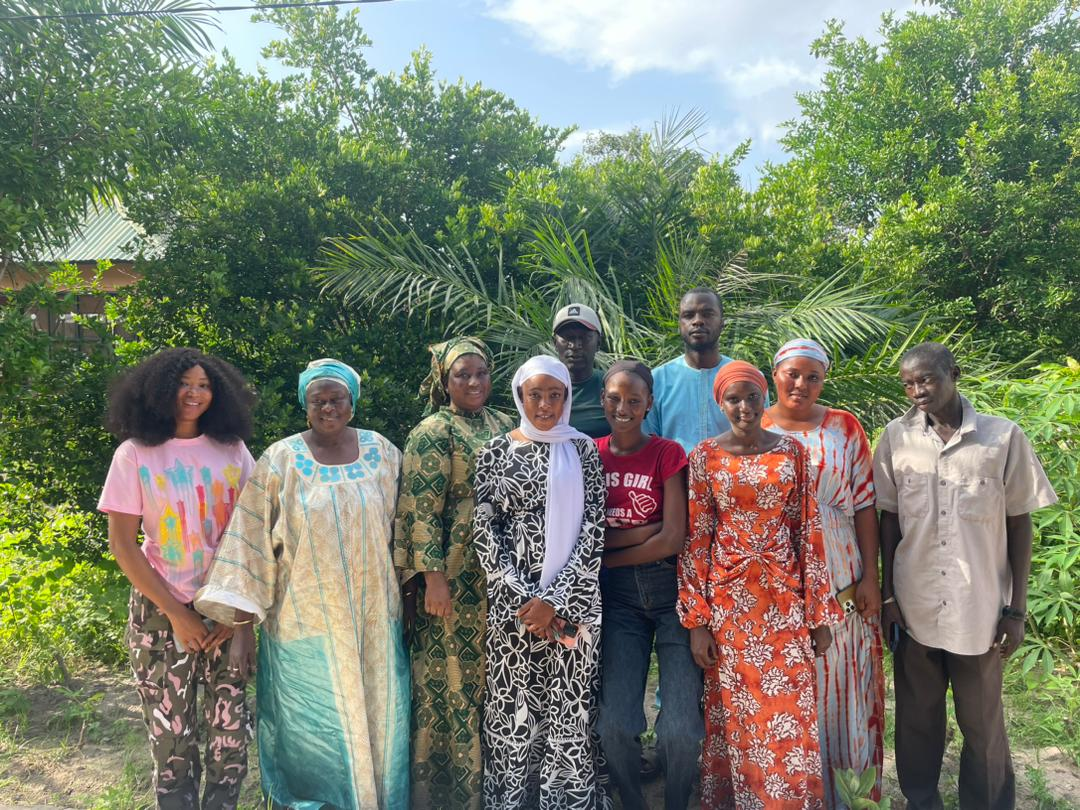
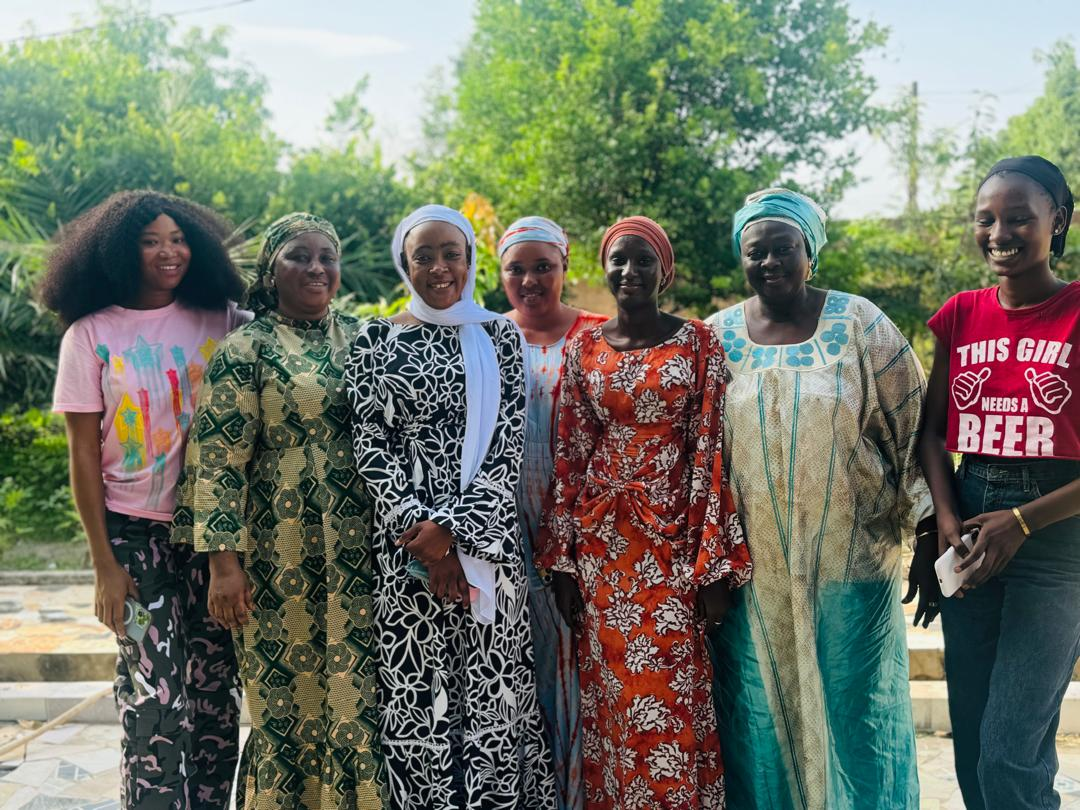
All Executive members of the Lower Fulladu West Community Care Alliance Foundation created in September 2024 by Hon Gibbi Mballow.
~ ~ ~ ~ ~
Read more posts about FGM and the Gambia
~ ~ ~ ~ ~
Books by Hilary Burrage on female genital mutilation
https://orcid.org/0000-0002-6684-2740

A free internet version of the book Female Mutilation is available here. It is hoped that putting these many global narrations onto the internet will enable people to read them in whatever language they choose.
Hilary has published widely and has contributed two chapters to Routledge International Handbooks:
Female Genital Mutilation and Genital Surgeries: Chapter 33,
in Routledge International Handbook of Women’s Sexual and Reproductive Health (2019),
eds Jane M. Ussher, Joan C. Chrisler, Janette Perz
and
FGM Studies: Economics, Public Health, and Societal Well-Being: Chapter 12,
in The Routledge International Handbook on Harmful Cultural Practices (2023),
eds Maria Jaschok, U. H. Ruhina Jesmin, Tobe Levin von Gleichen, Comfort Momoh
~ ~ ~
PLEASE NOTE:
The Inter-African Committee on Traditional Practices Affecting the Health of Women and Children, which has a primary focus on FGM, is clear that in formal discourse any term other than ‘mutilation’ concedes damagingly to the cultural relativists. ‘FGM’ is therefore the term I use here – though the terms employed may of necessity vary in informal discussion with those who by tradition use alternative vocabulary. See the Feminist Statement on the Naming and Abolition of Female Genital Mutilation, The Bamako Declaration: Female Genital Mutilation Terminology and the debate about Anthr/Apologists on this website.
~ ~ ~
This article concerns approaches to the eradication specifically of FGM. I am also categorically opposed to MGM, but that is not the focus of this particular piece, except if in any specifics as discussed above.
Anyone wishing to offer additional comment on more general considerations around male infant and juvenile genital mutilation is asked please to do so via these relevant dedicated threads.
Discussion of the general issues re M/FGM will not be published unless they are posted on these dedicated pages. Thanks.

 Hilary Burrage