Female Genital Mutilation And Contemporary Elective Genital Surgeries
Whether there are parallels between the tradition of FGM and other, now contemporary, ‘genital surgeries’ is a matter of considerable debate. What is the significance of ‘medicalisation’? How are genital cosmetic surgeries such as labiaplasty perceived? And by whom? How did the law stand on hymen ‘repair’ and other such matters? What about intersex conditions and gender assignment? In this essay, which I wrote in April 2019 whilst preparing my (ultimately much shorter) chapter for a book*, I explored some of these issues. Given that the debate continues, perhaps now – July 2026 – is a good time to share these observations. I have not changed anything of note from this piece in 2019, and the references also remain as then, since it may be helpful to see something of how matters stood, legally and medically as well as socially, at that point.
*Female Genital Mutilation and Genital Surgeries: Chapter 33, in Routledge International Handbook of Women’s Sexual and Reproductive Health (2019), eds Jane M. Ussher, Joan C. Chrisler, Janette Perz
You can read this website in the language of your choice via Google Translate.

‘… the practise of FGM is struggling to remain relevant,’ reports the lawyer Christine Nanjala-Ndenga, ‘and as a result it keeps on changing every single day.’[i] (Nanjala-Ndenga, 2016) Ms. Nanjala-Ndenga is well placed to make this observation, given her experience in Kenya as a lead officer in the female genital mutilation (FGM) prosecution unit in the Office of the Director of Public Prosecutions.
Like many others around the world, Christine started her career with little idea that the eradication of FGM would become the focus of her work, but also like many others, her commitment to ending this cruel, entrenched human rights abuse has become compelling.
Despite valiant efforts there is little evidence of significant reduction of rates of FGM globally or even at some national levels. Estimates suggest that around 200 million women and girls alive today have undergone some form of ‘cutting,’ and around three million more experience FGM every year.[ii] (World Health Organisation, [WHO] 2018a) FGM occurs everywhere across the globe. In the USA[iii] (Milken Institute School of Public Health, 2017) and Europe[iv] (Access to European Law, 2013) alone half a million girls and women in each instance are thought to have experienced, or to be at serious risk of, mutilation. FGM is found in parts of Asia and South America as well as in the usually acknowledged nations of Africa and the Middle East.[v](WHO, 2018b) [vi] (WHO, 2018c) (Burrage, 2016)[vii]
In some countries local programmes to stop FGM have been successful, but overall demographic trends are challenging:[viii] (UNICEF, 2015/16) Increasing numbers of children and young people across the globe mean that every year more girls and young women at risk, so, although rates have dropped significantly in some countries,[ix] (Koski and Heyman, 2017) the absolute numbers who experience FGM continue to rise.[x] (UNICEF, 2016)
The stark truth is that in the 21st Century the human race continues to face an epidemic of (identified/recorded) child and gendered harm, of which FGM is one of the most prevalent and appalling elements. FGM stretches back millennia. It is a vestige of authoritarian patriarchy,[xi] (see e.g. Makama, June 2013) as are many other forms of harmful traditional practice (HTPs),[xii] (International Planned Parent Federation, 2013, and below). In many traditional communities FGM is an unquestionable imperative; as Nanjala-Ndenga said, it morphs to suit local conditions and, more recently, to evade detection. Formal notions of individual human rights and child protection have little or no impact in often-isolated communities that have conducted business unchanged for hundreds of years. Community norms hold far more sway than any interests or concerns; the community comes first.[xiii] (see e.g. Leake and Black, 2005) Traditions define the group and are – and this is just as true for some tight-knit communities (usually diaspora groups) in Western countries, as it is for various heritage-defined groups in the ‘developing’ nations.[xiv] (De Vos, March 2013)
…
This essay will explore how female genital mutilation fits in the context of a world where almost all informed opinion now perceives it as a harmful tradition to be consigned to history as soon as possible, but where it continues to have powerful sway in many places around the globe.
There is as yet no agreed disciplinary paradigm for the study of FGM and other harmful traditional practices – all of them inter-woven in their origins and impacts. It is certain however in contemporary contexts that, whatever analyses evolve or are actively developed, the medical perspective will be central. Why does FGM occur, and what are its effects on individuals and their communities? How can clinicians and others help and support women and girls who have experienced FGM? And what are the obstacles to eradicating FGM?
All these questions require a plethora of insights across a broad range of social, historical, legal, educational, medical and other disciplines;[xv] (Burrage, 2019a) no one perspective can accommodate every aspect of FGM.
The issues as complicated further by various modern-day medical practices which are discussed below. These include both the ‘medicalization’ of FGM itself, and contemporary clinical procedures such as female genital cosmetic surgery and techniques intended to address conditions such as intersex status and disorders of sex development. The challenge for those who wish to consign FGM to history is to bring these understandings together in ways which maximise effectiveness. Experience this far suggests this is no easy task.
What is Female Genital Mutilation?
FGM comprises cutting or otherwise harming female genitalia (sexual organs) in the absence of medical necessity. It has no positive outcomes except, in practising communities, as a marker of virtue, ‘purity,’ marriageability, or group identity. It may cause significant long-term physical and / or psychological damage to women, or even result in death: It has been suggested that in parts of Somalia where there are no antibiotics as many as 1 in 3 girls who undergo FGM die of the practice.[xvi] Many countries have now made FGM formally illegal,[xvii] (Burrage, 2015a) whether by explicit legislation or, as, for instance, in France,[xviii] (Willshire, 10 February 2014)) in the context of the prohibition of bodily harm.
The World Health Organisation (WHO) defined four main types of FGM (WHO, 2007)
- Clitoridectomy – damage to, or removal of, some part of the clitoris, the female erectile sex organ. Contrary to common belief, total removal of the clitoris is effectively impossible, as only the small front ‘button’ is visible, but the entire organ extends backwards in a wishbone shape around the vagina.[xx] (O’Connell, Sanjeevan and Hutson, 2005) Similarly, it is sometimes claimed that ‘only’ the prepuce (visible skin fold) is removed; this ‘minimal’ practice – which some communities insist is not FGM at all – is known as ‘sunna’, ‘khafz’ or ‘khafna’,[xxi] (Abrol, February 2018) (Abdulcadir, nd)[xxii] but this is also almost impossible, given the very modest skills of most operators, and the likely erratic physical movements of the victim.[xxiii] (Horowitz and Jackson, August 1997)
- Excision – partial removal by whatever means (even sharp objects such as nails, stones or snail shells) of the clitoris and of the labia minora, plus sometimes also of the labia majora (the inner and outer ‘lips’ that surround the vagina). [xxiv] (Edna Adan Hospital, 2018)
- Infibulation – securing the outer labia (e.g., with pins, thorns, thread[xxv] (Rashid and Rashid, 2007)), usually after excision, to leave only a small hole for urine, menstrual blood, and other body fluids. The hole may not align with internal anatomy, thereby causing enduring blockages, infection, and pain; it is often sealed by tying the legs together until the wound heals to whatever extent it can. (Yee, 2017)[xxvi]
- Other – piercing, scraping, burning, pricking, labia pulling or otherwise damaging the female genitalia. This category has given rise to much heated debate because it western-style piercing, to which little attention has been paid by enforcement authorities. (The debate about whether adult female genital cosmetic surgery (FCGS) constitutes FGM remains in some minds unresolved,[xxvii] (Magon and Alinsod, 2007) but, as discussed below, in general legal advice has been to proceed very cautiously.)
Not everyone however is convinced that the formal categorisation of types of FGM are . As Dr Morissanda Kouyaté, Director of the Inter-African Committee on Harmful Traditional Practices (which focuses especially on FGM), said,[xxviii] (Kouyate, 2016) types of ‘cutting’ are mutilation.[xxix] (Burrage et al, 2013)
Why Does FGM Occur? Harmful (Traditional) Practices
The history of FGM goes back to ancient Egypt, when it is suggested (although the evidence is thought by some to be conflicting[xxx] (FGM National Clinical Group, 2007-2015)) that first princesses and later also female slaves were infibulated[xxxi] (28 Too Many, February 2013) to ‘ensure’ that they nly when their husbands or owners wanted this to happen. For royalty, the issue was validated heirs, and for slave owners it was control of human ‘stock’ and assured availability of the workforce. In both of these cases the underlying theme was, and continues to be, patriarchy: the ownership and control by powerful men of women and how they live their lives. Indeed, FGM, along with other forms of Harmful Traditional Practice [xxxii] (Open University, nd) is the ultimate form of patriarchy incarnate[xxxiii] (Burrage, 5 March 2016) – the physical imposition of men’s will literally carved into women’s bodies.
It is important in this context to acknowledge openly that FGM is ‘only’ one – but certainly a hugely significant one – of many variations of the long-acknowledged denial of human rights (OFCHR, December 1979)[xxxiv] and the direct imposition of powerful people’s will on those they seek to control and subjugate. Harmful traditional practices – HTPs; but now also termed simply ‘harmful practices, to indicate contemporary standing and avoid appeals to ‘tradition’ (IPPF, nd)[xxxv] – range across many cruelties, from breast-ironing, beading, child marriage, labia pulling, widow-‘cleansing’ and leblouh / gavage (all discussed in Burrage, 20 March 2016)[xxxvi] to – as many intactivists would insist – male circumcision. (Pollack, February 2012) [xxxvii]
It is likely that FGM emerged in various societies across history, probably without any awareness of it occurring elsewhere. It seems to be embedded in many ways with notions of ‘coming of age’ ‘purity,’ and sexuality (though never named as such), as well as notions of dominance / subjugation.[xxxviii] (Norway in Geneva, February 2018)
FGM is practised in groups that link it to various formal religions (including Islam; but in some parts of the world Muslims are unaware even that FGM happens, and there is no validated reference in Islamic scripture to a requirement for FGM.[xxxix] (Stop FGM Middle East, nd) (Asmani and Abdi, 2008)[xl] FGM also occurs in Christian, animist and other communities; (Drum, 2016)[xli] it has as its rationale everything from the belief that the clitoris is a lethal organ, which, if left unattended, will grow enormously and kill any man or new-born whom it touches, or that a girl will not be female, or cannot be an adult, unless it is removed, or that hygiene and child-birth are improved by clitoridectomy ( New Zealand FGM Education Programme, 2019).[xlii] (1996) refers to these terrifying claims that no-one dare test as ‘belief traps’.[xliii] (Mackie’s conceptualisation of the ‘belief trap’ is perhaps more persuasive than his parallel claim in this paper that FGM can be eradicated using the same methodologies as foot binding. Feet are visible; vulvas are not.)
In almost every case, however, the fundamental rationale for FGM is that it increases (or simply makes possible) the economic ‘value’ that can be secured when a daughter is in marriage – albeit that the ‘marriage’ may be of an early adolescent girl to an older man who probably already has other wives. (Rathbone, 1934, provides an early examination of child marriage in the context of India.) [xliv]
Child and early marriage has therefore been a concern for at least a century. To most Western minds sanctioned traditions such as child rape (e.g. ‘beading’ and child marriage [xlv] (Kios Foundation, March 2017) – this in-reality child rape is referred to as child ‘marriage’),and arranged or forced marriage (like ) may result in significant harm, but to the communities where such practices occur they are the means by which girls repay through marriage the ‘investment’ that was required of their father / families to raise them. The and, in some cases, the groom’s obligation to care for the girl’s parents in later life (her marriage secures their ‘pension’), are essential financial transactions embedded deeply in the socio-economic infrastructure. [xlvi] (Burrage, May 2016, and Burrage, April 2018) With time the economic rationales for bride price may become less compelling, but still the tradition-respecting imperative continues, as Nanjala-Ndenga reminded us (above), even when the rationale for FGM is lost way back in history.[xlvii] (Lorenzi, October 2012) No wonder FGM is difficult to eradicate.
What are the Outcomes of FGM for Girls and Women?
If FGM is not done, no harm will arise; but when it does occur, the consequences for every aspect of the woman survivor / victim’s life may be very serious. The specifics of the damage are reported in many professional and medical publications,[xlviii] (WHO, 2018) but can be summarised as below. It is self-evident that the harm of FGM produces many clinical challenges.
Immediate impacts on physical health
FGM is often imposed by brute force, without either pain relief and in (often extremely) unsterile conditions, sometimes employing crude utensils to cut numbers of girls at one time. Inevitably severe pain, shock and the risk of infection, tetanus or even death[xlix] (Norwegian Institute of Public Health, 2014) are amongst the consequences of this assault. The harm inflicted may be amplified if girls struggle as FGM is undertaken.
Medium and longer-term impacts on physical health
FGM may result in chronic infection, anaemia, anal and / or urinary incontinence, chronic pain, cheloids and scarring (fibrosis)[l] (Hearst and Molnar, June 2013) caused by FGM wounds, haematocolpos (internal accumulation of menstrual blood), hepatitis, genital hypersensitivity and/or tissue rotation (e.g., birth passage adheres to the pelvis, with significant risks to both mother and child).[li] (Reisel and Creighton, January 2015) Recto-vaginal / obstetric fistulae, in which tearing results in permanent leakage of urine and/or faeces via the FGM orifice, is a devastating outcome of giving birth for some women, especially when delivery is extended due to the young age of the mother or other FGM-related obstruction of the birth canal. [lii] (Vaughan, May 2017)
Impacts on sexual health
Problems may include pain (dyspareunia) or other issues with sexual intercourse (including lack of desire / arousal),[liii] (Biglu et al, December 2016) vaginal dryness, greater risk of HIV (unhealed wounds), morbidity due to anal intercourse and primary infertility (damage to reproductive organs), as well as secondary infertility (no access for intercourse). Broken and mental health problems may occur if husbands resort to ‘uncut’ prostitutes etc.[liv] (Ismail et al, 2017) Fistulae may result in social ostracism for the woman.
In recent years some surgeons, liaising with psychologists, have developed techniques to reconstruct the clitoris, in the hope that this may enhance the enjoyment of sex. As discussed below, much work to evaluate these complex remains to be done[lv] (Sigurjonsson and Jordal, 2018) but there are some reports of successful outcomes.[lvi] (Abdulcadir et al, November 2015)
Psychological impacts (may vary by age)
The nature of imposition of FGM – often unanticipated by the victim and imposed forcefully by people she has trusted to care for her – can trigger anger, anxiety / fear, flashbacks, depression, emotional insecurity and distance, hyper-vigilance and sleep disorders.[lvii] (Daughters of Eve, nd) Vulnerability, low self-esteem, lack of trust, and problems with relationships may occur and phobia, stigma, a sense of helplessness and post-traumatic stress disorder (PTSD)[lviii] (Behrendt and Moritz, May 2005) [lix] (Forma, 2018) are other noted conditions.[lx] (Chung, May 2016) The psychological issues arising from FGM are as yet not fully explored.[lxi] (National FGM Clinical Group, 2007-2015) Individual therapy may offer valuable support to women familiar with Western psychological treatments, if not for others in traditional settings,[lxii] (Good Therapy, November 2018) but wider questions concerning the impacts, generation after generation, of FGM (and PTSD etc.) on whole communities of women remain to be addressed.[lxiii] (Glover et al, 2017) (Burrage, 12 May 2016)[lxiv]
Maternal obstetric impacts
FGM has adverse impact on obstetric outcomes – perhaps one or two additional maternal deaths per one hundred women.[lxv] (WHO, 2006) It requires specific care throughout pregnancy.[lxvi] (Balogun et al, February 2013) Pelvic examination (including non-pregnant health checks) may be difficult or impossible prior to de-infibulation and there is increased need for episiotomy and caesarean delivery (where this service is actually available).[lxvii] (Rodriguez et al, 2016) The second stage of labour may be extended, with, haemorrhage, and risk of torn uterus, perineal damage and sepsis. Repeated pregnancies after losing babies may occur, with a higher risk overall of premature maternal death and high infant mortality,[lxviii] (WHO, June 2006) with all the impacts these tragedies may have for surviving family members.
Paediatric obstetric impacts
Given the obstructions of the birth canal which FGM can cause, the likelihoods of stillbirth, neonatal distress / mortality, and need for resuscitation are increased by FGM. One report found that over 20% of perinatal deaths in infants born to women with FGM can be attributed to the FGM.[lxix] (Eke and Nkanginieme, 2006) Failure to thrive and serious long-term incapacity are also significant risks for the child, as is post-partum or later death of mother, thereby placing the infant also at subsequent high risk.[lxx] (Atrash, 2011)
Socio-economic outcomes
Negative socio-economic impacts of FGM occur at all levels, from the individual girl or woman, to the family and community, and ultimately as costs to the nation itself.[lxxi] (Mpinga et al, October 2016) (Burrage, 6 February 2014)[lxxii]
There is much still to learn about such impacts, but little doubt that the chronic physical and mental ill-health in women which FGM can cause puts a life-long strain on their social and economic functioning.
Girls who fail to undergo FGM may be deemed unmarriageable, unable to attain adult status, and thereby not permitted to own land or other resources;[lxxiii] (Burrage, April 2016) and girls who do have FGM are likely to receive little further education (another hinderance to social outcomes). Further, child ‘brides,’ perhaps as young as 10 years old, are told they are now ‘women’ with the personal autonomy in some areas that goes with that status – and which inevitably a child cannot handle well. Women who are unable to ‘enjoy’ sex with their husbands, (Dean, July 2015) or who are incontinent or have fistulae[lxxv] (ICS, 2019) may be discarded and destitute;[lxxvi] (Ernest et al, 2014) women with chronic anaemia or other ill-health find it difficult to support and care for their families. They may even in desperation turn to prostitution – a tragic irony given that FGM is believed by some to stop promiscuity.
In FGM-practising communities women function less optimally, with inevitable loss to that economy. When mothers are incapacitated (or dead) their children are at severe risk, also with impacts at every social level. At the national level, entirely avoidable premature morbidity and mortality is a heavy weight on any country’s resources, legislature and socio-political infrastructure.
These risks are not however apparent to those who have not met ‘uncut’ women. FGM is presented is a fait accompli; no-one questions it. The belief trap[lxxvii] (McKie above) – the idea that something dreadful will happen if a traditional practice is not observed – presents too much risk to take. Sof the community cannot be challenged – grandparents and their forbears are revered, and may be feared for the curses they can invoke against disobedient offspring; the power of tribal forebears is absolute.
No child wants or dares believe their parents forced them to endure pain and illness needlessly. Even deaths from FGM may be ‘explained’ as possession by evil spirits, (Wikipedia, nd)
Medicalisation of FGM; how clinicians have become ‘cutters’
Not all clinicians see FGM as an act of harm. In some countries, such as ,[lxxxii] (UNFPA Arab States News, February 2018) medicalised FGM is increasingly the norm, performed by clinicians who maintain they remove risks, or see opportunities to amplify their .[lxxxiii] (Doucet et al, 2017) Neonatal services may include normal maternal and infant care alongside other procedures such as ear-piercing, vaccination and genital mutilation.[lxxxiv] (UN Human Rights Office of the High Commissioner, 2014)
The World Health Organisation and others are however clear that the medicalization of FGM is a matter of very serious concern.[lxxxv] (WHO, 2010) Whilst medicalised FGM is generally conducted with asepsis and anaesthetics, it also provides an aura of normality and acceptability to this harmful practice – hence the clinically imposed ‘just a prick or tiny cut’ idea promoted by some US physicians[lxxxvi] (Kimani and Shell-Duncan, 2018) which might suggest (without substantive evidence) a move towards eradication; but medicalization is strongly resisted by most EndFGM activists, who say it may be interpreted by FGM traditionalists as validation of the notion that FGM is necessary or even beneficial.[lxxxvii] (Serour, September 2013) Even weighty legal questions and ethical issues apart, the widely held consensus is that medicalisation is now perhaps the greatest obstacle to FGM eradication.[lxxxviii] (Bartha, February 2017)
When finances are stretched – as they surely are in health provision in some parts of the world – it is probably unsurprising that numbers of clinicians offer ‘professional’ services for FGM. But how does this paid-for professional provision align with modern western clinical procedures such as female genital cosmetic surgery (FGCS)? The accusation is regularly made that there is a double standard:[lxxxix] (Northern Ireland Human Rights Commission, August 2016) FGM done by minority ethnic people is ‘wrong’, but FGCS provided by white clinicians – or, in any circumstance, male circumcision[xc] (Shahvisi and Earp, 2018) – is acceptable.
Female Genital Cosmetic Surgery (‘Labiaplasty’)
The condemnation of medicalisation in FGM is not therefore a straightforward matter. Whilst it is obvious that any unnecessary ‘surgery’ is unacceptable, the issue becomes complicated when modern western clinical procedures such as female cosmetic genital surgery (FGCS) and, as we shall see below, intersex / gender reassignment (particularly in infants and children) are considered.
Female genital cosmetic surgery is a clinical field which has grown considerably in the western world and beyond over the past few decades (e.g. India[xci] (Desai, S.A. and Dixit, W. (2018) and Cambodia[xcii] (Abdulcadir, J. et al (2015)). It may be referred to in general discussion as ‘labiaplasty’ or as procedures intended to achieve a ‘designer vagina’, but more accurately it comprises a range of specific surgeries.
Likewise, in common parlance the vulva is often referred to as the vagina[xciii] (Telfer, N., 2018) – perhaps an indication of the lack of public understanding of the anatomy of the female genital organs. The more accurate terms include not only labiaplasty[xciv] (NHS, April 2018) but also vaginoplasty (or ‘vaginal rejuvenation’),[xcv] (WebMD, 2017) hymenoplasty[xcvi] (Diane, 2016) and, for instance, vulvoplasty.[xcvii] (Zelmanovich, 2017) As the material and texts of referenced documents cited here demonstrate, such surgeries are (in most countries) commonly conducted within the for-profit sector of clinical practice, and with the concomitant marketing language. Some health provision services such as the British NHS may provide these procedures in specific instances – around two thousand such NHS cases were noted in 2011 – there is resistance to the use of public money for the large majority of patients (‘customers’) requesting cosmetic surgery.[xcviii] (Roberts, M, 2011)
Another form of genital aesthetic is piercing,[xcix] (BMEZINE.com, 2007) done as a purely cosmetic (and maybe ‘alternative’) procedure and/or in the belief that it will heighten sexual sensation. The procedure, usually carried out by non-clinical operators in commercial premises,[c] (WebMD, 2005) is formally categorised as (Type 4) FGM, and is therefore in strict interpretations illegal; ( WHO, 2019) [ci] Piercing is included in FGM data sets such as the UK records of FGM[cii](The National Archives, 2017) and is the choice of people across a wide age range, including under-18s. Various clinicians argue that whilst FGCS has parallels with FGM, that is not the case with piercings because, whilst regulation of piercing practitioners is required for hygiene and safety, these procedures do not permanently excise bodily tissue and they can be reversed simply by the person concerned removing the piercing object.[ciii] (Nelius, T. et al, 2012) Nonetheless, as matters stand, in many places, and in formal WHO and similar categories of FGM, piercing is still included.
The late 1970s saw the first significant discussions of FGCS [civ] (Liao, L-M. and Creighton, S. (2011) but the topic was not much considered in the medical literature until the 1980s, and then more actively from 1998 as a result of papers by two male surgeons in the USA who reported on their practice of ‘vaginal tightening’.[cv] (Tiefer, L. 2008 / 2016) Over the same time period the number of genital cosmetic procedures conducted in many countries around the globe is thought to have increased dramatically – nobody knows by quite how much – yet there is no evidence to suggest that the incidence of vulval morphology / labial or female genital pathology requiring surgery has similarly increased. [cvi] (Liao, L-M et al, 2/6) As even those promoting this surgery agree, the issues that bring women to their doctors’ surgeries are perceptual and psychological, not simply physical.
The most frequent FGCS procedure is labiaplasty, although other cosmetic surgeries such as liposuction, breast augmentation and rhinoplasty are, in eg the USA, even more common.[cvii] (OBP, 2018)
But no surgery or invasive procedure has zero risk, and in the case of cosmetic (ie optional) procedures this risk requires very serious consideration. As the British Society for Paediatric and Adolescent Gynaecology (BritSPAG) emphasises, there is a particularly critical issue regarding elective surgery on girls aged under 18.[cviii] (RCOG/BritSPAG, 2017)
Genital anatomy changes throughout the lifespan and the earlier surgery begins, the higher the probable number of operations over a life time. There is no research on the long term impacts of labiaplasty and in the absence of positive findings many experts agree that cosmetic labiaplasty should not be performed on girls under the age of 18.
Given severe warnings of this sort – especially concerning the most vulnerable (child) patients – it might be thought unlikely that FGCS occurs at all. The research is at best inadequate and satisfactory outcomes are by no means guaranteed; but still these procedures are increasingly popular with both patients and clinicians.
The evidence so far[cix] (Sharp, G. et al, 2016) suggests that women and girls who request FGCS do so for reasons such as poorly informed, non-diverse ideas about bodily ‘perfection’ and how other women’s genitals appear, perceived physical discomfort and/or embarrassment because of clothing or sports activity, pressures from advertising and marketing, the trend, especially in younger women, towards removal of pudendal hair (with subsequent exposure of genitals), online pornography and digitally manipulated images and, in women and girls from some communities, the necessity for an ‘intact’ hymen before marriage.
Whilst there may occasionally be a need to remediate genital morphology because of disease – in which case the surgery is not ‘cosmetic’ – this is rare. S above, and as many reports indicate, the underlying issues are psychological or related to social pressure, or even psychiatric (eg genuine body dysmorphic disorder[cx] see e.g. Mayo Clinic, nd), rather than physical. Further, feminist critiques such as those of Braun and Tiefer, (2010)[cxi], Keil (2010) [cxii] and Bonavoglia (2011) [cxiii] suggest that it is the medical profession itself which authenticates, and perhaps even enhances, the idea that female genitalia can routinely be ‘improved’ by cosmetic surgery.
Clinicians are strongly advised by professional bodies in a variety of countries[cxiv] (RACGP, 2015) always to keep full written records of consultations, medical details and signed consents (of which patients should also have a copy); these may be needed in any possible future legal situation. Doctors must listen carefully to the explanations patients give of their concerns. They must also consider wider health and sexual matters and offer respectful general and gynaecological examination and (if there is no evidence of disease) reassure and emphasise that the variation in female genital morphology is great, and that the female genital organs in any case change considerably over a lifetime.
Guidance emphasises additionally the importance of psychological and psychiatric assessments (and treatments) where appropriate; surgery should never be the first option. Consent to surgery should never be obtained on first consultation. Many patients are able to accept their doctor’s assurance that clinical intervention is not required and they have normal, healthy genitalia; but not all are content to leave it there. Some will go on to find other, usually private, clinics[cxv] (RCOG, 2013) which agree to provide surgical services to address what could be construed as their customer’s wish for physical readjustment in respect of psychological need. Since there is no medical necessity and the procedures will result in financial benefit to the advising clinician it is difficult not to see here potential for some conflict of interest on the part of the physician.
The relevant medical colleges of several nations, especially but not only in the global North,[cxvi] (Rheingold, 2017) have recommended that FGCS should not be undertaken, or that at the very least extreme caution is required of any clinician who becomes involved in such a procedure, and that under no circumstance should it be offered unless medically essential to under-18s. (Medical Board of Australia, 2017) [cxvii]
Nonetheless, surgeons continue to offer FGCS (and sometimes market it aggressively). How can this be? Perhaps most importantly, FCGS is a generally unregulated field with little in the way of accredited post-qualifying training (see e.g. the RACGP letter of 29 May to the Chair of the Medical Board of Australia,[cxviii] (RACGP, 2015)) in which private medicine is delivered by clinicians with a substantial financial interest to patients who are anxious about their bodies and how they present to others. Cosmetic surgery is sought because women – and girls and sometimes their mothers[cxix](Boddy, 2016) – believe it will solve a personal problem. They expect it to make them more confident or comfortable and happier, and perhaps also to enhance their sex lives.[cxx] (RCOG, 2013). Some clinicians then provide the requested private surgical services in addition to other non-invasive forms of care.
As the BritSPAG statement[cxxi] (see xcvi) makes clear, however, there is scant evidence to support the expectation that FGCS will resolve patients’ concerns, either in the short term or (even less so) longer term; and the experience itself may be harmful or unpleasant, with reports of bleeding, infection, wound dehiscence and scarring, and possible (as yet unverified) later problems during childbirth and in later maturity, as well as the risk of decreased genital sensitivity and other hazards. [cxxii] (Liao and Creighton, 2011) There is at present no substantive research which would give clarity about these possibilities; no stringent longitudinal studies have been undertaken, at least in part because much of this surgery is conducted in private clinics away from the scrutiny of large or state institutions.
One UK legal report, reflecting the views also of many others in many locations who have considered the connections between FGM and FGCS, advises that cosmetic surgeons (and tattooists and those working in piercing salons, whether they know it or not) need to ‘tread carefully’. There is a need, we are told, for proper national legal guidance on what is deemed ‘necessary’ for a person’s physical and mental health, whilst it is also essential that every patient requesting FGCS to accepts referral before treatment for a mental health assessment by an approved psychologist, and a second opinion should be sought from a second (presumably independent) doctor, if possible the patient’s GP, before any surgery is undertaken.[cxxiii] (Mills and Reeve, 2016)
The fundamental question is, then, why is there now so much modern western engagement in female genital alteration – and is this in any way similar to the ancient traditions of female genital mutilation?
What has already been discussed provides some answers to this question.
Firstly, it is evident that modern culture and the mass media, with their emphases on individuality and sexuality, have laid the groundwork for contemporary concerns about how female genitals ‘look’. Half a century ago few women and girls were much aware of such matters, but now most women have seen representations of others’ private anatomy; and what they may not realise is that such representations are likely to have been adjusted, perhaps at considerable expense and effort, to meet an almost unattainable ‘ideal’. Inevitably, and like FGM, some conclude that they must fit the perceived specification if they want to be socially included, and perhaps even if they wish to have a sexual partner at all. (This observation is in no way intended to diminish the grim experience of girls and women who have been obliged to undergo FGM; it is simply to make the case that both practices are normative.)
And secondly, there is an economic undercurrent to both practices. Neither is designed ultimately to be advantageous to the health of the ‘customer’ herself, but both provide financial advantage to others (Burrage, November 2017)[cxxiv] , Michala et al (2012) [cxxv] – usually the practitioner, and often to other business / commercial interests as well: FGCS is a significant source of income to marketing companies, media organisations which promote beautiful women’s bodies, and service providers amongst others, just as FGM promotes the economic interests of (usually) fathers as well as those who provide commercial services for ‘celebrations’ and the like.
Further, from a rather different perspective, it could be said that clinicians, in agreeing to perform FGCS, are endorsing social structures that construe women and girls to be objects, rather than individuals in their own right. These cosmetic procedures are aligned with ideas around ‘sexuality as technical performance’,[cxxvi] (Barbara, 2017) and with traditional notions of ‘purity’ which also have impact on perceptions of the female body. Indeed, some commentators suggest that whilst most current medical models about FGCS underpin assumptions about the ‘need’ for private clinical services, really doctors should reflect on how their actions reinforce wider and unquestioned male assumptions about women, embedded in social-political structures.[cxxvii] (Lippman, 1999) In condoning FGCS clinicians positions themselves as ‘cultural guardians’, reflecting ‘masculine aspirations’ and fears[cxxviii] (Liao and Creighton, 2011) and undermining gender equality.[cxxix] (Tiefer, 2008)
Individual women’s choices, it is suggested, are to be respected, but sometimes a choice of one woman – e.g. to have cosmetic surgery – is a restriction of choice for the group – e.g. women as a category who via that other individual’s choice become sexualised in a commercial or other constrained way.
And so the debate on FGCS continues, with concerns around how this idea affects the standing of women in their own right, and with calls for better regulation, training, guidance, evaluation and legal reassurance. It is not surprising that some who defend FGM perceive hypocrisy on the part of those who provide FGCS.
Intersex and gender (re-)assignment treatments
The situation in regard to the medical treatment of diagnosed sex and gender conditions also raises comparisons with FGM.
Gender assignment surgeries and drug treatments may arise in instances where a child is born without clearly sex-defined genitalia (the reproductive organs, especially those exterior and visible) and/or internal gonads – ovary or testes, i.e. the reproductive glands that produce germ cells (gametes) – or where a child later indicates consistently that s/he identifies as the opposite gender to the one which biologically defines her/him.
Nomenclature of such conditions remains a matter of some debate, not least because the underlying physiological and chromosomal states are complex. The Consensus Statement on Management of Intersex Disorders proposes adoption of the term ‘“disorders of sex development” (DSD), as defined by congenital conditions in which development of chromosomal, gonadal, or anatomic sex is atypical.’ (Lee et al, 2006) [cxxx]
Others more recently have explored the significance of various terms in respect of those to whom they are attached, and suggest that ‘intersex’ terminology may be a better way forward at least in the early years of an affected person’s life. (Viau-Colindres et al, 2017). [cxxxi]
When a baby is born without a conclusive sex / gender identity, the issue is immediately complex and delicate. [cxxxii] (Children’s Hospital of Wisconsin, 2019) The most pressing clinical question is the extent to which the child’s genitalia and internal organs are able to support normal physiological functions such as excretion. For parents, however, the discovery that their new-born has no immediately identifiable ‘gender’ is also understandably confusing and upsetting. (Oliviera, 2015) [cxxxiii] Considered responses to the situation will probably take time, and often involve difficult choices.
If the child’s physiological functions are not satisfactory, it is obvious that the requirement is emergency treatment to support the child’s well-being. Such life-saving measures lie in principle beyond issues around choice and the legality of elective genital surgery; they may however come to bear immediately if a decision to create ‘gendered’ organs is made at the time of initial surgical intervention.
More nuanced legal and protocol considerations, beyond physiological function, may arise in regard to surgical intervention around infant and paediatric intersex or disorders of sex development, and / or later sex/gender assignment. Further, as Markosyan and Ahmed (2017) [cxxxiv] observe, assignments are influenced by temporal, social and geographical variations. They also remind us that some countries, such as Australia, Bangladesh, Germany, India, New Zealand, Nepal and Pakistan, the sex of the child can be registered as undetermined – a move increasingly adopted around the globe, along with calls simply not to require registration of sex at all.
It is worth noting that some traditional (non-Western) communities have also acknowledged non-binary gender status. The TwoSpirit people, Fa’afafine and Hijra all include ‘third’ gender individuals. (APA, 2015) [cxxxv]
Physically ambiguous situations occur more frequently than some might imagine. The Intersex Society of North America reports that around one in a hundred neonates have bodies that ‘differ from standard male or female’, (ISNA, nd) [cxxxvi] but they point out that physical sexual diversity comes in many forms, some chromosomal, some anatomical, some physiological or even idiopathic, etc. About one person in 1,500 to 2,000 is born with an evident condition requiring the immediate attention of a sexual differentiation specialist; but for others their indeterminate sex / gender may not become apparent until several years later. The epidemiology and estimation of incidence is uncertain, as the NHS Standard Contract for Gender Identity Development Service for Children and Adolescents (2016)[cxxxvii] makes clear in its detailed draft service specification and overview of the issues.
It follows from the disparities of age at diagnosis that the prospect of genital surgery or other clinical treatment may arise at various points in a child’s life.
A case has often been made for intervention at a very early stage, so that children grow up with clearly defined notions of their gender. (Kleeman, 2016) [cxxxviii] Parents and doctors together (in whatever ratio or power balance) have frequently in the past decided what sex the child ‘should’ have, and that decision is then implemented as far as possible on the child via surgery and/or pharmaceutical treatment.
The serious drawback of this determination is that when s/he is older the child may not feel comfortable in the gendered skin assigned to her/him. Likewise, the clinical assumption, based on inadequate evidence, that there will be physical and psychological congruence is no longer always accepted. (Kipnis and Diamond, nd?) [cxxxix] As personal testimony has sometimes made clear (Zieselman, 2017)[cxl] physical attributes, whether surgically imposed or original, do not inevitably attune as children develop with psychological gender preferences. (NHS, June 2018) [cxli] Children for whom this disparity applies may be termed in a clinical context as gender-diverse, gender-variant or transgender or, if as they are growing up they do not identify as of either gender, non-binary.
It is not always physical diversity which causes concern; sometimes the issues are solely psychological; and in that instance, as Olson-Kennedy and Forcier (2019) [cxlii] observe, ‘gender diversity in childhood is unpredictable; some children with gender diversity will grow up as transgender adults, and some will grow up as cisgender adults (ie adults in whom gender identity matches genital anatomy).’
Whilst children may display behaviour and preferences, and demand responses, contrary to their physical sex, this situation can be fluid. Significant numbers of children who deem their gender to be in contradiction to their physiological sex choose as they move towards adulthood to readopt their cis (biological) gender. [cxliii] (Cantor, 2016)
For this reason amongst others resistance or withdrawal of support [cxliv] (American Academy of Pediatrics, 2007) is growing to the ‘treatments’ which have been developed to begin anatomical sex transition in childhood. [cxlv] (Nicklaus Children’s Hospital, 2019) Unless the sex and gender of the child are clear from very early on, and there is a clinically justifiable requirement beyond simple preference (of the parents, and later of the child) for surgery, the view is often now that irreversible treatments should not be imposed before the child is genuinely able to make the choice, convincingly, in person: the American College of Pediatricians (2017)[cxlvi] reports that full maturity may not be reached until the mid-twenties because that is when the pre-frontal cortex of the brain – responsible for judgement and risk assessment – matures. In the view of the ACP, “Never has it been more scientifically clear that children and adolescents are incapable of making informed decisions regarding permanent, irreversible and life-altering interventions.”
There is however continuing debate amongst both parents/patients [cxlvii] (OZY, 2019) and professionals about how best to serve children’s interests. This variance of views is illustrated, for instance, by the intense disagreements which have emerged over the work of the Tavistock Clinic in London, the UK’s leading (only, as of 2019) clinic dealing exclusively with such matters. The Clinic’s Gender Identity Development Service [cxlviii] (Gender Development Identity Service, 2019) offers treatment paths which start at a young age and, along with therapies, may involve drug treatments (‘hormone blockers’) [cxlix] (GIDS 2019) to delay puberty, with the possibility of later surgery.
Non-physically-invasive therapeutic services for young people who are gender diverse are routine, not least because the risk of suicide or self-harm is significantly higher than for that population as a whole, even after surgery. [cl] (Dhejne, 2018) It is the physical (hormonal) intervention before adulthood which is in dispute. [cli] (Doward, 2018).
These are difficult matters. On the one hand, there is a weighty duty on the part of clinicians to protect the psychological well-being of children and young people at significant (and sometimes variable) risk of immediate harm, and on the other there is the potential for life-long harm, both psychological and physical, resulting from invasive medical procedures which are later regretted.
In some ways this dilemma is inversely parallel with the situation around FGM which is faced by families in traditional settings – always assuming they are aware not ‘only’ of the pain inflicted, but also of the longer-term consequences. How can the (perceived, anticipated) negative social consequences of non-action – no FGM – be balanced against the health risks of imposing FGM on the child? The specific bases of authority on how to make a decision on what to do are differently based in traditional communities and in modern western ones, but in both cases it is often not ultimately the child, nor even in reality the parent/s, who will determine what actually happens. That decision will largely be shaped by the upholders of the relevant social mores or norms: traditional community elders in one case, and the medical ‘high priests’ who influence contemporary clinical practice in the other.
Perhaps one way to resolve some of the difficult conundrums associated with DSD, FGCS and other intimate life-changing interventions is to suggest that no non-essential surgery or other invasive procedure should be permitted a person reaches full maturity. Given however that that age is in several respects (full sexual and cognitive development) 25, there are obvious difficulties with this idea. Not least of these is that, despite UNICEF regarding under 18 marriages as ‘child marriage’, in some countries – including the United Kingdom – young people are permitted to marry at, say, 16. (Wikipedia, March 2019) [clii]
The conflation of age of consent and marriageable age continues in some locations to prove an obstacle to rational policy; but even without these extra difficulties it is unlikely that routine deferment of surgical procedures to resolve gender / sex issues until 25 will be accepted. For physicians more than many a person’s physical sex itself is important – which health checks do they need? what sorts of treatments? etc. This, along with an irrefutably gendered society, results in a situation which in many ways relies on clinicians across the range of expertise to support (ethical), safe, tailored modes of approach for individuals who want or need to seek help with these personal issues.
It is not difficult here to draw parallels with the conundrums of FGM medicalization.
Caring for Women and Girls with FGM
Globally FGM, like modern-day inessential genital surgeries, is becoming a matter of human rights and, for FGM particularly, also of reproductive justice[cliii] (Braun, 2012) which must be stopped. This rights perspective is echoed, for instance, in the United Nations Sustainable Development Goal 5[cliv] (Wendoh, 2018), which aims to ‘achieve gender equality and empower all women and girls.’ (United Nations, nd)[clv]
Modern-day surgeries to address specific damage following FGM do however have an important part to play in helping women who have survived this tradition regain some level of sexual health.
The most common procedure is deinfibulation, which can be conducted by suitably trained midwives and doctors as well as specialist gynaecologists and obstetricians. (FGM National Clinical Group, 2007-2015)[clvi] Deinfibulation may be done at any time if the woman wishes to achieve a degree of reversal of the more serious forms of FGM, and can be necessary for the safe delivery of both mother and child, whether is carried out either during pregnancy or, in an emergency, during labour.
More complex procedures intended to reconstruct or ‘restore’ clitoral response remain however contested. (Creighton et al, 2012[clvii] and FGM National Clinical Group, 2012[clviii] ). Various surgeons across the globe – such as Ahmed Thabet and Saeed Thabet in Egypt (Thabet, S.M. and Thabet, A.S., 2003),[clix] Pierre Foldès in France, (Levin, 2014),[clx] WHO / Swiss surgeon Jasmine Abdulcadir (Abdulcadir et al, 2015),[clxi] and Marci Bowers (Middelburg, 2014)[clxii] ( Bowers, 2019) [clxiii]and Wayne Bloodworth (Collins, 2019),[clxiv] (The Surgery Center for FGM, 2019) [clxv] both in the USA, have been working on methods which might restore sensitivity particularly to the clitoris.
All these physicians emphasise that surgery is not necessarily the first or best option; sometimes simply learning that she has a ‘hidden’ clitoris is enough to reassure a woman who has presented herself for help. There is always a need in such referrals for multi-disciplinary support – physical, psychological and social – and often therapy across a range of agencies and specialisms is required.
Increasingly such support is provided via a ‘one stop shop’, as Frédérique Martz of the Paris clinic for FGM and other gendered violence survivors has insisted. Surgery alone is not the way forward; in fact, most patients chose not to have it once they have had the opportunity to examine how they feel about their situation. [clxvi] (Surugue, 2017)
Nonetheless, whilst everyone agrees that more research is necessary for clarity, (Abdulcadir et al, August 2017)[clxvii] (Sigurjonsson and Malin, April 2018)[clxviii] there is some evidence that, alongside proper support, some forms of surgical intervention can provide both pain relief and restoration (or simply, for the first time, enabling) of pleasurable sexual sensation, and of a feeling of ‘wholeness’ or improved self-image. (Mañero and Labanca, 2018)[clxix]
In traditional communities however there is necessarily less emphasis on complex medical care, and much more focus by those who want to improve survivors’ health and eradicate FGM on how the community perceives this practice. Care-givers of those with FGM have usually themselves been and they are often the people who impose FGM on the girl or woman for whom they are caring. They have both psychological and (often) economic investment in the practice continuing. Any ill-health FGM imposes will be seen as ‘normal’ for women in that community. The challenges for any outsider who seeks such circumstances are many.
In some parts of the world the emphasis must be on low-technology approaches. Significant here are developments such as the ‘Barefoot Grannies’ (Burrage, 2016[clxx] and Burrage, 29 December 2016[clxxi] ) and ‘Grandmother Project’ initiatives, (Associated Press, February 2019) [clxxii] In these programmes older women in a community – sometimes themselves former ‘cutters’ – receive training in basic health care, and specifically about why FGM must not be done, and then they take the message to others in their community. (Interestingly, some of the initiators of these programmes are young male community leaders.)
And so, slowly, citizens across the globe are becoming better informed about the nature of FGM and the harm it can do both physically and psychologically; and clinicians at every level of expertise are becoming more aware[clxxiii] (Gaffney, 2018) of the impact of FGM on obstetric patients and their babies. The World Health Organisation has issued guidance on clinical practice in the care of women and girls with FGM,[clxxiv] (WHO, 2016) as have other international organisations, as well as national bodies such as the Australian authorities [clxxv] and that of UK Royal Colleges for doctors, midwives, and nurses. [clxxvi] (Jordon et al, 2014) Increasingly, too, clinical instruction is available for clinicians and other carers on-line. (WHO, 2018[clxxvii] , AHAFoundation, 2019[clxxviii], Forensic Healthcare Online, 2019 [clxxix], eIntegrity, nd[clxxx])
Likewise, specific instruction is available for those who provide obstetric care, sometimes via a ‘pathway’ such as that prescribed by the UK NHS (RCOG, 2015,[clxxxi] NHSGGC, 2016 [clxxxii]) There is still however much to learn about the clinical experience and treatment of women and girls with FGM. One large-scale study (amongst others) in African countries by the WHO has demonstrated that FGM does have adverse obstetric outcomes, (Rymer, 2006),[clxxxiii] but further investigation demonstrates that in a western metropolitan context this disadvantage can be mitigated (Varol et al, 2016) [clxxxiv] Other researchers have explored the particular context of migrant women who ‘frequently encounter negative attitudes when accessing the maternity services in their host countries’ (Scamell and Ghumman, 2018)[clxxxv]; also researched have been the perspectives of both those with FGM who seek healthcare, and those who provide it, in high income countries (Evans, Tweheyo, McGarry et al, 2017).[clxxxvi]
Guidance on good clinical practice continues to be marred even in the global North by omissions in areas of considerable importance. Thus, even in the UK, there has only recently been advice for general medical practitioners, [clxxxvii] (RCGP, 2016) nor is there yet enough emphasis on best practice in response to patients who disclose their FGM to clinicians. The ’10 second opportunity’ – if clinicians are not already prepared it will be lost (Burrage, 31 March 2017)If the clinician has not thought through her or his response to unanticipated disclosure, that may the last time the patient ever tries to discuss her mutilation, the problems arising from it, or perhaps also other aspects of gendered violence (VAWG) she is experiencing.[cxc](UK Department of Health, 2016) This silence may have severe consequences both for the woman herself and for her , particularly, for instance, because the risk of intimate partner violence may be increased in cases where the woman has undergone FGM. (Peltzer and Pengpid, 2014)[cxci] (UN Women, 2017)[cxcii]
Many of the observations above point to the criticality of awareness by the whole health and social care team – including school nurses, social workers, teachers and law enforcement officers as well as professionals in formal clinical settings. But sometimes teachers remain untrained, social workers have massive workloads and school nurses may be few in number. (Bhardwa, 2015) [cxciii] In the UK and some other countries attempts are made to bring these various roles into an integrated whole via versions of the ‘multi-agency’ approach, (UK Government, 2016)[cxciv] but on-the-ground realities may not always reflect that policy position. Until an articulated paradigm for dealing with FGM is developed, with genuine formal, identified and top-level leadership, this piecemeal strategy – some funds for her, some training for you, some offices for him – will not address the problem adequately. (Burrage, 2015)[cxcv]
The Vocabularies of FGM
Given the harm FGM can inflict, the terms used to discuss FGM have particular significance. There is a trend, e.g. in parts of the USA, to ignore the advice of the WHO and UNFPA[cxcvi] (WHO, 2006) and instead consistently to refer to FGM as female genital ‘cutting, or even ‘circumcision’ ().[cxcvii] (see New York State Department of Health, 2016) This may help those close to the tradition to feel comfortable, but euphemisms in formal settings risk lessening the gravity of the tradition in wider community and professional perceptions.[cxcviii] (28 Too Many, nd) FGM is not a serendipitous ill-health condition to be borne bravely; it is patriarchy incarnate, a violent affront to human rights and reproductive justice, an intended criminal act inflicted in the interests of powerful people, mostly men regardless of who actually inflicts it, and usually on
Nonetheless, there are occasions when alternatives to the term ‘mutilation’ may be appropriate, particularly in discussion with those women and girls who have undergone FGM, or with other people who live in communities where it is done. Many communities have specific words, such as ‘cutting’ or ‘female circumcision’ or other terms[cxcix] (National FGM Centre, nd) to denote the ‘procedure’ and use of these words may aid communication between local people and e.g. visiting health or education workers. In traditional communities it may be inconceivable that adulthood – and maybe the right to own resources (e.g., land) or to marry – be conferred on any woman who has not had FGM. There is sometimes no word in the local language to accord adult status to a woman who has not been ‘cut..’ Women without FGM simply retain the status of children.[cc]
Also with unspoken implication, the term ‘circumcision’ brings to some minds a suggestion that, as male circumcision (more accurately, male genital mutilation, MGM) is deemed – in error – to do no harm, then FGM is also harmless. Although global trends in MGM are dropping about 50% of American men have been circumcised. There arecampaigns in most western countries against MGM Boy babies die as a result of circumcision, even in the USA,[cci](Earp et al, 2018) and in parts of the developing world hundreds of adolescent boys are killed by the procedure every year.[ccii] (WHO / Joint United nations Program on AIDS, 2007) There is an emerging opinion in some parts of the EndFGM community that neither FGM or MGM will cease entirely until the other does.[cciii](Burrage, November 2018)
Language must depend on context, including within specific academic disciplines. Most professionals (e.g., medicine, law, social science) use the term ‘mutilation’ in formal dialogue, but some observers adopt a relativist position,[cciv] – Tobe Levin (2010)[ccv] refers to this position as Anthr/Apology – claiming that they must not ‘judge’ the action and its consequences, but rather record it solely in the contexts of the understandings of those directly involved – hence the use of softer terms such as ‘cutting’.[ccvi](Cassman, 2008) [ccvii](Wilkinson, 2004) [ccviii] (UNFPA / UNICEF, 2013) Whilst such insights are valuable, the ‘no moral judgments’ neutral lens (concerning what is by any standards a breach of human rights) leads some commentators to claim it is not the business of White people to tell those of colour what to do. Black activists sometimes insist , were the subjects of FGM White – some actually are[ccix](Bergstom, 2016) (Batha, 2019)[ccx] – there would be an enormous outcry, but because most victims are of different (BAME) ethnicities, these activists say, no-one in mainstream Western societies cares.
Prevention and Eradication across the Globe
FGM eradication programmes[ccxi] (see e.g.UNFPA-UNICEF, 2018 and Williams-Breault, 2018) operate in many parts of the world and take various forms. The elements of eradication to be addressed within communities constitute the ‘4Es’: Engagement, Education, Enforcement, and Economics (or, indeed, the ‘Many Es’ – including also Empathy, Empowerment, and Epidemics),[ccxii] (Burrage, April 2018) all of them within the remit of public health. Simple prohibition (enforcement) is rarely effective; the practice may then just be hidden. [ccxiii] (Dubuis, 2016)
Engagement in traditional communities is a necessary but not sufficient first step in eradication; traditions eclipse new information about FGM and health. Most girls undergo FGM in childhood and are then sold as wives (perhaps several per husband), at which point their schooling ends. Only when men abandon the expectation of FGM will the tradition stop.
One response in developing countries is ‘safe houses’ for girls who run away to avoid FGM. girls who escape are offered long-term education and later possible reconciliation (initially via mobile phones[ccxiv] (Tremblay and Carson, 2016) with their parents. This strategy can however meet only .
To be accepted, the message that FGM must end requires the approval of community leaders, usually also the local faith or tradition custodians. One practical initiative in African communities is some form of alternative rite of passage (ARP),[ccxv] (Cook, 2018) (28 Too Many, 2015)[ccxvi] in which, with the community’s consent, girls (and sometimes boys) are taught. how their bodies function and are encouraged to continue their education. The programme concludes a ceremony involving everyone in the community according the girls adult status without the imposition of FGM.
The ARP model of FGM eradication initially had variable success depending on context. The possibility that ‘real FGM’ will be imposed afterwards cannot, however, always be dismissed, and ARP is not relevant in places such as the Middle East where FGM is imposed without ceremony, and often secretly. Similarly, ARPs are resisted by professional cutters, at least unless alternative employment and continued high status for them can be accorded.[ccxvii] (Koroma, 2002)
In recent years various studies have been undertaken to ascertain the efficacy of FGM eradication programmes.[ccxviii] (Bhattacharya, 2014) ARPs offer increasing scope for success, particularly if introduced alongside education and at the optimal point of readiness for intervention.[ccxix](Brown et al, 2013)
Positive rites of passage are not however, usually available in ‘first world’ locations to which diaspora groups may migrate. FGM eradication are likely to be taken forward in the developed world via established formal civic infrastructures rather than informally via community-led strategies such as alternative rites of .[ccxx](Burrage, July 2017)
One problem is the relative lack in first world nations of positive community-sanctioned, inter-generational alternative rites of passage for young people. Most young people’s rites of passage are now youth-led, a significant variance with traditional expectations. This has seen the emergence, for instance, in the ‘cults’ of teenage knife crime gangs (and murders) in some major western cities such as London and Glasgow, UK[ccxxi] (Townsend, 2018) – an ‘epidemic’ that the police say must include public health strategies (educating even small children about the peril) alongside law enforcement; an approach similarly endorsed by many EndFGM campaigners. It is a tragic irony that, when diaspora traditional communities choose FGM as a mark of collectivism for their daughters, that act may result in further dependency and exclude them from formal education and opportunity when, in their countries of origin, it did at least accord these young women proper adult status. (Burrage, 24 April 2014)[ccxxii]
So where are the formally sanctioned and recognised positive rites of passage for present-day young people? Perhaps one could argue that formal examinations at 16 and 18 comprise rites of passage for those who are successful; but what about the rest?
Another difficulty in taking forward FGM eradication may arise from post-traumatic stress syndrome / disorder. Evidence[ccxxiii] (Bhattacharya, 2014 and Van der Kolk, 2014) suggests that trauma changes the ways victims or ‘survivors’ perceive their circumstances. People may cope despite everything, or they may become traumatised or depressed, perhaps withdrawn and deeply distrustful, for their entire lives.
The group dynamic aspects of trauma (e.g., distrust of others, living in the moment of trauma) are still however unlikely to be acknowledged in FGM practising communities or diasporas, where collective survival is more important than individual needs. In these contexts honouring demanding forebears takes precedence over hearing public health messages from Westerners. [ccxxiv] (see e.g. Institut National D’Etudes Demographique, 2008)
Changing perceptions in the context of survivor dynamics and traditional beliefs may be a challenge. Nonetheless, progress seems promising when programmes such as the Global Media Campaign to End FGM – a project whereby young local journalists are trained to send out the word – are employed. (GMC)[ccxxv]
In first world locations survivors’ needs for personal support may be ; but as elsewhere, the developed world provides few places of safety for girls and women at risk of FGM. Women’s refuges, if they exist, do not generally accommodate those who fear FGM rather than more often acknowledged forms of violence against women and girls (VAWG). Asylum seekers with or at risk of FGM are often poorly served;[ccxxvi] (Proudman, 2018) (University of Oxford Refugee Study Centre, 2015)[ccxxvii] and women from the diaspora are in any case very unlikely to mention FGM when they first encounter the asylum gatekeepers (usually White men). Thereafter, if such women share their concerns (perhaps fears for their daughters’ safety), they may be disbelieved, or officials may claim that FGM is not a hazard in the region of origin. Distress, deportation and enforced exposure to risk is the not infrequent outcome.[ccxxviii] (Burrage, April 2014) Nor has legal action in some first world nations so far achieved much success. There have been several successful prosecutions in France[ccxxix] (Bouchoucha, 2016 and Burrage, November 2012) but as of early 2019 just one with that outcome in the UK (see below) and until 2019 also only one in Australia, later .[ccxxx] Since then, a Queensland woman has been found guilty of taking her two daughters to Somalia for FGM, and in March 2019 she was sentenced to four years in prison, of which eight months must be served – although an ‘exemplary sentence’, considerably less than the 14 years maximum because the court heard she was seriously ill with breast cancer. (Australian Associated Press, 2019)[ccxxxi]
In some African countries there have been multiple convictions for FGM.
The British conviction in March 2019 is of considerable significance, not only for the heavy prison sentence which was passed, but also for the other findings of the investigating authorities. (Lusher and Forrest, 2019)[ccxxxii] The woman from Uganda who was convicted was found to have inflicted FGM on her three-year-old daughter, and also to have engaged in witchcraft and to own extreme pornographic material. FGM, whilst not quite unknown, is not common in Uganda,[ccxxxiii] and there is a suggestion that the FGM was undertaken in the context of witchcraft rather than ‘tradition’. [ccxxxiv] (Marsh, March 2019) This case illustrates very clearly the need for vigilance about child abuse, which takes many forms. (Dearden, L., February 2018) [ccxxxv] Although discussion of such matters is muted, it might also be asked whether FGM is sometimes conducted for the purpose of obtaining body parts which are used in various forms of witchcraft. (Onyulo, May 2017) [ccxxxvi] (Stevens, P., 2015)[ccxxxvii] (Gil, 2019[ccxxxviii]) Witchcraft practices are known to occur in the UK, as they do elsewhere. (Afruca, 2017)[ccxxxix]
Legal and enforcement systems in the developed world continue to demonstrate a lack of clear knowledge about how and why FGM occurs.(Burrage, 8 June 2016[ccxl]) The stereotype may tell us that FGM is usually done by women, using a knife, as an ‘act of love’,[ccxli] (Moszynski, 2003); but the reality, demonstrated by a number of survivor narratives in Burrage (2016)[ccxlii] is that it is done by a variety of perpetrators with motives ranging from economic gain to direct punishment of girls who do not ‘know their place.’ Medical anthropology affords scope to provide precise detail, so that those who examine possible victims of the crime, and those who prosecute possible perpetrators, know exactly what evidence of injury, delivered in what way, they are looking for.
The ‘tools’ that inflict FGM vary: a fingernail, sharp stone or shell, or a range of bespoke instruments. The victim’s age can range from just a few days old to maturity, the assault may occur once or several times. The act may be commissioned or conducted by a relative, a person (male or female) whose trade it is, or a religious or faith practitioner. These significant variations have yet to be routinely acknowledged in law enforcement, but are relevant to prosecutions and to enforcement and protection agencies who work in areas such as border control: one example here is the Operation Limelight exercise involving collaboration between the US and the UK authorities.[ccxliii] (Safeguarding Hub,nd) (US Department of Justice, 2019)[ccxliv]
Supportive environments for girls and women in danger of, or surviving, FGM are rare. Even where the issues are confronted, those who want to stop FGM within diaspora or traditional communities may receive little support, not even out-of-pocket expenses.[ccxlv] (Burrage, July 2018) Problems may arise when every formal, ‘outside’ official is salaried but community activists receive nothing. Activists may resent this; their community may perceive their unpaid activism and its message unimportant to the authorities. In such a situation the role of the school becomes ever-more important.
Framing FGM Eradication
Stopping FGM is difficult, whether in a community that has not much changed in the past several hundred years, or in a diaspora regrouping in a different, usually Western, country. At the most fundamental it is important to understand the philosophy behind the action: Do those who seek to end FGM wish to ‘abolish’ it, ‘eliminate’ it, or ‘eradicate’ it? All who want to make FGM history have the same end in mind, but the frameworks employed are important.
‘Abolition’, ‘elimination’ or ‘eradication’? This last approach is most likely to succeed, but it is complex in terms of formal delivery and coherence on the ground. [ccxlvi] (Burrage, 2015)
Eradication efforts may include legislation but no resources or effective accountability or evaluation. Sometimes in the developing world politicians may quietly uphold politically sensitive traditions by permitting their daughters to undergo FGM, whilst also appearing to be anti-FGM because that will help secure outside agency aid funding.[ccxlvii] (Fofana, 2016)(Burrage, 2016) [ccxlviii] Sometimes the political objective may even be to gain favourable media coverage via fine words expressed in the company of attractive young women survivors – words more convincing when allied with substantial funding and when politicians at the highest levels take direct individual (not generalised multi-agency) responsibility for outcomes.
Conflicts may arise between professionals who oversee eradication programmes and activists on the ground. Often the professionals (e.g., clinicians, social workers, teachers, the police) are resented ,not least on the grounds that local activists are un-resourced, often unpaid, and sometimes also at considerable personal risk, whereas those who oversee them officially, in the view of the activists, ’know nothing’ and receive salaries, whilst also being dependent on these activists for success. (Burrage, 18 July 2017)[ccxlix]
Another tension is between different professional interests[ccl] (Burrage, March 2015) and different disciplines (Burrage) [ccli] Collaboration between doctors, lawyers, the police, protection agencies and teachers may be limited. Doctors and lawyers particularly have a considerable degree of professional autonomy, but active collaboration is necessary in work on FGM. The same applies to clinical hierarchies – especially, for instance, the interaction between midwives and obstetricians or, say, between school nurses (where these still exist) and general medical practitioners. Everyone must liaise if children are to be spared FGM and other abuses; but those on the ground have less influence than professionals further distanced.
So who takes ultimate responsibility for protecting girls and vulnerable women? Who decides where to place resources, and on what basis? How are the conflicting demands for school nurses or , legal personnel, social workers, specialist midwives, mental health workers, gynaecologists, and many others to be met? Is anyone equipped to take a responsible overview? Is there even reliable information to enable such decisions to be taken?
How can the many governmental and non-governmental organisations associated with the eradication of FGM and wider issues of child protection best function? Many countries have developed ‘multi-agency’ guidelines[cclii] (GOV.uk, 2018) via which protection and care bodies collaborate. But who has ultimate responsibility for real progress? Each organisation has its own obligation to act in the interests of specific objectives, leadership, staff, governance, stakeholders and, importantly, its own funders and budgets. As discussed above, none can openly embrace any move that could damage that obligation.
Conclusion
FGM is at epidemic levels,[ccliii] (UNICEF, 2018) but to see FGM as a single issue is to miss a fundamental truth: FGM is ‘only’ one aspect of patriarchy incarnate,[ccliv] (Burrage, March 2018) the imposition of some men’s will and economic interests (whatever genders the implementing actors) on the bodies of women and girls. FGM is closely associated with domestic violence[cclv](Peltzer and Pengpid, 2011) and other harmful traditional practices (HTPs), including bride price and child ‘marriage’ (CEFM, in reality sanctioned rape), various forms of slavery and trafficking, breast ‘,’ and other assaults and human rights abuses.[cclvi](Women’s Rights -Ethiopia, 2013)
For these reasons (sub-)national programmes to eradicate FGM need to be bolstered by international and global messages and cooperation. The contributions from the United Nations, World Health Organisation, UNFPA[cclvii], (UNFPA, nd), the EU (EndFGM European Network, nd)[cclviii] and others are essential, setting this harmful tradition firmly within the human and reproductive rights contexts they promote. Work on the ground must be supported, whether with girls and women directly, with community and faith leaders (mostly men, plus powerful female cutters who abandon the knife), or in the context of a broader approach, for instance training young indigenous journalists to challenge and expose FGM in traditionally practising locations[cclix] (Global Media Campaign to End FGM, above) – a strategy particularly effective in engaging powerful politicians with the influence to steer facilities and allocate funds.
FGM is deeply embedded in the beliefs and practices of long-established communities, both in the developing world and in the Western diaspora. It is not however a ‘cultural matter’; it is a tradition, and as such can, with due care,(Burrage, 19 May 2017)[cclx] be stopped without necessarily contesting deeply embedded community identities.
Nonetheless, eradicating FGM is a daunting task. Many still oppose eradication, for reasons including loss of income / resources (e.g., land), reduced social standing, fear at the consequences of ‘disrespecting’ ancestors, and personal unwillingness to believe that what they have done (and had done to them) is damaging. These traditionalists have at their disposal an arsenal of well-tried defences; it is easy to suggest that those opposing FGM are imperialist, racist, self-serving or impertinent.
Those who seek to end FGM must be open and straightforward. We must acknowledge that patriarchal power is not confined by any means to traditional communities – nor is it exerted only by men; female ;cutters’, for instance, derive considerable status and power from their occupation. And patriarchal power is also wielded by and against women in first world communities.
We need to show that we will counter gendered and other harm across the board, not ‘just’ in FGM practising communities.
We have an obligation to ensure that community activists working with their neighbours are supported, resourced, and respected in the same way as the external professionals with whom they liaise and share their essential grounded knowledge. And we in the developed world must understand how those in traditional settings who continue to support FGM perceive as disingenuous legislation in Western countries that apparently (in some locations) permits child / under-18 marriage and . For critics of FGM eradication these are hypocrisies waiting to be called out.
Eradicating female genital mutilation and other harmful traditional practices is a journey in which everyone has something to contribute but no one can travel far without co-campaigners and workers. The analysis is complex, moving across many disciplines from anthropology and socio-economics, via politics and policy to enforcement, education and psychology. But often the first point of contact regarding FGM is medical. Clinicians and public health practitioners have an especially important part to play in FGM eradication.
~ ~ ~
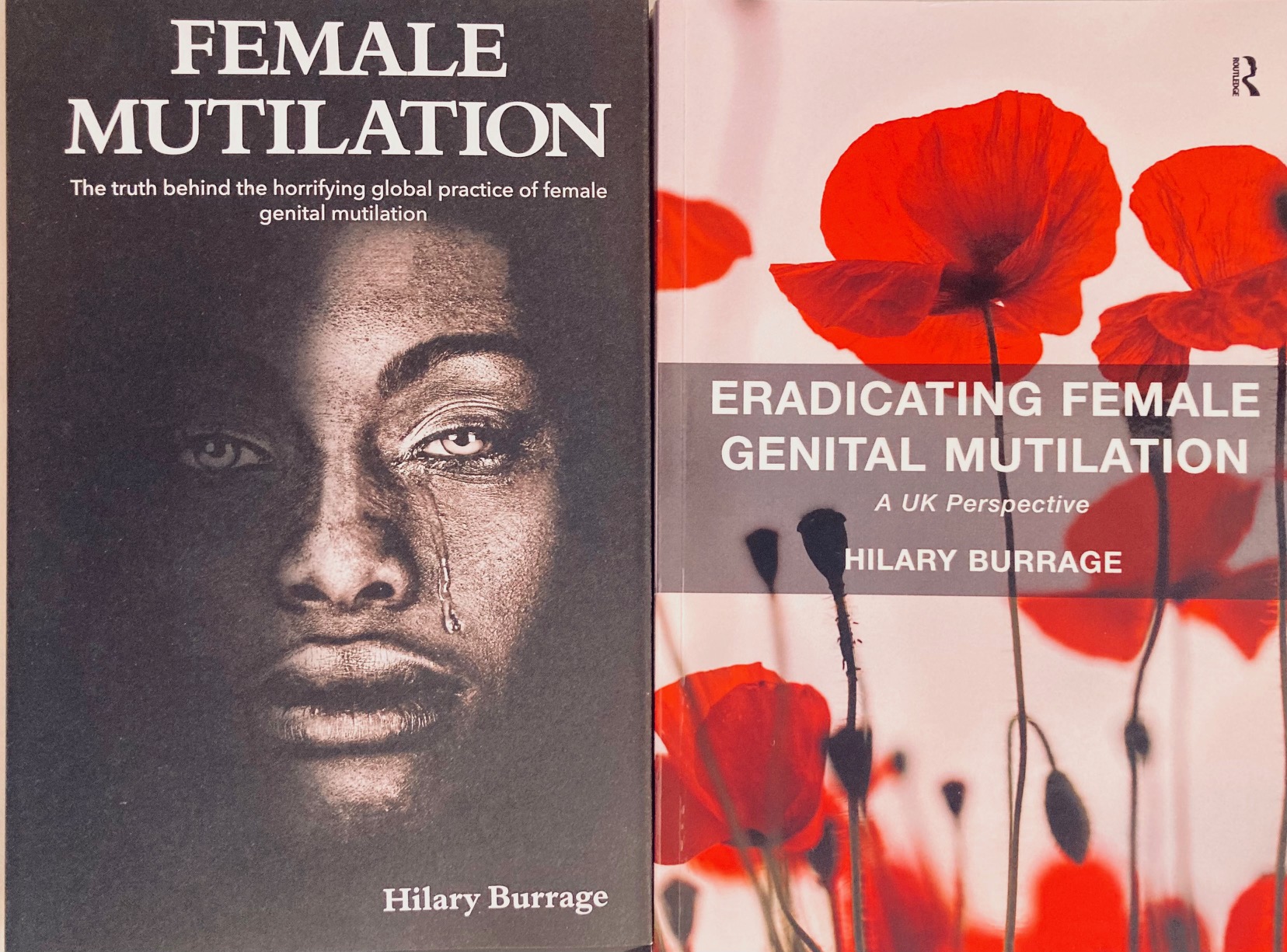
[i] Nanjala-Ndenga, C. (2016) p46 in Burrage, H. Female mutilation: the truth behind the horrifying global practice of female genital mutilation. Sydney: New Holland Publishers
[ii] World Health Organisation (updated 2018?), Female Genital Mutilation. Retrieved from http://www.who.int/reproductivehealth/topics/fgm/prevalence/en/
[iii] Milken Institute School of Public Health (2017), Female Genital Mutilation/Cutting: Half a Million Girls & Women in the United States at Risk. Retrieved from https://publichealth.gwu.edu/content/female-genital-mutilationcutting-half-million-girls-women-united-states-risk
[iv] Access to European Law (Eur-LEX) (2013), COMMUNICATION FROM THE COMMISSION TO THE EUROPEAN PARLIAMENT AND THE COUNCIL Towards the elimination of female genital mutilation. Retrieved from https://eur-lex.europa.eu/legal-content/EN/TXT/?uri=COM:2013:0833:FIN
[v] World Health Organisation (January 2018) Female Genital Mutilation: Key Facts. Retrieved from http://www.who.int/news-room/fact-sheets/detail/female-genital-mutilation
[vi] World Health Organisation (?2018), Female Genital Mutilation: Prevalence of FGM. Retrieved from http://www.who.int/reproductivehealth/topics/fgm/prevalence/en/
[vii] Burrage, H. (2016). Chapter 6: Egypt, the Middle-East and Southeast Asia, Female Mutilation, New Holland Press 68-88
[viii] UNICEF (2015/16), UNICEF’s Data Work On FGM/C. Retrieved from https://www.unicef.org/media/files/FGMC_2016_brochure_final_UNICEF_SPREAD.pdf
[ix]Koski, A. and Heymann, (2017). Thirty-year trends in the prevalence and severity of female genital mutilation: a comparison of 22 countries, BMJ Global Health, 2, 4 . Retrieved from https://gh.bmj.com/content/2/4/e000467
[x] UNICEF (February 2016), New statistical repJ. ort on female genital mutilation shows harmful practice is a global concern. Retrieved from https://www.unicef.org/media/media_90033.html
[xi] See e.g. Makama, G.A. (June 2013), Patriarchy and Gender Inequality in Nigeria: The Way Forward, European Scientific Journal, 19(7), 115-144. Retrieved from https://eujournal.org/index.php/esj/article/download/1161/1177
[xii] International Planned Parenthood Federation (?2013), HARMFUL TRADITIONAL PRACTICES AFFECTING WOMEN & GIRLS. Retrieved from https://www.ippf.org/sites/default/files/harmful_traditional_practices.pdf
[xiii] See e.g. Leake, D., & Black, R. (2005), Essential tools: Cultural and linguistic diversity: Implications for transition personnel. University of Minnesota, Institute on Community Integration, National Center on Secondary Education and Transition. Retrieved from http://www.ncset.org/publications/essentialtools/diversity/partIII.asp
[xiv] De Vos, P. (March 2013). Do members of traditional communities have any democratic rights? Constitutionally Speaking. Retrieved from https://constitutionallyspeaking.co.za/do-members-of-traditional-communities-have-any-democratic-rights/
[xv] Burrage, H (2019) [NWestern Univ paper to be published in next few weeks]
[xvi] Nordqvist, C. (May 2017). What is female genital mutilation? Complications, Medical News Today. Retrieved from https://www.medicalnewstoday.com/articles/241726.php
[xvii] See eg Burrage, H (2015). Eradicating female mutilation: a UK perspective (Ashgate / Routledge). Chapter 6, 145-153
[xviii] Willshire, K. (10 February, 2014) France’s tough stance on female genital mutilation is working, say campaigners, The Guardian. Retrieved from https://www.theguardian.com/society/2014/feb/10/france-tough-stance-female-genital-mutilation-fgm
[xix] World Health Organisation (2007). Classification of female genital mutilation. Retrieved from http://www.who.int/reproductivehealth/topics/fgm/overview/en/
[xx] O’Connell, H.E., Sanjeevan, K.U. and Hutson, J.M. (October 2005). Anatomy of the clitoris, Journal of Urology, 174 (4Pt.1) 1189-95. Retrieved from https://www.ncbi.nlm.nih.gov/pubmed/16145367
[xxi] Abrol, S. (7 February 2018), Yes, Female Genital Mutilation happens in India; here’s everything you need to know. We bring you the why, how and why-not of female genital mutilation in India, India Today. Retrieved from https://www.indiatoday.in/lifestyle/people/story/female-genital-mutilation-india-clitoris-pleasure-muslim-bohra-community-1162510-2018-02-06
[xxii] Abdulcadir, J. (nd) Countering myths about FGM/C, Female Circumcision: Myths & Facts. Retrieved as https://femalecircumcision.org/countering-myths-fgm-c-jasmine-abdulcadir/
[xxiii] Horowitz, C.R. and Jackson, C.J. (August 1997., Female ‘Circumcision’: African Women Confront American Medicine, Journal of General Internal Medicine 12(8) 491-499. Retrieved from https://www.ncbi.nlm.nih.gov/pmc/articles/PMC1497147/
[xxiv] See Edna Adan Hospital (2018). What is Female Genital Mutilation? Instruments and Methods. Retrieved from http://www.ednahospital.org/hospital-mission/female-genital-mutilation/
[xxv] Rashid, M. and Rashid, M.H. (2007). Review: Obstetric management of women with female genital mutilation, The Obstetrician and Gynaecologist, 9:95-101. Retrieved from https://obgyn.onlinelibrary.wiley.com/doi/pdf/10.1576/toag.9.2.095.27310
[xxvi] Yee, A. (6 April 2017). Talking It Out: The Effort to End Female Genital Mutilation in Ethiopia, Pulitzer Center. Retrieved from https://pulitzercenter.org/reporting/talking-it-out-effort-end-female-genital-mutilation-ethiopia
[xxvii] Magon, N. and Alinsod, R. (February 2007). Female Genital Cosmetic Surgery: Delivering What Women Want, Journal of Obstetrics and Gynecology in India, 67(1) 15-19. Retrieved from https://www.ncbi.nlm.nih.gov/pmc/articles/PMC5306104/
[xxviii] Kouyaté, M. (2016). Preface, Female Mutilation: The truth behind the horrifying global practice of female genital mutilation (Burrage, 2016) 6-7
[xxix] Burrage, H. et al (2013). Feminist Statement on Female Genital Mutilation: Retrieved from https://statementonfgm.com/
[xxx] FGM National Clinical Group (2007-2015) FGM Information: Historical and Cultural. Retrieved from http://www.fgmnationalgroup.org/historical_and_cultural.htm
[xxxi] Evidence of infibulation, rather than clitoridectomy, ie a form of economic rather than sexual control, has been found in ancient Egyptian remains, see e.g. 28 Too Many (19 February 2013). What are the origins and reasons for FGM? Retrieved from https://www.28toomany.org/blog/2013/feb/19/what-are-the-origins-and-reasons-for-fgm-blog-by-28-too-manys-research-coordinator/
[xxxii] Open University (nd) Adolescent and Youth Reproductive Health Module: 5. Harmful Traditional Practices (HTPs). Retrieved from http://www.open.edu/openlearncreate/mod/oucontent/view.php?id=66&printable=1
[xxxiii] Burrage, H. (5 March 2016). Patriarchy Incarnate: The Horrifying Practice of Female Genital Mutilation. Retrieved from https://hilaryburrage.com/2016/03/05/patriarchy-incarnate-the-horrifying-practice-of-female-genital-mutilation/
[xxxiv] United Nations Office of the High Commissioner for Human Rights (OHCHR), (18 December 1979). Fact Sheet No.23, Harmful Traditional Practices Affecting the Health of Women and Children, Convention on the Elimination of All Forms of Discrimination Against Women (art. 5 (a)), adopted by General Assembly resolution 34/180 of 18 December 1979. Retrieved from https://www.ohchr.org/Documents/Publications/FactSheet23en.pdf
[xxxv] IPPF (nd). Harmful Traditional Practices Affecting Girls & Women, ActionAid UK – Gender & Development Network – Womankind International Planned Parenthood Federation – Orchid Project. Retrieved as https://www.ippf.org/sites/default/files/harmful_traditional_practices.pdf
[xxxvi] Burrage, H. (20 March 2016). What Are Harmful Traditional Practices (HTPs)? Why Do They Occur? Retrieved from https://hilaryburrage.com/2016/03/20/what-are-harmful-traditional-practices-htps-why-do-they-occur/
[xxxvii] Pollack, M. (6 February 2012). Circumcision: Identity, Gender And Power, HuffPost. Retrieved from https://www.huffingtonpost.com/miriam-pollack/circumcision-identity-
[xxxviii] Norway in Geneva (8 February 2018). Ending Female Genital Mutilation is a Political Decision. Retrieved from https://www.norway.no/en/missions/wto-un/our-priorities/globalhealth/ending-female-genital-mutilation-is-a-political-decision/
[xxxix] Stop FGM Middle East (nd). Religion or Culture? Retrieved from http://www.stopfgmmideast.org/background/islam-or-culture/
[xl] Asmani, I.L. and Abdi, M.S., (2008). Delinking Female Genital Mutilation/ Cutting from Islam, USAid, Population Council. Retrieved from https://www.unfpa.org/sites/default/files/pub-pdf/De-linking%20FGM%20from%20Islam%20final%20report.pdf
[xli] Drum, K., (6 April 2017). Female Genital Mutilation Is Not a Uniquely Muslim Problem, Mother Jones. Retrieved from https://www.motherjones.com/kevin-drum/2016/02/female-genital-mutilation-not-uniquely-muslim-problem/
[xlii] New Zealand FGM Education Programme, (2019). Female Genital Mutilation Information for Health and Child Protection Professionals. Beliefs and Issues. Retrieved from http://fgm.co.nz/beliefs-and-issues/
[xliii] Mackie, G. (1996). Ending footbinding and infibulation: a convention account, American sociological review, 61(6). 999-1017
[xliv] See Eleanor Rathbone, R. (1934) Child marriage: the Indian minotaur: an object lesson from the past to the present (George Allen and Unwin) for an early examination of child marriage in the context of India – CEFM has been a concern for at least a century
[xlv] Kios Foundation (8 March 2017). Hidden tradition – girl child beading in Samburu communities Retrieved from https://www.kios.fi/en/2017/03/local-organisation-fights-against-human-rights-violations-towards-samburu-women-and-girls-in-kenya/
[xlvi] See Burrage, H. (12 May 2016). The 4 ‘E’s Of FGM Eradication – My Paper On The Economics Of FGM, At The UN Geneva IAC Meeting. Retrieved from https://hilaryburrage.com/2016/05/12/the-4-es-of-fgm-eradication-my-paper-on-economics-at-the-un-geneva-iac-meeting/ and (24 April 2018) The Many ‘E’s Of FGM Eradication – And Why They All Lead Via ‘Economics’ And ‘Epidemics’ To Public Health. Retrieved from https://hilaryburrage.com/2018/04/24/the-many-es-of-fgm-eradication-and-why-they-all-lead-via-economics-and-epidemics-to-public-health/
[xlvii] Lorenzi, R. (12 October 2012). How Did Female Genital Mutilation Begin? Retrieved from https://www.seeker.com/how-did-female-genital-mutilation-begin-1766105357.html
[xlviii] World Health Organization (2018). Health risks of female genital mutilation (FGM). Retrieved from http://www.who.int/reproductivehealth/topics/fgm/health_consequences_fgm/en/
[xlix] Norwegian Institute of Public Health (2014). Immediate health consequences of female genital mutilation/cutting (FGM/C). Retrieved from https://www.fhi.no/en/publ/2014/immediate-health-consequences-of-female-genital-mutilationcutting-fgmc-
[l] Hearst, AA and Molnar, AM (June 2013). Female Genital Cutting: An Evidence-Based Approach to Clinical Management for the Primary Care Physician, Mayo Clinic Proceedings 88 : 6 : 618-629 (especially Section 111.C). Retrieved via https://www.mayoclinicproceedings.org/article/S0025-6196%2813%2900264-4/fulltext#sec4.3.2
[li] Reisel, D. and Creighton, S. (January 2015). Long term health consequences of Female Genital Mutilation (FGM), Maturitas, 80 (1), 48-51. Retrieved from https://www.maturitas.org/article/S0378-5122(14)00326-0/fulltext
[lii] Vaughan, J. (23 May 2017). Obstetric fistula; a silent death for millions of women and girls. Retrieved from http://news.trust.org/item/20170523104025-9ctkl
[liii] Biglu, MH et al (December 2016). Effect of female genital mutilation/cutting on sexual functions, Sexual and reproductive healthcare 10 : 3-8 Retrieved via https://www.ncbi.nlm.nih.gov/pubmed/27938869
[liv] Ismail, S, et al (2017). Effect of female genital mutilation/cutting; types I and II on sexual function: case-controlled study, Reproductive Health, 14.108. Retrieved from https://reproductive-health-journal.biomedcentral.com/articles/10.1186/s12978-017-0371-9
[lv] Sigurjonsson, H. and Jordal, M. (2018). Addressing Female Genital Mutilation / Cutting (FGM/C) in the Era of Clitoral Reconstruction: Plastic Surgery, Current Sexual Health reports 10 : 2 : 50-56. Retrieved from https://www.ncbi.nlm.nih.gov/pmc/articles/PMC5937872/
[lvi] Abdulcadir, J. et al (25 November 2014). Clitoral Reconstruction after Female Genital Mutilation/Cutting: Case Studies, Wiley Online Library. Retrieved from https://onlinelibrary.wiley.com/doi/full/10.1111/jsm.12737
[lvii] Daughters of Eve (nd), Living with FGM Mental and Emotional Health. Retrieved from http://www.dofeve.org/living-with-fgm.html
[lviii] Behrendt, A. and Moritz, S. (May 2005). Posttraumatic stress disorder and memory problems after female genital mutilation, American Journal of Psychiatry, 162(5):1000-2. Retrieved from https://www.ncbi.nlm.nih.gov/pubmed/15863806
[lix] Forma (19 July 2018). Trauma And Female Genital Cutting, Part 2: Post Traumatic Stress Disorder. Retrieved from https://www.formafgc.org/news/2018/7/19/trauma-and-female-genital-cutting-part-2-post-traumatic-stress-disorder
[lx] Chung, S. (16 May 2916). The Psychological Effects of Female Genital Mutilation (Research blog). 28 Too Many. Retrieved from https://www.28toomany.org/blog/the-psychological-effects-of-female-genital-mutilation-research-blog-by-serene-chung/
[lxi] For discussion of the current state of knowledge re FGM and psychological impacts see National Clinical Group (2007-2015). FGM Information: Psychological Aspects http://www.fgmnationalgroup.org/psychological_aspects.htm
[lxii] Cultural differences in regard to post-trauma stress are discussed here: Good Therapy (6 November2018). Post Traumatic Stress. Retrieved from https://www.goodtherapy.org/learn-about-therapy/issues/ptsd
[lxiii] Glover, J. et al (2017). The psychological and social impact of female genital mutilation: A holistic conceptual framework, Journal of International Studies 10 : 2 219-238. Retrieved from https://pure.coventry.ac.uk/ws/portalfiles/portal/12390286/16_388_Glover_et_al.pdf
[lxiv] Burrage, H. (12 May 2016). The 4 E’s Of FGM Eradication – My Paper On The Economics Of FGM At The UN Geneva IAC Meeting. Retrieved from https://hilaryburrage.com/2016/05/12/the-4-es-of-fgm-eradication-my-paper-on-economics-at-the-un-geneva-iac-meeting/
[lxv] WHO study group on female genital mutilation and obstetric outcome (2006). Female genital mutilation and obstetric outcome: WHO collaborative prospective study in six African countries. Retrieved from http://www.who.int/reproductivehealth/publications/fgm/fgm-obstetric-study-en.pdf
[lxvi]Balogun OO, Hirayama F, Wariki WMV, Koyanagi A, Mori R (28 February 2013). Interventions for improving outcomes for pregnant women who have experienced genital cutting, Cochrane. Retrieved from https://www.cochranelibrary.com/cdsr/doi/10.1002/14651858.CD009872.pub2/full
[lxvii] Rodriguez, MI et al (2016). Episiotomy and obstetric outcomes among women living with type 3 female genital mutilation: a secondary analysis, Reproductive Health 13 ; 31. Retrieved from https://www.ncbi.nlm.nih.gov/pmc/articles/PMC5057400/
[lxviii] World Health Organization (2 June 2006). New study shows female genital mutilation exposes women and babies to significant risk at childbirth. Retrieved from http://www.who.int/mediacentre/news/releases/2006/pr30/en/
[lxix] Eke N, Nkanginieme K. (2006). Female genital mutilation and obstetric outcome. Lancet 367:1799 Summary report retrieved from http://www.who.int/reproductivehealth/topics/fgm/obstetric_problems_fgm/en/
[lxx] Atrash, H.K. (2011). PARENTS’ DEATH AND ITS MPLICATIONS FOR CHILD SURVIVAL, Journal of Human Growth and Development, 21(3): 759-770. Retrieved from https://www.ncbi.nlm.nih.gov/pmc/articles/PMC4501914/ and
Scott, S. et al (22 February 2017). Effect of maternal death on child survival in rural West Africa: 25 years of prospective surveillance data in The Gambia. Retrieved from https://journals.plos.org/plosone/article?id=10.1371/journal.pone.0172286
[lxxi] Mpinga, E.K. et al, (October 2016). Female genital mutilation: a systematic review of research on its economic and social impacts across four decades, Global Health Action, 9: 10.3402. Retrieved from https://www.ncbi.nlm.nih.gov/pmc/articles/PMC5052514/
[lxxii] Burrage, H., (6 February 2014). The Global Economics Of Female Genital Mutilation (FGM). Retrieved from https://hilaryburrage.com/2014/02/06/the-global-economics-of-female-genital-mutilation-fgm/
[lxxiii] Burrage, H. (13 April 2016). FGM: a costly, organised crime against women and girls, The Guardian. Retrieved from https://www.theguardian.com/society/blog/2016/apr/13/fgm-costly-organised-crime-africa
[lxxiv] Dean, L. (16 July 2015). Global Post: ‘I hate it. It hurts’ — Egyptian women talk about sex after female genital mutilation, Stop FGM Middle East. Retrieved from http://www.stopfgmmideast.org/global-post-i-hate-it-it-hurts-egyptian-women-talk-about-sex-after-female-genital-mutilation/
[lxxv] The debate continues, as here: https://www.ics.org/committees/developingworld/professionaleducation/femalegenitalmutilation
[lxxvi] Ernest, D. et al (2014). ‘Do not hide yourselves, you are not cursed’: A PEER Study of Obstetric Fistula. Mpwapwa, Dodoma, Tanzania, Mwanamke Maternal Health and Dignity (FORWARD). Retrieved from http://www.forwarduk.org.uk/wp-content/uploads/2014/12/Do-not-hide-yourself_PEER-Study.pdf
[lxxvii] see McKie above
[lxxviii] Wikipedia, Female genital mutilation; Social obligation, poor access to information. Retrieved from https://en.wikipedia.org/wiki/Female_genital_mutilation
[lxxix] Morlin-Yron, S. (7 February 2017). Cut in secret: the medicalization of FGM in Egypt, CNN Africa View. Retrieved from https://edition.cnn.com/2017/02/06/africa/africa-view-egypt-fgm/index.html
[lxxx] Burrage, H. (22 January 2018) Female Genital Mutilation and Gender Politics in Modern Egypt, Left History 149-161
(also http://hilaryburrage.com/2019/02/12/egypt/ CHECK)
[lxxxi] Parsitau, D.S. (19 June 2018). How outlawing female genital mutilation in Kenya has driven it underground and led to its medicalization, Education Plus Development. Retrieved from https://www.brookings.edu/blog/education-plus-development/2018/06/19/how-outlawing-female-genital-mutilation-in-kenya-has-driven-it-underground-and-led-to-its-medicalization/
[lxxxii] UNFPA Arab States News (7 February 2018). FGM performed in clinics can make it dangerously attractive. Retrieved from https://arabstates.unfpa.org/en/news/fgm-performed-clinics-can-make-it-dangerously-attractive
[lxxxiii] Doucet, M-H. et al (2017). Understanding the motivations of health-care providers in performing female genital mutilation: an integrative review of the literature, Reproductive Health 14 : 64. Retrieved from https://reproductive-health-journal.biomedcentral.com/articles/10.1186/s12978-017-0306-5
[lxxxiv] See e.g. United Nations Human Rights Office of the High Commissioner (2014). Additional Submission to the United Nations Committee on the Rights of the Child 66th Session. Medicalization of FGM in Indonesia. Retrieved from https://tbinternet.ohchr.org/Treaties/CRC/Shared%20Documents/IDN/INT_CRC_NGO_IDN_16628_E.pdf
[lxxxv] World Health Organization (2010). Global strategy to stop health-care providers from performing female genital mutilation. Retrieved from http://www.who.int/reproductivehealth/publications/fgm/rhr_10_9/en/
[lxxxvi] Kimani, S. and Shell-Duncan, B. (2018). Medicalized Female Genital Mutilation/Cutting: Contentious Practices and Persistent Debates, National Center for Biotechnology Information. Retrieved from https://www.ncbi.nlm.nih.gov/pmc/articles/PMC5840226
[lxxxvii] Serour, G.I. (September 2013). Medicalization of female genital mutilation/cutting, African Journal of Urology 19(3):145–149. Retrieved from https://www.researchgate.net/publication/259143891_Medicalization_of_female_genital_mutilationcutting
[lxxxviii] Batha, E. (6 February 2017). Why ‘Medicalization’ of FGM Is a Serious Threat to Women:
Many health workers see FGM as a potential source of income, Global Citizen. Retrieved from https://www.globalcitizen.org/en/content/medicalization-fgm-serious-threat/
[lxxxix] Northern Ireland Human Rights Commission (August 2016) Female Genital Mutilation in the United Kingdom, p18. Retrieved from http://www.nihrc.org/uploads/publications/FGMinUK-15.08.2016.pdf
[xc] Shahvisi, A. and Earp, B.D. (2018) (book now in press, or published??) Retrieved from https://www.researchgate.net/publication/322287554_The_law_and_ethics_of_female_genital_cutting
[xci] Desai, SA and Dixit, W. (April 2018) Audit of female Aesthetic Surgery: Changing Trends in India, Journal of Obstetrics and Gynaecology of India. 68(3) : 214-220 Retrieved from https://europepmc.org/abstract/med/29896002
[xci]i Abdulcadir, J, et al (August 2015) Female genital mutilation/cutting type IV in Cambodia: a case report. Case Reports 3(12) ; 979-982
Retrieved from https://onlinelibrary.wiley.com/doi/pdf/10.1002/ccr3.403
[xci] Telfer, N. (April 2018) Vaginas 101, HelloClue. Retrieved from https://helloclue.com/articles/cycle-a-z/vaginas-101
[xci] NHS (May 2016). Your guide to cosmetic procedures: Labiaplasty (vulval surgery) NHS website. Retrieved from https://www.nhs.uk/conditions/cosmetic-treatments/labiaplasty/
[xci] WebMD (2017). What is vaginoplasty and labiaplasty? WebMD website. Retrieved from https://www.webmd.com/women/qa/what-is-vaginoplasty-and-labiaplasty
[xci] Diane (August 2016). What is hymenoplasty?, Cherokee. Retrieved from https://cherokeewomenshealth.com/2016/08/what-is-hymenoplasty/
[xci] Zelmanovich, A. (October 2017) Vulvoplasty Manhatten Women’s Health. Retrieved from https://www.obgynecologistnyc.com/procedures/vulvoplasty/
[xci] Roberts, M. (August 2011). Designer vagina NHS operations unwarranted, BBC Health News. Retrieved from https://www.bbc.co.uk/news/health-14627659
[xcix] BMEZINE.com (May 2007) Category: Female Genital Piercings Retrieved from https://wiki.bme.com/index.php?title=Category:Female_Genital_Piercings
[c] WebMD (2005) Genital Piercings. Retrieved from https://www.webmd.com/sex/genital-piercings#2
[ci] WHO (2019). Sexual and reproductive health. Classification of female genital mutilation. Retrieved from https://www.who.int/reproductivehealth/topics/fgm/overview/en/
[cii] The National Archives (May 2017) FGM Enhanced Dataset – Frequently Asked questions. Section5.6. Retrieved from https://webarchive.nationalarchives.gov.uk/20180328130852tf_/http://content.digital.nhs.uk/media/22977/Frequently-Asked-Questions-updated-16-11-2016/pdf/Frequently_Asked_Questions_updated_16-11-2016.pdf/
[ciii] Nelius, T. et al (April 2012). A relationship between female genital piercings and female mutilation? JBOG Correspondence. Retrieved from https://obgyn.onlinelibrary.wiley.com/doi/full/10.1111/j.1471-0528.2012.03320
xcii Liao, L-M et al, An analysis of the content and clinical implications of online advertisements for female genital cosmetic surgery, BMJ Open, 2.6. Retrieved from https://bmjopen.bmj.com/content/2/6/e001908
xciiiOBP, June 2018. What Factors Are Driving the Trend in Female Genital Cosmetic Surgery? OBPMedical.com. Retrieved from https://obpmedical.com/what-factors-are-driving-the-trend-in-female-genital-cosmetic-surgery/
xcivRCOG/BritSPAG, 2017. RCOG/BritSPAG statement on BBC report of under 18s seeking labiaplasty, Royal College of Obstetricians and Gynaecologists.
Retrieved from https://www.rcog.org.uk/en/news/rcogbritspag-statement-on-bbc-report-of-under-18s-seeking-labiaplasty
xcv Sharp, G. et al, September 2016. Motivations, Expectations, and Experiences of Labiaplasty: A Qualitative Study, Aesthetic Surgery Journal, 36. 8, 920–928. Retrieved from https://academic.oup.com/asj/article/36/8/920/2613944
xcviMayo Clinic, ND. Body dysmorphic disorder. Retrieved from https://www.mayoclinic.org/diseases-conditions/body-dysmorphic-disorder/symptoms-causes/syc-20353938
xcvii Braun, V. and Tiefer, L., (2010). The ‘designer vagina’ and the pathologisation of female genital diversity: interventions for change, Radical Psychology 8(1) 2010. Retrieved from https://researchspace.auckland.ac.nz/handle/2292/12581
xcviii Keil, A. (March 2010) Genital Anxiety and the Quest for the Perfect Vulva: A Feminist Analysis of Female Genital Cosmetic Surgery, UCI 95863710. Retrieved from https://www.anthropology.uci.edu/files/docs/2010_benedict_keil.pdf
xcviv Bonavoglia, A. (2011). Cosmetic Vaginal Surgeons Clueless About Female Sexuality, HuffPost Contributor platform. Retrieved from https://www.huffpost.com/entry/cosmetic-vaginal-surgeons_n_475929
xcviii RACGP, (2015). Female genital cosmetic surgery A resource for general practitioners and other health professionals. Retrieved from https://www.racgp.org.au/download/Documents/Guidelines/Female-genital-cosmetic-surgery-toolkit.pdf
xcviii RCOG (2013). Ethical opinion paper
Ethical considerations in relation to female genital cosmetic surgery (FGCS). Retrieved from https://www.rcog.org.uk/globalassets/documents/guidelines/ethics-issues-and-resources/rcog-fgcs-ethical-opinion-paper.pdf
xcix Reingold, R (March 2017). The Differential Treatment of FGCS and FGM/C: a legal double standard? Oneill Institute, Georgetown Law. Retrieved from http://oneill.law.georgetown.edu/the-differential-treatment-of-fgcs-fgmc-a-legal-double-standard/
[cxvi] Medical Board of Australia, (2017). Guidelines for registered medical practitioners who perform cosmetic medical and surgical procedures: Additional responsibilities when providing cosmetic medical and surgical procedures for patients under the age of 18. Medical Board of Australia. Retrieved from https://www.medicalboard.gov.au/Codes-Guidelines-Policies/Cosmetic-medical-and-surgical-procedures-guidelines.aspx
C See eg the RACGP letter of 29 May 2015 to the Chair of the Medical Board of Australia. Quote: Newer emerging cosmetic procedures such as female genital cosmetic surgery (FGCS) raises other concerns regarding regulation. FGCS is not medically indicated and aims to change aesthetic (or functional) aspects of a woman’s genitalia. These procedures can be performed by anyone with a medical degree, including a cosmetic surgeon, gynaecologist, plastic surgeon, or urologist. No formal training is required and there are no evidence based guidelines for these procedures at present.
Retrieved from https://www.medicalboard.gov.au/documents/default.aspx?record=WD15%2F18026&dbid=AP&chksum
[cxviii] BritSPAG (2013) – (see xcvi)
[cxviii] Liao, L-M. and Creighton, S. (January 2011). Female genital cosmetic surgery: a new dilemma for GPs, British Journal of Clinical Practice, 61(582): 7–8. Retrieved from https://www.ncbi.nlm.nih.gov/pmc/articles/PMC3020045/
[cxviii] Burrage, H. (November 2017). Economics Is Why FGM Persists (Oxford Seminar On The Elephants In The Room), Hilary Burrage website. Retrieved from https://hilaryburrage.com/2017/11/23/economics-is-why-fgm-persists-oxford-seminar-on-the-elephants-in-the-room
[cxviii] Michala, L. et al (2012). Female genital cosmetic surgery: how can clinicians act in women’s best interests?, The Obstetrician and Gynaecologist, 14:203–206. Retrieved from https://obgyn.onlinelibrary.wiley.com/doi/pdf/10.1111/j.1744-4667.2012.00121.x
[cxviii] Barbara, G. et al, (2017). Vaginal rejuvenation: current perspectives, International Journal of Women’s Health, 9: 513–519 Retrieved from https://www.ncbi.nlm.nih.gov/pmc/articles/PMC5560421/
[cxviii] Lippman, A. (1999) Choice as a risk to women’s health. Health Risk Soc, 1(3);281-291. Retrieved from https://www.tandfonline.com/doi/abs/10.1080/13698579908406317
[cxviii] Liao and Creighton (2011) See cv1 above
[cxviii] Tiefer, L. (2008). Female Genital Cosmetic Surgery: Freakish or Inevitable? Analysis from Medical Marketing, Bioethics, and Feminist Theory, Feminism & Psychology ,SAGE (Los Angeles, London, New Delhi and Singapore) 18(4): 466–479; 0959-3535. Retrieved from http://citeseerx.ist.psu.edu/viewdoc/download?doi=10.1.1.897.3268&rep=rep1&type=pdf
[cxxiii] Mills & Reeve (March 2016) The Female Genital Mutilation Act: an update. Retrieved from https://www.mills-reeve.com/the-female-genital-mutilation-act-an-update/
[cxxvii] Lippman, A. (1999) Choice as a risk to women’s health. Health Risk Soc, 1(3);281-291. Retrieved from https://www.tandfonline.com/doi/abs/10.1080/13698579908406317
[cxxix] Mills and Reeve, March 2016. The Female Genital Mutilation Act: an update. Retrieved from https://www.mills-reeve.com/insights/publications/the-female-genital-mutilation-act-an-update
[cxxix] Lee, P. et al (August 2006). Consensus Statement on Management of Intersex Disorders, Pediatrics, 18.2. Retrieved from https://pediatrics.aappublications.org/content/118/2/e488
[cxxix] Viau-Colindres, J. et al, November 2017. Bringing Back the Term “Intersex”, American Academy of Pediatrics, 140.5 Retrieved from https://pediatrics.aappublications.org/content/140/5/e20170505
[cxxix] Children’s Hospital of Wisconsin, 2019. Ambiguous genitalia. Retrieved as https://www.chw.org/medical-care/urology/conditions/ambiguous-genitalia
[cxxix] Oliviera, M.S. et al, July 2015. Parents’ experiences of having a baby with ambiguous genitalia, Journal of Pediatric Endocrinology and Metabolism, 28(7-8):833-8. Retrieved from https://www.ncbi.nlm.nih.gov/pubmed/26068900
[cxxix] Markosyan, R. and Ahmed, S.F., December 2017. Sex Assignment in Conditions Affecting Sex Development, Journal of Clinical Research in Pediatric Endocrinology, 9(2): 106-112. Retrieved from http://eprints.gla.ac.uk/154868/
[cxxix] APA, 2015. Non-Binary Gender Identities, APA Factsheet, APA Division 4, Society for the Psychology of Sexual Orientation and Gender Diversity. Retrieved from https://www.apadivisions.org/division-44/resources/advocacy/non-binary-facts.pdf
[cxxix] Intersex Society of North America (nd), How common is intersex? Retrieved from http://www.isna.org/faq/frequency
[cxxix] NHS Commissioning Board, 2016. Standard Contract for Gender Identity Development Service for Children and Adolescents – Draft for Public Consultation, E13/S(HSS)/e . Retrieved from https://www.engage.england.nhs.uk/consultation/clinical-commissioning-wave8/user_uploads/gids-serv-spec-upd.pdf
[cxxix] Kleeman, J, 2 July 2016. ‘We don’t know if your baby’s a boy or a girl’: growing up intersex. The Guardian. Retrieved from https://www.theguardian.com/world/2016/jul/02/male-and-female-what-is-it-like-to-be-intersex
[cxxix] Kipnis, K. and Diamond, M., (nd?). Pediatric Ethics and the Surgical Assignment of Sex, The UK Intersex Association. Retrieved from http://www.ukia.co.uk/diamond/ped_eth.html
[cxxix] NHS, 4 June 2018. Think your child may be trans or non-binary? Healthy body. Retrieved from https://www.nhs.uk/live-well/healthy-body/think-your-child-might-be-trans-or-non-binary/
[cxxix] Zeiselman, K.M., (August 2017). I was an intersex child who had surgery. Don’t put other kids through this, USA Today. Retrieved from https://eu.usatoday.com/story/opinion/2017/08/09/intersex-children-no-surgery-without-consent-zieselman-column/539853001/
[cxxix] Olson-Kennedy and Forcier, M., January 2019. Management of transgender and gender-diverse children and adolescents, UpToDate. Retrieved as https://www.uptodate.com/contents/management-of-transgender-and-gender-diverse-children-and-adolescents.
[cxxix] Cantor, J.,11 January 2016. Do trans- kids stay trans- when they grow up?, Sexology Today. Retrieved as http://www.sexologytoday.org/2016/01/do-trans-kids-stay-trans-when-they-grow_99.html
[cxxix] American Academy of Pediatrics, February 2007. October 2006: AAP Publications Retired or Reaffirmed: Retired, Pediatrics, 119.2. Retrieved from https://pediatrics.aappublications.org/content/119/2/405
[cxxix]Nicklaus Children’s Hospital, 2019. Intersex: Definition. Treatment. Retrieved from https://www.nicklauschildrens.org/genetic/intersex
[cxxix] American College of Pediatricians (2017). Gender Ideology Harms Children. Retrieved from https://www.acpeds.org/the-college-speaks/position-statements/gender-ideology-harms-children
[cxxix] OZY Editors, 1 March 2018. At What Age Should Kids be Allowed To Transition? We asked, you answered. OZY Daily Dose. Retrieved from https://www.ozy.com/opinion/at-what-age-should-trans-kids-be-allowed-to-transition-we-asked-you-answered/85190
[cxxix] Gender Identity Development Service, 2019. GIDS Gender Identity Development Service. Retrieved from http://gids.nhs.uk/
[cxxix] GIDS, 2019. Puberty and physical intervention. Retrieved from http://gids.nhs.uk/puberty-and-physical-intervention
[cxxix] Dhejne, C. et al, (22 February 2011). Long-Term Follow-Up of Transsexual Persons Undergoing Sex Reassignment Surgery: Cohort Study in Sweden, Plos One. Retrieved as https://journals.plos.org/plosone/article?id=10.1371/journal.pone.0016885
[cxxix] Doward, J., 3 November 2018. Too young to decide? Questions dividing real-life Butterfly families. Behind ITV’s drama about a transgender child is a fierce debate that has led parents to challenge a pioneering clinic, The Observer. Retrieved from https://www.theguardian.com/society/2018/nov/03/real-life-butterfly-families-transgender-child-tavistock-clinic and
(same date) Gender identity clinic accused of fast-tracking young adults. Tavistock Centre launches review amid parents’ fears over pace of transitioning decisions, The Observer. Retrieved from https://www.theguardian.com/society/2018/nov/03/tavistock-centre-gender-identity-clinic-accused-fast-tracking-young-adults
[cxxix] Wikipedia, 19 March 2019. Marriageable age. Retrieved from https://en.wikipedia.org/wiki/Marriageable_age#By_country
[cxxx] Lee, P. et al (August 2006). Consensus Statement on Management of Intersex Disorders, Pediatrics, 18.2. Retrieved from https://pediatrics.aappublications.org/content/118/2/e488
[cxxxi] Viau-Colindres, J. et al, November 2017. Bringing Back the Term “Intersex”, American Academy of Pediatrics, 140.5 Retrieved from https://pediatrics.aappublications.org/content/140/5/e20170505
[cxxxii] Children’s Hospital of Wisconsin, 2019. Ambiguous genitalia. Retrieved as https://www.chw.org/medical-care/urology/conditions/ambiguous-genitalia
[cxxxiii] Oliviera, M.S. et al, July 2015. Parents’ experiences of having a baby with ambiguous genitalia, Journal of Pediatric Endocrinology and Metabolism, 28(7-8):833-8. Retrieved from https://www.ncbi.nlm.nih.gov/pubmed/26068900
[cxxxiv] Markosyan, R. and Ahmed, S.F., December 2017. Sex Assignment in Conditions Affecting Sex Development, Journal of Clinical Research in Pediatric Endocrinology, 9(2): 106-112. Retrieved from http://eprints.gla.ac.uk/154868/
[cxxxv] APA, 2015. Non-Binary Gender Identities, APA Factsheet, APA Division 4, Society for the Psychology of Sexual Orientation and Gender Diversity. Retrieved from https://www.apadivisions.org/division-44/resources/advocacy/non-binary-facts.pdf
[cxxxvi] Intersex Society of North America (nd), How common is intersex? Retrieved from http://www.isna.org/faq/frequency
[cxxxvii] NHS Commissioning Board, 2016. Standard Contract for Gender Identity Development Service for Children and Adolescents – Draft for Public Consultation, E13/S(HSS)/e . Retrieved from https://www.engage.england.nhs.uk/consultation/clinical-commissioning-wave8/user_uploads/gids-serv-spec-upd.pdf
[cxxxviii] Kleeman, J, 2 July 2016. ‘We don’t know if your baby’s a boy or a girl’: growing up intersex. The Guardian. Retrieved from https://www.theguardian.com/world/2016/jul/02/male-and-female-what-is-it-like-to-be-intersex
[cxxxix] Kipnis, K. and Diamond, M., (nd?). Pediatric Ethics and the Surgical Assignment of Sex, The UK Intersex Association. Retrieved from http://www.ukia.co.uk/diamond/ped_eth.html
[cxl] Zeiselman, K.M., (August 2017). I was an intersex child who had surgery. Don’t put other kids through this, USA Today. Retrieved from https://eu.usatoday.com/story/opinion/2017/08/09/intersex-children-no-surgery-without-consent-zieselman-column/539853001/
[cxli] NHS, 4 June 2018. Think your child may be trans or non-binary? Healthy body. Retrieved from https://www.nhs.uk/live-well/healthy-body/think-your-child-might-be-trans-or-non-binary/
[cxlii] Olson-Kennedy and Forcier, M., January 2019. Management of transgender and gender-diverse children and adolescents, UpToDate. Retrieved as https://www.uptodate.com/contents/management-of-transgender-and-gender-diverse-children-and-adolescents.
[cxliii] Cantor, J.,11 January 2016. Do trans- kids stay trans- when they grow up?, Sexology Today. Retrieved as http://www.sexologytoday.org/2016/01/do-trans-kids-stay-trans-when-they-grow_99.html
[cxliv] American Academy of Pediatrics, February 2007. October 2006: AAP Publications Retired or Reaffirmed: Retired, Pediatrics, 119.2. Retrieved from https://pediatrics.aappublications.org/content/119/2/405
[cxlv]Nicklaus Children’s Hospital, 2019. Intersex: Definition. Treatment. Retrieved from https://www.nicklauschildrens.org/genetic/intersex
[cxlvi] American College of Pediatricians (2017). Gender Ideology Harms Children. Retrieved from https://www.acpeds.org/the-college-speaks/position-statements/gender-ideology-harms-children
[cxlvii] OZY Editors, 1 March 2018. At What Age Should Kids be Allowed To Transition? We asked, you answered. OZY Daily Dose. Retrieved from https://www.ozy.com/opinion/at-what-age-should-trans-kids-be-allowed-to-transition-we-asked-you-answered/85190
[cxlviii] Gender Identity Development Service, 2019. GIDS Gender Identity Development Service. Retrieved from http://gids.nhs.uk/
[cxlix] GIDS, 2019. Puberty and physical intervention. Retrieved from http://gids.nhs.uk/puberty-and-physical-intervention
[cl] Dhejne, C. et al, (22 February 2011). Long-Term Follow-Up of Transsexual Persons Undergoing Sex Reassignment Surgery: Cohort Study in Sweden, Plos One. Retrieved as https://journals.plos.org/plosone/article?id=10.1371/journal.pone.0016885
[cli] Doward, J., 3 November 2018. Too young to decide? Questions dividing real-life Butterfly families. Behind ITV’s drama about a transgender child is a fierce debate that has led parents to challenge a pioneering clinic, The Observer. Retrieved from https://www.theguardian.com/society/2018/nov/03/real-life-butterfly-families-transgender-child-tavistock-clinic and
(same date) Gender identity clinic accused of fast-tracking young adults. Tavistock Centre launches review amid parents’ fears over pace of transitioning decisions, The Observer. Retrieved from https://www.theguardian.com/society/2018/nov/03/tavistock-centre-gender-identity-clinic-accused-fast-tracking-young-adults
[clii] Wikipedia, 19 March 2019. Marriageable age. Retrieved from https://en.wikipedia.org/wiki/Marriageable_age#By_country
[cliii] Braun, V. (2012). Female genital cutting around the globe: A matter of reproductive justice? In J. C. Chrisler (Ed.), Reproductive justice: A global concern (pp. 29-55). Santa Barbara, CA: Praeger.
[cliv] Wendoh, S. (5 February 2018). Female genital mutilation (FGM) is a human rights violation, IPPF. Retrieved from https://www.ippf.org/blogs/female-genital-mutilation-fgm-human-rights-violation
[clv] United Nations (nd). Sustainable Development Goals 5: Gender Equality. Retrieved from https://www.un.org/sustainabledevelopment/gender-equality/
[clvi] FGM National Clinicial Group, 2007-2015. FGM Treatment: What is deinfibulation? Retrieved from http://www.fgmnationalgroup.org/fgm_treatment.htm
[clvii] Creighton, S. (27 October 2012). Reconstructive surgery after female genital mutilation (Letter), The Lancet, 380.9852 1469. Retrieved from
https://www.thelancet.com/journals/lancet/article/PIIS0140-6736(12)61836-4/fulltext
[clviii] FGM National Clinical Group, 2012. About Us: Position Statement regarding clitoral reconstruction. Retrieved from http://www.fgmnationalgroup.org/about_us.htm
[clix] Thabet, SMA and Thabet, ASMA, (4 February 2003). Defective sexuality and female circumcision: The cause and the possible management, The Journal of Obstetrics and Gynaecology Research,
https://doi.org/10.1046/j.1341-8076.2003.00065. Retrieved from https://obgyn.onlinelibrary.wiley.com/doi/abs/10.1046/j.1341-8076.2003.00065.x
[clx] Levin, T. (2014). An “Ethical Charter” to help stop FGM: Pierre Foldes opens the Institut en Santé Génésique (Institute for Sexual and Genital Health), UnCut/Voices Press: Focusing on the fight against FGM. Retrieved from https://uncutvoices.wordpress.com/an-ethical-charter-to-help-stop-fgm-pierre-foldes-opens-the-institut-en-sante-genesique-institute-for-sexual-and-genital-health/
[clxi] Abdulcadir, J., et al (2015). Clitoral Reconstruction after Female Genital Mutilation/Cutting: Case Studies, The Journal of Sexual Medicine, 12.1 274-281. Retrieved from https://www.jsm.jsexmed.org/article/S1743-6095(15)30885-7/fulltext
[clxii] Middelburg, A. (17 June 2014). The doctor who gives women their orgasms back, The Washington Post. Retrieved from https://www.washingtonpost.com/posteverything/wp/2014/06/17/the-doctor-who-gives-women-their-orgasms-back
[clxiii] Bowers, M. (2019) Marci L. Bowers, MD (website) Retrieved from http://marcibowers.com/
[clxiv] Collins, S. (8 March 2019). In U.S., Female Genital Mutilation’s Lasting Scars, WebMD. Retrieved from https://www.webmd.com/women/news/20190308/in-us-female-genital-mutiliations-lasting-scars
[clxv] The Surgery Center for FGM (2019). The Surgery Center for Female Genital Mutilation: Advisory Board (website). Retrieved from https://www.surgerycenterforfgm.org/advisory-board.html
[clxvi] Surugue, L. (7 February 2017) Meet the surgeon who made the fight against FGM his life-long battle: Hearing women’s voices, International Business Times. Retrieved from https://www.ibtimes.co.uk/meet-surgeon-who-made-fight-against-fgm-his-life-long-battle-1602246
[clxvii] Abdulcadir, J. et al (17 August 2017). Clitoral Surgery After Female Genital Mutilation / Cutting, Aesthetic Surgery Journal, 37.9, NP113-NP115. Retrieved from https://academic.oup.com/asj/article/37/9/NP113/4083575
[clxviii] Sigurjonsson, H. and Malin, J. (27 April 2018). Addressing Female Genital Mutilation/Cutting (FGM/C) in the Era of Clitoral Reconstruction: Plastic Surgery, Current Sexual Health Reports, 10.2 50-56. Retrieved from https://www.ncbi.nlm.nih.gov/pmc/articles/PMC5937872/
[clxix] Mañero, I and Labanca, T. (April 2018). Clitoral Reconstruction Using a Vaginal Graft After Female Genital Mutilation, Obstetrics and gynecology, 131.4 701-706. Retrieved from https://www.ncbi.nlm.nih.gov/pubmed/29528921
[clxx] Burrage, H. (2016). Ugana: Ahabwe Mugerwa Michael, Female Mutilation, New Holland Publishers, London, Sydney, Auckland 61-63.
[clxxi] Burrage, H. (29 December 2016). The ‘Cutting Season’: To End FGM (And Other Violence Against Women) We Need The Men On-Side, Hilary Burrage blog. Retrieved from https://hilaryburrage.com/2016/12/29/the-cutting-season-to-end-fgm-and-other-violence-against-women-we-need-the-men-on-side/
[clxxii] Associated Press (6 February 2019). Grandmothers fight to banish female genital mutilation. New York Post. Retrieved from https://nypost.com/2019/02/06/grandmothers-fight-to-banish-female-genital-mutilation/
[clxxiii] Gaffney, D. (2018). Many health professionals lack knowledge and guidelines on female genital mutilation and cutting, BMC International Health and Human Rights. Retrieved from https://www.biomedcentral.com/about/press-centre/science-press-releases/10-12-2015
[clxxiv] World Health Organization (2016). Guidelines on the management of health complications from female genital mutilation. Retrieved from http://www.who.int/reproductivehealth/topics/fgm/management-health-complications-fgm/en/
[clxxv] Jordan, L., Neophytou, K. and James, C. (January 2014). Improving the health care of women and girls affected by female genital mutilation/ cutting: A national approach to service coordination, Family Planning Victoria. Retrieved from https://www.fpv.org.au/assets/resources/FGM-ServeCoOrdinationGuideNationalWeb.pdf
[clxxvii] WHO (2019). Sexual and Reproductive Health: High-quality health care for girls and women living with FGM: WHO launches new clinical handbook. Retrieved from https://www.who.int/reproductivehealth/health-care-girls-women-living-with-FGM/en/
[clxxvii]i AHAFoundation (2019). A Training Curriculum for Professionals Likely to Encounter Victims of Genital Mutilation / Cutting. Retrieved from https://www.theahafoundation.org/online-training/female-genital-mutilationcutting-fgmc-training-for-professionals-working-with-victims-and-communities/
clxxviii Forensic Healthcare Online (July 2018). Clinical Guide: Female Genital Mutilation / Cutting. Retrieved from https://www.forensichealth.com/clinical-guides/female-genital-mutilation/
clxxx eIntegrity healthcare e-learning (nd), Female genital mutilation : awareness training. Retrieved from https://www.eintegrity.org/e-learning-healthcare-course/female-genital-mutilation.html
[clxxxi] Royal College of Obstetricians and Gynaecologists, (July 2015). Female Genital Mutilation and its management, Green-top Guideline No. 53. Retrieved from https://www.rcog.org.uk/globalassets/documents/guidelines/gtg-53-fgm.pdf
[clxxxii] NHS Greater Glasgow and Clyde, (6 March 2015). NHSGGC Care Pathway for Revision of Female Genital Mutilation (FGM), 3. Retrieved from https://www.sehd.scot.nhs.uk/cmo/NHSGGC_FMG.pdf
[clxxxiii] Rymer, J. (12 August 2016). WHO study group on female genital mutilation and obstetric outcome : Female genital mutilation and obstetric outcome: WHO collaborative prospective study in six African countries. The Lancet, 367: 1835-1841. Retrieved from https://www.thelancet.com/journals/lancet/article/PIIS0140-6736(06)69196-4/fulltext / https://www.who.int/reproductivehealth/publications/fgm/fgm-obstetric-study-en.pdf
[clxxxiv] Varol, N. et al, (28 October 2016). Obstetric outcomes for women with female genital mutilation at an Australian hospital, 2006-2012: a descriptive study. BMC Pregnancy & Childbirth. 16: 328. Retrieved from https://www.ncbi.nlm.nih.gov/pmc/articles/PMC5084319/
[clxxxv] Scamell, M. and Ghumman, A., (7 October 2018). The experience of maternity care for migrant women living with female genital mutilation: A qualitative synthesis. Birth Issues in Perinatal Care, Wiley Online Library. Retrieved from https://onlinelibrary.wiley.com/doi/full/10.1111/birt.12390
[clxxxvi] Evans C, Tweheyo R, McGarry J, et al. (19 October 2017) What are the experiences of seeking, receiving and providing FGMrelated healthcare? Perspectives of health professionals and women/girls who have undergone FGM: protocol for a systematic review of qualitative evidence. BMJ Open 2017;7:e018170. doi:10.11 Retrieved from https://bmjopen.bmj.com/content/bmjopen/7/12/e018170.full.pdf
[clxxxvii] Royal College of General Practitioners (RCGP), (2016) Female Genital Mutilation https://www.rcgp.org.uk/policy/rcgp-policy-areas/female-genital-mutilation.aspx
[clxxxviii] Burrage, H. (31 March 2017). Talking About FGM: The Welsh Obstetrics And Gynaecology Society Meeting, Hilary Burrage blog. Retrieved from https://hilaryburrage.com/2017/03/31/talking-about-fgm-welsh-obstetrics-and-gynaecology-meeting/
[clxxxix] Royal College of Paediatrics and Child Health (nd). Female Genital Mutilation – resources. Retrieved from https://www.rcpch.ac.uk/resources/female-genital-mutilation-resources and e.g.
Gov.UK, (7 June 2016). Official Statistics: Female Genital Mutilation – Jan-Mar 2016, Enhanced Dataset.
Retrieved from https://www.gov.uk/government/statistics/female-genital-mutilation-jan-mar-2016-enhanced-dataset
[cxc] Department of Health (May 2016). Female Genital Mutilation: Risk and Safeguarding Guidance for professionals. Retrieved from https://assets.publishing.service.gov.uk/government/uploads/system/uploads/attachment_data/file/525390/FGM_safeguarding_report_A.pdf p10
[cxci] Peltzer, K. and Pengpid, S. (2014). Female genital mutilation and intimate partner violence in the Ivory Coast, BMC Women’s Health, 14. 13. Retrieved from https://www.ncbi.nlm.nih.gov/pmc/articles/PMC3900257/
[cxcii] UN Women (2017). Female genital mutilation/cutting and violence against women and girls: Strengthening the policy linkages between different forms of violence. Retrieved from http://www.unwomen.org/en/digital-library/publications/2017/2/female-genital-mutilation-cutting-and-violence-against-women-and-girls
[cxciii] Bhardwa, S. (16 February 2015). FGM: A local responsibility. Independent Nurse. Retrieved from http://www.independentnurse.co.uk/news/fgm-a-local-responsibility/73859/
[cxciv] HM Government (April 2016). Multi-agency statutory guidance on female genital mutilation. Retrieved from https://www.gov.uk/government/publications/-agency-statutory-guidance-on-female-genital-mutilation / https://assets.publishing.service.gov.uk/government/uploads/system/uploads/attachment_data/file/746560/6-1914-HO-Multi_Agency_Statutory_Guidance_on_FGM__-_MASTER_V7_-_FINAL_-_Amended081018.pdf
[cxcv] Burrage, H (2015), Chapter 12: Will FGM in the UK be Eradicated in a Decade – Creating a Paradigm, Eradicating Female Genital Mutilation 291-295.
[cxcvi] World Health Organisation (2006). Female genital mutilation – new knowledge spurs optimism, Progress newsletter 72. Retrieved from http://www.who.int/reproductivehealth/publications/fgm/newsletter72/en/
and
United Nations Population Fund (UNFPA) (2014?). Female genital mutilation (FGM) frequently asked questions, Why are there different terms to describe FGM, such as female genital cutting and female circumcision? Retrieved from https://www.unfpa.org/resources/female-genital-mutilation-fgm-frequently-asked-questions#FGM_terms
[cxcvii] New York State Department of Health (November 2016). Female Genital Mutilation/Female Circumcision Reference Card for Health Care Providers, Communication Guidelines and Physician Obligations. Retrieved from https://www.health.ny.gov/community/adults/women/female_circumcision/providers.htm
[cxcviii] 26 Too Many, (nd). Terminology and FGM. Retrieved from https://www.28toomany.org/thematic/terminology-and-fgm/
[cxcix] National FGM Centre (UK), (nd). Traditional Terms for Female Genital Mutilation. Retrieved from http://nationalfgmcentre.org.uk/wp-content/uploads/2017/12/FGM-Terminology-for-Website.pdf
[cc] Burrage, H. (17 April 2016) Female genital mutilation: a costly, organised crime against women and girls, Bhekisisa Centre for Health Journalism. Retrieved from https://bhekisisa.org/article/2016-04-17-00-female-genital-mutilation-a-costly-organised-crime-against-women-and-girls
[cci] Earp, B.D. et al (October 2018). Clinical Pediatrics, Factors associated with early deaths following neonatal male circumcision in the United States, 2001-2010 57(13):1532-1540. Retrieved from https://www.researchgate.net/publication/326040454_Factors_associated_with_early_deaths_following_neonatal_male_circumcision_in_the_United_States_2001-2010 /
[ccii] World Health Organisation / Joint United Nations Program on AIDS (2007). Male circumcision: global trends and determinants of prevalence, safety and acceptability, 26. Retrieved from http://apps.who.int/iris/bitstream/handle/10665/43749/9789241596169_eng.pdf;jsessionid=BFFA8FAEB03A4FE6EF0E8689A150C7B9?sequence=1
[cciii] See e.g. Burrage, H. (November 2018) #EndFGM Campaigners And Intactivists Against Male Circumcision (MGM) Have Many Concerns In Common. Retrieved from https://hilaryburrage.com/2018/11/11/endfgm-and-intactivists-against-male-circumcision-mgm-have-many-concerns-in-common/ (The commentary which follows the post is interesting.)
[cciv] Levin, T. (2010). ’Highly valued by both sexes’: Activists, Anthr/apologists and FGM, Journal on Female Genital Mutilation and Other Harmful Traditional Practices. Scientific Organ of IAC. IAC 25th Anniversary Commemorative Issue. 3(1), 52-61; paper also published in http://www.ddv-verlag.de/issn_1570_0038_FE%2009_2010.pdf
[ccv] Levin, T. (2010). “’Highly valued by both sexes’: Activists, Anthr/apologists and FGM.” in the Journal on Female Genital Mutilation and Other Harmful Traditional Practices. Scientific Organ of IAC. IAC 25th Anniversary Commemorative Issue. 3,1, 2010 (including Vol. 2 No. 2). 52-61. Also in http://www.accmuk.com/fgm_factsheet_1.pdf & Feminist Europa. Review of Books. Special on FGM. 9/2009 & 10/ 2010. http://www.ddv-verlag.de/issn_1570_0038_FE%2009_2010.pdf
[ccvi] Cassman, R. (Fall 2008). Fighting to Make the Cut: Female Genital Cutting Studied within the Context of Cultural Relativism, Northwestern Journal of International Human Rights, 6.1 (Article 5) Retrieved from https://scholarlycommons.law.northwestern.edu/cgi/viewcontent.cgi?article=1068&context=njihr
[ccvii] Wilkinson, D. (7 February 2004) Cultural relativism and female genital mutilation, Practical Ethics. Retrieved from http://blog.practicalethics.ox.ac.uk/2014/02/cultural-relativism-and-female-genital-mutilation/
[ccviii] UNFPA / UNICEF (September 2013). JOINT EVALUATION UNFPA-UNICEF JOINT PROGRAMME ON FEMALE GENITAL MUTILATION/CUTTING: ACCELERATING CHANGE 2008 – 2012: FINAL REPORT Volume II Retrieved from https://www.unfpa.org/sites/default/files/admin-resource/FGMC_Final%20Evaluation%20Report_Volume%20II_September09.pdf
[ccix]Bergstrom, R. (3 December 2016) ‘FGM happened to me in white, midwest America’, The Guardian. Retrieved from https://www.theguardian.com/us-news/2016/dec/02/fgm-happened-to-me-in-white-midwest-america
[ccx] Batha, E. (1 April 2019) U.S. woman says strict Christian parents subjected her to FGM, Thomson Reuters Foundation. Retrieved from https://www.reuters.com/article/us-usa-religion-fgm/u-s-woman-says-strict-christian-parents-subjected-her-to-fgm
[ccxi] Van der Kolk, B. (2014). The Body Keeps The Score: Mind, Brain and Body in the Transformation of Trauma, Viking Penguin.
[ccxii] Burrage, H. (24 April 2018). The Many ‘E’s Of FGM Eradication – And Why They All Lead Via ‘Economics’ And ‘Epidemics’ To Public Health. Retrieved from https://hilaryburrage.com/2018/04/24/the-many-es-of-fgm-eradication-and-why-they-all-lead-via-economics-and-epidemics-to-public-health/
[ccxiii] Dubuis, A. (12 December 2016). Kenyan Clan Elders Are Profiting Off Female Genital Mutilation, Huffington Post. Retrieved from https://www.huffingtonpost.com/entry/kenyan-clan-elders-are-profiting-off-female-genital-mutilation_us_584ec02ee4b0bd9c3dfd8816
[ccxiv] Tremblay, S. and Carson, M. (6 February 2016), End FGM Guardian Global Media Campaign: Online mapping tool gives FGM runaways a path to help. Retrieved from https://www.theguardian.com/society/2017/feb/06/online-mapping-tool-gives-fgm-runaways-a-path-to-help
[ccxv] Cook, S. (7 March 2018). DO ALTERNATIVE RITES OF PASSAGE (ARP) APPROACHES WORK? 28 Too Many. Retrieved from https://www.28toomany.org/blog/2018/mar/7/do-alternative-rites-of-passage-arp-approaches-work/
[ccxvi] 28 Too Many (June 2015). Strategies to End FGM. Retrieved from https://www.28toomany.org/static/media/uploads/Training%20Research%20and%20Resources/overview_of_strategies_to_end_fgm_(june_2015).pdf
[ccxvii] Koroma, J.M. (2002). FGM in the Gambia: A Desk Review (Economic Incentives, 18-19), National Women’s Bureau / UNICEF. Retrieved from https://www.unicef.org/wcaro/wcaro_gambia_FGM_Desk_Review.pdf
[ccxviii] Bhattacharya, S. (5 November 2014). The lifelong cost of burying ou r traumatic experiences, New Scientist. Retrieved from https://www.newscientist.com/article/mg22429941-200-the-lifelong-cost-of-burying-our-traumatic-experiences/
[ccxix] See e.g. Brown, K., Beecham, D. and Barrett, H. (2013). The Applicability of Behaviour Change in Intervention Programmes Targeted at Ending Female Genital Mutilation in the EU: Integrating Social Cognitive and Community Level Approaches, Obstetrics and Gynecology International, 2013 : 324362. Retrieved from https://www.ncbi.nlm.nih.gov/pmc/articles/PMC3745976/
[ccxx] Burrage, H. (17 July 2017). Ending Female Genital Mutilation (FGM) Requires Support For Community Activists. Retrieved from https://hilaryburrage.com/2017/07/18/ending-female-genital-mutilation-fgm-requires-support-for-community-activists
[ccxxi] Townsend, M. (6 January 2018). Knife crime needs public health strategy, says London police chief, The Guardian. Retrieved from https://www.theguardian.com/uk-news/2018/jan/06/knife-crime-metropolitan-police-cressida-dick
[ccxxii] Burrage, H. (21 April 2014). Does Female Genital Mutilation (FGM) In Western Societies Create An Underclass? Retrieved from https://hilaryburrage.com/2014/04/24/does-female-genital-mutilation-fgm-in-western-societies-create-an-underclass/
[ccxxiii] Battacharya, S. (5 November 2014). The lifelong cost of burying our traumatic experiences, Huffington Post . Retrieved from https://www.newscientist.com/article/mg22429941-200-the-lifelong-cost-of-burying-our-traumatic-experiences
[ccxxiv] This report examines the two-fold role of public health in eradicating FGM: https://www.ined.fr/en/everything_about_population/demographic-facts-sheets/focus-on/Female-genital-mutilation/
[ccxxv] Global Media Campaign to End FGM (Facebook page: https://www.facebook.com/gmcendfgm )
[ccxxvi] Proudman, C. (20 May 2018.) Female Genital Mutilation / Cutting: Asylum Claims and Appeals, Refugee Legal Aid Information for Lawyers Representing Refugees Globally: Rights in Exile Programme . Retrieved from http://www.refugeelegalaidinformation.org/female-genital-mutilationcutting-asylum-claims-and-appeals
[ccxxvii] University of Oxford Refugee Study Centre, (April2015). Forced Migration Review mini-feature: FGM and asylum in Europe, Forced Migration Review. Retrieved from https://resourcecentre.savethechildren.net/node/9113/pdf/5566c7f74.pdf
[ccxxviii] Burrage, H. (25 April 2014). How can Britain deport a child at risk of FGM? Theresa May must think again, The Guardian. Retrieved from https://www.theguardian.com/commentisfree/2014/apr/25/britain-deport-child-at-risk-fgm-theresa-may-nigeria
[ccxxix] Bouchoucha, L. (7 March 2016). In France, FGM is Reason to Fear Homelands, Seek Asylum, We.news. Retrieved from https://womensenews.org/2016/03/in-france-fgm-is-reason-to-fear-homelands-seek-asylum/ and
Burrage, H. (28 November 2012). The UK Can Learn From France On Female Genital Mutilation Prosecutions. Retrieved from https://hilaryburrage.com/2012/11/28/the-uk-can-learn-from-france-on-fgm-prosecutions
[ccxxxi] Australian Associated Press (21 March 2019). Queensland woman who took daughters to Somalia for genital mutilation jailed. The Guardian. Retrieved from https://www.theguardian.com/australia-news/2019/mar/21/queensland-woman-who-took-daughters-to-somalia-for-genital-mutilation-jailed
[ccxxxii] Lusher, A. and Forrest, A. (8 March 2019). FGM Trial: First ever person convicted of practice in UK jailed for 13 years after mutilating 3-year-old daughter. The Independent. Retrieved from https://www.independent.co.uk/news/uk/crime/fgm-sentencing-trial-uganda-mother-guilty-old-bailey-conviction M t
[ccxxxiv] Marsh, S. (8 March 2019) Mother jailed for 11 years in first British FGM conviction, The Guardian. Retrieved from https://www.theguardian.com/society/2019/mar/08/mother-of-three-year-old-is-first-in-uk-to-be-convicted-of-fgm
[ccxxxiv] Dearden, L., (19 February 2028) ‘We must act before another child is killed’: Warning over abuse linked to witchcraft and possession beliefs in UK, The Independent. Retrieved from https://www.independent.co.uk/news/uk/crime/witchcraft-possession-child-abuse-murders-warning-figures-spirits-faith-belief-action-call-a8214196.html
[ccxxxiv] 28 Too Many, (May 2018). Uganda: The Law and FGM, Thomson Reuters Foundation. Retrieved from https://www.28toomany.org/static/media/uploads/Law%20Reports/uganda_law_report_v1_(may_2018).pdf
[ccxxxvi] Onyulo, T., (1 May 2017). In this nation, children’s body parts are sacrificed for witchcraft, USA Today. Retrieved from https://eu.usatoday.com/story/news/world/2017/05/01/uganda-human-children-sacrifice/100741148/
[ccxxxvii] Stevens, P. (2015). Culture And Sexuality: Taboo and pollution, The International Encyclopedia of Human Sexuality, First Edition. Eds Whelehan, P. and Bolin, A., John Wiley and Sons Ltd. Retrieved from https://onlinelibrary.wiley.com/doi/pdf/10.1002/9781118896877.wbiehs110
[ccxxxviii] Gil, N. (1 February 2019). The Shocking Link Between Witchcraft & FGM In The UK, Refinery 29. Retrieved from https://www.refinery29.com/en-gb/2019/01/221872/fgm-female-genital-mutilation-witchdraft
[ccxxxix] Afruca – Africans Unite Against Child Abuse (January 2017). What Is Witchcraft Abuse? Safeguarding African Children in the UK, Series 5 (2nd edition). Retrieved from https://www.afruca.org/wp-content/uploads/2017/05/What-is-Witchcraft-Booklet-2017.pdf
[ccxl] Burrage, H. (8 June 2016). Policing Issues In Regard To Female Genital Mutilation (And Other harmful Traditional Practices) In The UK. Retrieved from https://hilaryburrage.com/2016/06/08/policing-issues-in-regard-to-female-genital-mutilation-in-the-uk/
[ccxli] Moszynski, P. (2003). Sudan to tighten law on female genital mutilation, British Medical Journal. 327 (7415) ; 580. Retrieved from https://www.ncbi.nlm.nih.gov/pmc/articles/PMC1140691/
[ccxlii] Burrage.H. (2016) Female Mutilation ….
[ccxliii] Safeguarding Hub (nd) Female Genital Mutilation – Operation Limelight. Retrieved from https://safeguardinghub.co.uk/female-genital-mutilation-operation-limelight/
[ccxliv] US Department of Justice Office of Public Affairs, (6 February 2019). DOJ, ICE Recognize International Day of Zero Tolerance for Female Genital Mutilation/Cutting, Justice News. Retrieved from https://www.justice.gov/opa/pr/doj-ice-recognize-international-day-zero-tolerance-female-genital-mutilationcutting
[ccxlv] Burrage, H. (18 July 2017). The ‘Cuts’ And ‘Cutting’ – And So Female Genital Mutilation Continues In The UK, Huffington Post. Retrieved from https://www.huffingtonpost.co.uk/hilary-burrage/fgm-in-uk_b_17495044.html
[ccxlvi] See Burrage, H. (2015). Abolish? Eliminate? Eradicate?, Eradicating Female Genital Mutilation, Ashgate, Farnham UK, 15-17
[ccxlvii] E.g., Sierra Leone: Fofana, U. (29 September 2016). Captured and cut: FGM returns to Sierra Leone despite official ban, The Guardian. Retrieved from https://www.theguardian.com/global-development/2016/sep/29/female-genital-mutilation-returns-sierra-leone-official-ban
[ccxlviii] Burrage, H. (2016) Sub-Saharan and Southern Africa. Somalia: Ahmed Hassan. Female Mutilation, Chapter 6: 60 New Holland Press. Also at https://femalemutilationworldwide.com/2013/11/09/female-mutilation-chapter-4-sub-saharan-and-southern-africa-ahmed-hassan/
[ccxlix] Burrage, H. (18 July 2017) The ‘Cuts’ And ‘Cutting’ – And So Female Genital Mutilation Continues In The UK, HuffPost. Retrieved from https://www.huffingtonpost.co.uk/hilary-burrage/fgm-in-uk_b_17495044.html?
[ccl] Burrage, H. (7 March 2015). Preventing FGM: Beware A Turf War Between Medicine And Law. Retrieved from https://hilaryburrage.com/2015/03/07/preventing-fgm-beware-a-turf-war-between-medicine-and-law/
[ccli] Burrage, H (1987). Epidemiology and community health: A strained connection? Social Science and Medicine 25.8 895-903 Retrieved from https://www.sciencedirect.com/science/article/abs/pii/0277953687902590
[cclii] See e.g. Gov.UK (23 October 2018). Multi-agency statutory guidance on female genital mutilation:
Multi-agency guidelines on FGM for those with statutory duties to safeguard children and vulnerable adults. Retrieved from https://www.gov.uk/government/publications/multi-agency-statutory-guidance-on-female-genital-mutilation
[cclii] UNICEF, (5 February 2016). New statistical report on female genital mutilation shows harmful practice is a global concern. Retrieved from https://www.unicef.org/media/media_90033.html
[ccliv] Burrage, H. (5 March 2016). Patriarchy Incarnate: The Horrifying Practice of Female Genital Mutilation. Retrieved from https://hilaryburrage.com/2016/03/05/patriarchy-incarnate-the-horrifying-practice-of-female-genital-mutilation
[cclv] Peltzer, K. and Pengpid, S. (201). Female genital mutilation and intimate partner violence in the Ivory Coast, BMC Women’s Health, 14 : 13. Retrieved from https://www.ncbi.nlm.nih.gov/pmc/articles/PMC3900257/
[cclvi] See e.g. Women’s Rights – Ethiopia (2013). Combating Female Genital Mutilation and other Harmful Traditional Practices, EuropeAid. Retrieved from http://www.eeas.europa.eu/archives/delegations/ethiopia/documents/eidhr/eidhr_ethiopia_2013.pdf and
[cclvii] UNFPA (nd). Female Genital Mutilation: Overview / News on female genital mutilation. Retrieved from https://www.unfpa.org/female-genital-mutilation
[cclviii] EndFGM European Network (nd). EU Policy Framework. Retrieved from http://www.endfgm.eu/resources/eu-framework/
[cclix] Global Media Campaign to End FGM (nd). Facebook page. {Declaration: Hilary Burrage is an Honorary Trustee of the Global Media Campaign.) Retrieved from https://www.facebook.com/gmcendfgm
[cclx] Burrage, H. (19 May 2017). Thinking About Ethics In Tackling Female Genital Mutilation (FGM). Retrieved from https://hilaryburrage.com/2017/05/19/thinking-about-ethics-in-tackling-fgm/
~ ~ ~ ~ ~
Books by Hilary Burrage on female genital mutilation
https://orcid.org/0000-0002-6684-2740

A free internet version of the book Female Mutilation is available
here.
[It is hoped that putting all these global Female Mutilation narrations onto the internet will enable readers to consider them via Google Translate in whatever language they choose.]
Hilary has published widely and has also contributed two chapters to Routledge International Handbooks:
Female Genital Mutilation and Genital Surgeries: Chapter 33,
in Routledge International Handbook of Women’s Sexual and Reproductive Health (2019),
eds Jane M. Ussher, Joan C. Chrisler, Janette Perz
and
FGM Studies: Economics, Public Health, and Societal Well-Being: Chapter 12,
in The Routledge International Handbook on Harmful Cultural Practices (2023),
eds Maria Jaschok, U. H. Ruhina Jesmin, Tobe Levin von Gleichen, Comfort Momoh
~ ~ ~
PLEASE NOTE:
The Inter-African Committee on Traditional Practices Affecting the Health of Women and Children, which has a primary focus on FGM, is clear that in formal discourse any term other than ‘mutilation’ concedes damagingly to the cultural relativists. ‘FGM’ is therefore the term I use here – though the terms employed may of necessity vary in informal discussion with those who by tradition use alternative vocabulary. See the Feminist Statement on the Naming and Abolition of Female Genital Mutilation, The Bamako Declaration: Female Genital Mutilation Terminology and the debate about Anthr/Apologists on this website.
~ ~ ~
This article concerns approaches to the eradication specifically of FGM. I am also categorically opposed to MGM, but that is not the focus of this particular piece, except if in any specifics as discussed above.
Anyone wishing to offer additional comment on more general considerations around male infant and juvenile genital mutilation is asked please to do so via these relevant dedicated threads.
Discussion of the general issues re M/FGM will not be published unless they are posted on these dedicated pages. Thanks.