Protecting Women & Girls in the UK from Female Genital Mutilation – Webinar, 29 August 2024
.
You can TRANSLATE this website to the language of your choice via the Google weblink.
.
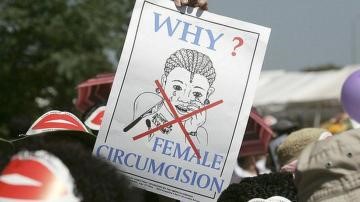 The Public Policy Exchange is holding a webinar on Thursday 29 August, on the subject of Protecting Women & Girls in the UK from Female Genital Mutilation: Prospect for Safeguarding the Vulnerable, Supporting Survivors & Increasing Prosecutions Under a New Labour Government. The event is from 09.30 to 13.00 BST.
I was pleased to be invited to chair the webinar, and I look forward to welcoming five distinguished speakers over the course of the morning:
Lynne Townley, Barrister, BVS Lecturer and PhD Candidate on honour crime and familial codes of honour at City, University London
Aneeta Prem MBE, Founder & Trustee of Freedom Charity
Dot Pritchard, Operations Manager at Oxford Against Cutting
Professor Tobe Levin Freifrau von Gleichen, Associate of the Hutchins Center for African and African American Research, Harvard University & Founder & CEO of UnCUT/VOICES Press
and
Sumaya Mohamed, Participation and Inclusion Worker at London Black Women’s Project.
The Public Policy Exchange offers the following Overview and Programme for the webinar:
Overview
The new Labour government has ambitious plans to tackle violence and abuse against women and girls, but significant challenges exist for the new government in improving protection of women and girls against female genital mutilation (FGM)? In February 2024, for only the second time in UK history, a person was convicted of FGM since it became illegal in 1985. In 2022, the most recent year for which the UK government has statistics, the Forced Marriage Unit (FMU) gave advice and support in 302 cases related to a possible forced marriage and/or possible FGM. However, according to the charity FORWARD, there are some 137,000 women in the UK who have undergone FGM. Meanwhile, in 2023, an independent report carried out by the Vavengers charity showed that two thirds of the NHS staff surveyed reported receiving either no or minimal training on how to deal with FGM survivors. FGM survivors in the UK are often forced to travel abroad for specialist medical treatment due to a lack of options on the NHS.
The UK government’s Forced Marriage Unit operates inside the UK and overseas to provide advice and support to UK residents and nationals who are victims of FGM and provides outreach support to local areas to support them in developing their local response to tackling FGM and to raise awareness of the unit. NHS guidance states that healthcare professionals should seek to support women by “offering referral to community groups for support, clinical intervention or other services as appropriate, for example through an NHS FGM clinic”. The NHS has also set up specialist, community-based National FGM Support Clinics, across the UK, which can offer a range of support services to victims, including: physical assessment and treatment (including deinfibulation), emotional support and counselling, access to FGM Health Advocates, and referral to a specialist consultant.
The new Labour government, meanwhile, has pledged to halve levels of violence against women and girls within a decade, including by introducing specialist rape and sexual offences teams in every police force; relentlessly targeting the most prolific and harmful perpetrators, using tactics normally reserved for terrorists and organised crime; introducing domestic abuse experts in 999 control rooms so that victims can talk directly to a specialist, and ensuring there is a legal advocate in every police force area to advise victims from the moment of report to trial. Labour has also committed to ensuring schools address misogyny and teach young people about healthy relationships and consent and providing police forces with the powers they need to track and tackle the problem. The new government also plans to strengthen the rights and protections available to women in co-habiting couples.
Manyexperts argue that little was done by the previous government to support the prevention of FGM from the grass roots and highlight the lack of a national action plan. Critics also point out that unlike in many countries across the EU, there is no provision in the UK for reconstructive surgery for FGM survivors. Charities, pressure groups and FGM experts stress that the UK is lagging far behind, with there now being 26 clinics across 11 different European countries offering reconstructive surgery to FGM victims. Many groups believe that British doctors already possess the required skills to perform such surgeries on survivors but that their injuries are simply not being considered a priority. Campaigners are also pushing policy makers in the NHS to establish a national centre of excellence to provide surgery as a treatment option for survivors. Another challenge relates to the fear that some victims have in coming forward about and reporting FGM and the ability of healthcare practitioners, the police and other authorities to build trust with those impacted by FGM.
This seminar aims to bring together stakeholders – including charities, community and religious groups, law enforcement, schools, and local authorities – to examine current challenges in tackling FGM and what more can be done in the UK to address this urgent issue and to better protect potential victims and support survivors.
Programme
- Assess the efficacy of current government policy and legislation aimed at tackling FGM, the role of the Forced Marriage Unit and what a national action plan on FGM should look like
- Learn about and assess the new Labour government’s plans to tackle violence and abuse against women and girls and improve support for victims and the implications of these plans for protecting women and girls from FGM
- Share best practice on how relevant authorities and wider stakeholders can better collaborate to identify and safeguard those vulnerable to FGM, increase the reporting of cases, encourage victims to come forward and seek support, and identify perpetrators
- Formulate policy and legislative frameworks for increasing prosecutions of perpetrators of FGM
- Examine the challenges that FGM survivors in the UK face accessing specialist medical treatment
- Evaluate ideas for improving NHS treatment for gynaecological damage caused by FGM, including establishing specialist clinics and offering reconstructive surgery
- Consider avenues for improving access to mental health and psychosexual support for FGM survivors
- Develop educational and grass roots community strategies and interventions aimed at changing cultural attitudes supportive of FGM
Registration for the event is here.
This webinar is timely. It was almost exactly a decade ago that a noted human rights lawyer agreed to be key speaker at an informal fringe event at the 2014 Labour Party Conference in Manchester.
The speaker’s name was Keir Starmer, now the UK’s new Prime Minister.
The new Government has committed to halving violence against women and girls within the next decade, so we must hope that rapid progress will now come about specifically also on the critical issue of FGM.
~ ~ ~ ~ ~
Books by Hilary Burrage on female genital mutilation
https://orcid.org/0000-0002-6684-2740

Hilary has published widely and has contributed two chapters to Routledge International Handbooks:
Female Genital Mutilation and Genital Surgeries: Chapter 33,
in Routledge International Handbook of Women’s Sexual and Reproductive Health (2019),
eds Jane M. Ussher, Joan C. Chrisler, Janette Perz
and
FGM Studies: Economics, Public Health, and Societal Well-Being: Chapter 12,
in The Routledge International Handbook on Harmful Cultural Practices (2023),
eds Maria Jaschok, U. H. Ruhina Jesmin, Tobe Levin von Gleichen, Comfort Momoh
~ ~ ~
PLEASE NOTE:
The Inter-African Committee on Traditional Practices Affecting the Health of Women and Children, which has a primary focus on FGM, is clear that in formal discourse any term other than ‘mutilation’ concedes damagingly to the cultural relativists. ‘FGM’ is therefore the term I use here – though the terms employed may of necessity vary in informal discussion with those who by tradition use alternative vocabulary. See the Feminist Statement on the Naming and Abolition of Female Genital Mutilation, The Bamako Declaration: Female Genital Mutilation Terminology and the debate about Anthr/Apologists on this website.
~ ~ ~
This article concerns approaches to the eradication specifically of FGM. I am also categorically opposed to MGM, but that is not the focus of this particular piece, except if in any specifics as discussed above.
Anyone wishing to offer additional comment on more general considerations around male infant and juvenile genital mutilation is asked please to do so via these relevant dedicated threads.
Discussion of the general issues re M/FGM will not be published unless they are posted on these dedicated pages. Thanks.

 Hilary Burrage