Welcome. This website comprises mostly Hilary's sociological papers and articles about patriarchy, (gendered) harmful practices (e.g. female genital mutilation / FGM) and thoughts on science, health, environmental issues, sociological analysis, social policy and good practice.
DIUS Science And Society Consultation
 The UK Department for Innovation, Universities and Skills has just conducted a consultation on Science and Society. What follows is a version of my submission to DIUS on this subject, covering issues such as the role of scientists in the service of government, the use of social science, the need to develop regional science strategies, engagement and stakeholding, the iterative way science evolves in its inevitably social context/s, and how different sorts of people feel about and become active (or not) in this process.
Read more…
From Regeneration To Sustainability: A Northern Take On Knowledge (& Knowledge Ecology)
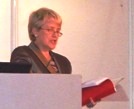 This is a version of a Keynote Lecture delivered at the NUREC 2008 conference, in Liverpool on 28 July 2008. In it we explore the connections between Knowledge Economies and Ecologies, and Big Science and Regeneration (especially in regional and sub-regional settings such as the Daresbury Laboratories) and in respect of Sustainability. My thesis is that Knowledge is not yet recognised for the fundamental resource it surely is.
A similarly focused paper – ‘Knowledge: The new currency in regeneration’ – exploring further the ideas developed here, was published in the Journal of Urban Regeneration and Renewal in September 2009.
Regeneration Rethink: Acknowledging Equality And Diversity
 Regeneration is a crowded field. It’s the market place to resolve the competing demands of social equity indicators as varied as joblessness, family health, carbon footprint, religious belief and housing. But it’s obvious something isn’t gelling in the way regeneration ‘works’. Could that something be the almost gratuitous neglect of experiential equality and diversity?
Read more…
Communities And The Public Realm: Places For People
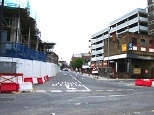 If anything belongs to ‘the people’, it is surely the streets where we live and work. Streets are usually owned by the public authorities who exist to serve our interests.
But where are the civic procedures to reflect this common ownership in renewing or developing the public realm? And who and where are the ‘communities’ which must be consulted?
Read more…
 Investment in scientific programmes often has added socio-economic value. But there is little evidence that good indices are available to measure what this impact might be for large-scale scientific regionally-based development. Whilst private investors guard their capital with care, only rarely do the criteria for evaluation of Big Science proposals include adequate consideration of the wider impact of public funds invested.
Read more…
BURA’s Regeneration Equality And Diversity Network Has Lift-Off
 Today (20 February 2008) saw the formal launch of the British Urban Regeneration Association (BURA)’s Equality and Diversity Framework and Network. The event, at the Abbey Community Centre in Westminster, was attended by people from across the regeneration world, and produced much discussion about how BURA and its partners could move forward.
Read more…
Launching The BURA Regeneration Equality And Diversity Framework
 Next week sees the launch in Westminster, London of the British Urban Regeneration Association (BURA) Regeneration Equality and Diversity Framework. The BURA Board has unanimously resolved to try honestly to do what regeneration is supposed to do – reduce inequality and discrimination through the creation of environments where people can lead sustainable, happy and fulfilling lives.
Read more…
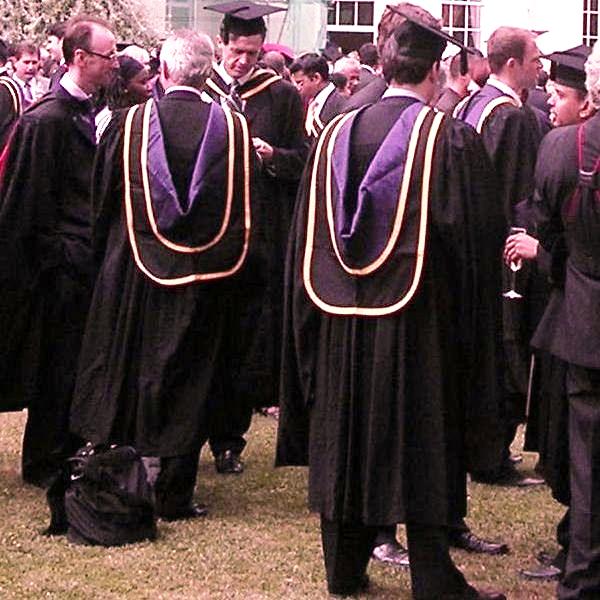 The Liverpool city region (Merseyside) looks on available evidence to have only about half the number of scientists which might be expected on the basis of the overall national statistics. The reasons for this deficit are not immediately obvious, given the number of HE institutions in the sub-region.
So by what indicators might Merseyside measure progress in the retention and development of graduate scientists and technologists?
King’s Cross: Community And Colossal Opportunity Combined
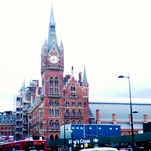 The renewal of King’s Cross – St Pancras and all that surrounds it is long overdue, but it looks to be a spectacular project worth the wait. The final moves to achieve success in terms of the local community will however require those who should, to put their heads above the parapet so that everything comes together to make the best possible result. This project will ‘work’ for everyone as long as people really try to collaborate to get it right.
The Science Council Lecture On Government Science Policy
 The Science Council’s first Sir Gareth Roberts Science Policy Lecture on 6th November 2007 was an excellent opportunity to learn the views of Ian Pearson MP, Minister of State for Science and Innovation.
Much of the Department for Innovation, Universities and Science (DIUS) Minister’s speech concerned science and society, and the enormous challenges that scientists and the wider community must now confront.
Liverpool: Governance, Growth And Going (Somewhere)
 Abrupt curtailment of the 2007 Mathew Street Festival, silly ideas about removing fish so the docks become a concert arena, questions about preparations for the Big Year. Liverpool 2008 is a drama unto itself. The leading arts venues have devised a pretty good cultural programme for European Capital of Culture Year, but concerns about what else needs to be done remain…. There’s a jolly good row going on in Liverpool just now.
Read more…
What Makes A Good Regeneration Worker?
 All regeneration and strategic planning professionals need to have excellent formal qualifications and wide experience; the job is far too important for anything less. But what other characteristics are also required to make a good regeneration official into an outstanding agent of delivery on the ground? A list of such characteristics follows, starting from a rather specific observational position. Here are some suggested stereotypical characteristics of the ideal regeneration or urban / rural planning worker:
Read more…
Sky-High Homes For The UK’s Regional Cities?
 How many people reading this article actually live in a city centre? How many readers live in a high-rise apartment? And how many of these readers are aged 30-50? My guess is that fewer readers live in high-rise than have views on them; the evidence certainly shows that most people past a certain age choose to live in suburbia or out-of-town. So is the commercial emphasis on city centre ‘executive’ apartments sustainable?
Read more…
 Graduate retention is a serious aspect of any decent policy for regeneration. But the emphasis on new / young graduates alone is strange, when there are always also other highly qualified and more experienced people who might offer at least as much in developing economies. A recurring theme in the regeneration of cities and regions is the emphasis on retention of graduates, is generally a task allocated to the regional universities which have educated them. But is the talent hunt wide enough?
Read more…
Policy-Related Scientific Research In Context
 Avian influenza (‘bird flu’) has again made us aware of the scientific research which underpins government policy. Some have great faith in this science, others have none.
Our growing understandings of how scientific research and public policy inter-relate can however help inform both science itself, and how political / policy decisions might be taken in real life has provoked quite a debate in The Guardian about how science and politics inter-relate.
Science And Regeneration
 Science may sometimes be difficult for people in regeneration to understand; and perhaps this doesn’t always matter. But we do all need to see what science in its operation and applications has to offer. For optimal outcomes at every level dialogue between scientists and regeneration practitioners is critical.
Why is science important in regeneration? And why, if it is important, is it also largely invisible in that field?
The Conference Diversity Index
 Conferences involving public funds and public policy are still too often devised and conducted as though the vast majority of the population were white, male, able-bodied and middle class. The time has come to start measuring in some way the extent to which this limited approach offers the general public value for money. This is the twenty first century. We in Britain live in a democratic and accountable society run, on the whole, by people who are serious about ‘getting it right’.
Read more…
No-Win Or Win-Win Gender And Babies Agenda?
 Choosing if and when to have a baby has never been an easy decision, especially if both partners want to continue in employment. More recently the debate has shifted a little, and perhaps a deeper understanding is emerging of what ‘work-life balance’ is about. But the question still to be asked is how can you get it right, if you’re a mum who wants to make her way in the world of work?
Big Science, Technology And The New Localism
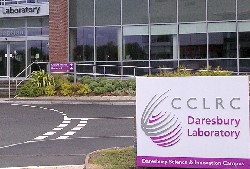 Big Science is a central part of the U.K. economy. The Knowledge Economy, with science and technology as the tangible drivers, is critical to economic success. But for many in regeneration, Big Science remains a mystery, especially at the level of the ‘new localism’. Here we consider regeneration strategies, science policy and the synergy of science and economies at regional and local level.
HOPES Millennium Commission Presentation (London, 22 September 2000)
 HOPES: The Hope Street Association (Liverpool) was honoured by being invited in September 2000 to give the ‘community festival’ perspective at a national meeting in London attended by the Secretary of State for Culture, Chris Smith M.P., the Millennium Commissioners, their special guests and members of the national press and other media.
This is the paper written and presented on that occasion by HOPES’ founding hon. Chair, Hilary Burrage

 Hilary Burrage